


Contact Mixer with Blade

TEL:18925129293


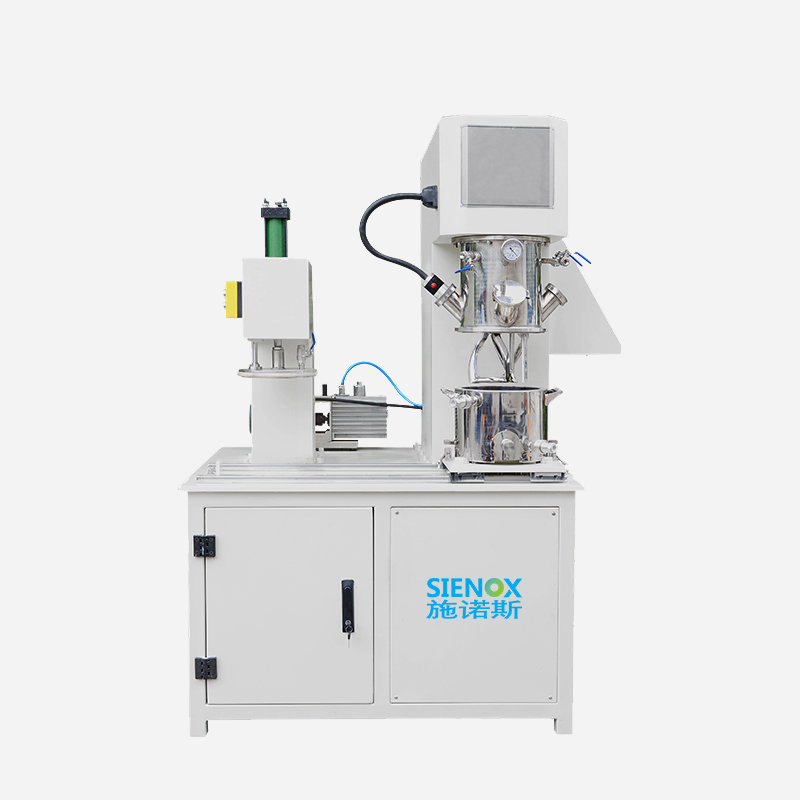
Planetary Mixer SIE‑GX20L
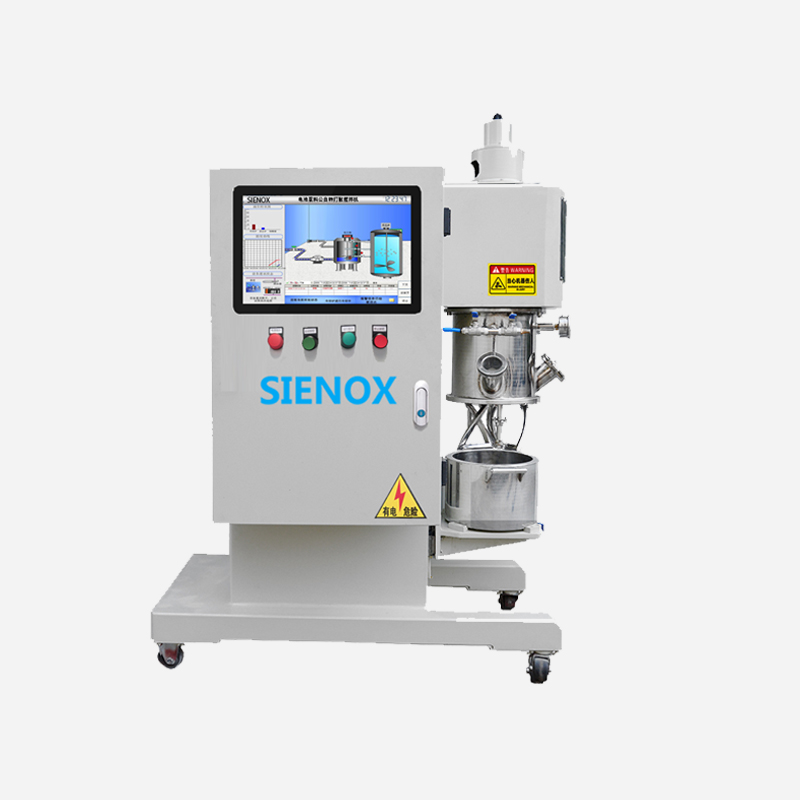


Dual‑planetary Revolution‑rotation Dead‑zone‑free Mixing · Vacuum Defoaming + Precise Temperature Control + MES Remote Monitoring
Dual‑planetary Revolution‑rotation Mixing + 0~3500rpm High‑speed Dispersion + Vacuum Defoaming & Precise Temperature Control
SIENOX SIE‑GX20L planetary mixer, 20L effective capacity, adopts dual‑planetary revolution‑rotation mixing with 0‑3500r/min high‑speed dispersion, ‑0.098 MPa vacuum defoaming, 8KW high power and ±0.5℃ precise temperature control. Suitable for mass production of lithium‑ion battery slurry, paste, gel and structural adhesive. 20‑year original manufacturer, free sample test available.
✓ ISO9001 Quality System ✓ RoHS Compliance ✓ Custom Voltage Available (110V/220V)
Why Planetary Mixing Is Required
Uneven mixing and dispersion of slurry directly impair end‑product performance.
Lithium‑ion Battery Slurry IndustryActive materials, conductive agents and binders in lithium‑ion cathode & anode slurries tend to be poorly dispersed during large‑volume mixing, resulting in coating areal density fluctuation, increased internal resistance, inconsistent cycle life and lower mass‑production yield. The planetary mixer adopts 8 kW high‑power driven enhanced helical frame to generate intensive kneading interference motion for 20L large‑volume high‑viscosity slurry. High‑speed dispersing disc shears and breaks conductive‑agent agglomerates, and vacuum defoaming eliminates bubbles generated in large‑batch mixing, ensuring dispersion uniformity and batch‑to‑batch consistency of production slurries. | Paste & Gel IndustryHigh‑loading powders and base materials in pastes & gels such as conductive silver adhesive and thermal conductive gel are difficult to disperse in large‑volume mixing, causing viscosity fluctuation, dense bubbles and unstable thermal/electrical conductivity. Low‑speed mixing paddles together with wall‑scraping design eliminate dead zones inside large vessels. High‑speed dispersing disc evenly distributes high‑loading powders. Vacuum defoaming at ‑0.098 MPa removes massive bubbles from large‑batch mixing and guarantees consistent quality of mass‑produced pastes and gels. | Structural Adhesive IndustryFillers and resins in epoxy & polyurethane structural adhesives are prone to sedimentation and delamination during large‑volume mixing, which leads to fluctuating cured strength, bubble defects on bonding surfaces and unstable durability. The enhanced helical frame of planetary mixer handles high‑viscosity structural adhesive systems. Small‑clearance design achieves dead‑zone‑free mixing for large‑volume materials. Vacuum defoaming removes bubbles generated during mixing. 350 mm long lifting stroke enables quick vessel change and ensures stable cured strength and bonding consistency of mass‑produced structural adhesives. |
✨ Traditional Mixing Challenges: Single‑shaft rotation of ordinary mixers creates numerous dead zones. For 20L large‑volume materials, climbing and wall‑adhesion issues become more severe with larger dead zones inside big vessels. Single mixing mode cannot realize large‑volume mixing and dispersion simultaneously; agglomerates in high‑viscosity slurry are hard to break up. Open‑style mixing brings in abundant bubbles, which grow denser and harder to eliminate for large‑batch materials. Imprecise temperature control causes severe heat generation during large‑volume slurry mixing. Without vacuum function, bubbles in production‑scale slurry cannot be removed, resulting in high finished‑product defect rate.
Why Choose SIE‑GX20L
Solve Core Pain Points in Large‑scale Mass Production
Large‑capacity Mass ProductionMeet the requirements of continuous high‑volume production, reduce material change frequency and improve production line efficiency. Enhanced helical frame combined with wall‑scraping mixing paddle, low‑clearance design creates strong kneading interference and omnidirectional circulating motion of materials, realizing dead‑zone‑free and "climbing‑free" mixing even under 20L large capacity. 350 mm long lifting stroke adapts to large‑barrel operation; screw lifting structure enables quick and convenient barrel replacement and material discharging. | 0~3500rpm High‑speed DispersionSufficient mixing torque for large‑volume working condition. 0‑3500r/min variable‑frequency speed regulation for high‑speed dispersing shaft, max linear speed up to 15 m/s to strongly shear and break agglomerated particles. Co‑operation of low‑speed mixing and high‑speed dispersion completes mixing and dispersion of 20L large‑volume slurry in one step without compromising dispersion performance for mass production. | Vacuum Defoaming + Precise Temperature Control + MES Remote MonitoringEquipped with oil‑free vacuum pump to remove internal bubbles of large‑volume slurry during mixing. Temperature sensor contacts materials directly with measurement deviation of ±0.5℃, precise heating & cooling temperature control available. Support MES software connection and remote monitoring, real‑time monitoring of equipment and slurry status, production data collection & traceability to satisfy quality management system requirements. Patented mixing blade design, one‑piece cast & CNC precision‑ground; imported electrical components ensure long‑term stable operation in mass‑production scenarios. |
✨ If your production line requires a large‑capacity, high‑power, traceable production‑grade planetary mixer, the GX20L is your ideal choice.
Working Principle
Both low‑speed mixing paddle and high‑speed dispersing disc perform rotation and revolution to realize mixing and dispersion simultaneously.
Step 1: Revolution and Rotation of Low-speed Stirring Paddle Step 2: Shearing and Dispersion by High-speed Dispersing Disc Step 3: Vacuum Defoaming & Temperature Control Three simple steps: Low-speed revolution & rotation mixing → High-speed shear dispersion → Vacuum defoaming, temperature control and discharging. Mixing, dispersion and defoaming are completed in one process. | 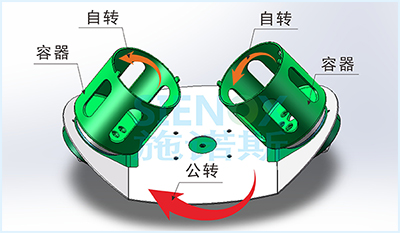 |
Technical Specifications
Complete Technical Specifications Overview, Customizable on Demand
| Model | SIE‑GX20L |
| Effective Capacity | 20L (Total Volume: 27L) |
| Speed Range | 0~5000r/min (Adjustable) |
| Vessel Dimension | Inner Diameter 350mm × Inner Height 270mm |
| Basic Structure | 1. Cantilever‑type screw lifting vessel; 2. Direct material temperature measurement; 3. Dual mixing shafts + wall‑scraping device + single dispersing shaft |
| Lifting Stroke | 350mm |
| Temperature Control | Heating & Cooling Available |
| High‑speed Dispersing Linear Speed | Max. 15m/s |
| Power Supply | AC380V/50Hz |
| Overall Dimension(W×D×H) | 1370×1100×2200mm |
| Net Weight | Approx. 1050 kg |
| Certifications | ISO9001, RoHS Compliance |
Our Partners
Trusted by leading industrial manufacturing clusters and advanced university laboratories worldwide
FAQ - Frequently Asked Questions
Answers to common questions about product performance and everyday process selection
-
What is the working principle of a centrifugal defoaming machine?
Principle of centrifugal defoaming machine: The bubbles are released by the downward principle of gravity.
-
How is the after-sales service?
The company has professional after-sales service personnel, 24-hour dedicated service, and one-on-one technical support to solve your worries.
-
Why choose SIENOX?
There are many reasons for choosing SIENOX, and the following are some of the main reasons:
1. Professionalism: Our team consists of a group of professional individuals with rich experience and knowledge in their respective fields. We not only understand industry trends and best practices, but also provide practical and feasible solutions.
2. Service quality: We focus on customer needs and satisfaction, and are always committed to providing high-quality services. We not only respond quickly to customer needs, but also provide customized services according to their requirements.
3. Reliability: We adhere to the principles of integrity and professionalism, always adhering to commitments and agreements. Our work methods and deliverables comply with industry standards and best practices, enabling our clients to trust us.
4. Innovation: We continuously explore new methods and tools to provide better services and meet customer needs. We encourage innovation and experimentation, and are willing to accept challenges and change.
5. Cost effectiveness: We provide cost-effective services that not only help customers save costs, but also improve efficiency and productivity. We always prioritize the interests of our customers and provide them with the best solutions.
6. Teamwork: We believe in the power and value of teamwork, and our team members support, collaborate, and respect each other. We establish close cooperative relationships with customers, partners, and other stakeholders to achieve common goals.
The above are just some of the reasons for choosing us. We believe there are many other advantages and values that can be provided to customers. If you are looking for a professional, reliable, and high-quality service provider, we look forward to working with you.
-
How does the stirring and defoaming machine work?
The SIENOX stirring and defoaming machine performs defoaming through centrifugal force at revolution and stirring through shear force formed by revolution and rotation,
Assisted by a vacuum pump to extract gas and achieve a vacuum state, removing nanoscale tiny bubbles. No contact with materials, no secondary pollution, and no secondary waste.
-
What is the function of a defoaming machine?
A defoaming machine is a device used to remove bubbles from liquids. Its function is to assist in the liquid mixing, reaction, coating, printing, infusion and other process steps in the production process, avoiding the generation of bubbles and their impact on the final product. In many industrial and laboratory environments, removing bubbles is essential as they may have a negative impact on product quality, such as affecting surface tension and stability. Defoaming machines typically use various techniques such as vibration, ultrasound, centrifugation, etc. to achieve effective bubble removal. It has a wide range of applications, including but not limited to semiconductors, solar energy, optics, biotechnology, materials science, etc.
Technical Specification List
Full‑line parameter specifications to assist your accurate process‑model selection
| Model | SIE‑GX5L | SIE‑GX10L | SIE‑GX20L |
| Effective Capacity | 5L | 10L | 20L |
| Speed Range | 0~3500r/min (Adjustable) | 0~3500r/min (Adjustable) | 0~3500r/min (Adjustable) |
| Vessel Dimension | Inner Diameter 130mm × Inner Height 85mm | Inner Diameter approx.310mm × Inner Height approx.230mm | Inner Diameter 350mm × Inner Height 270mm |
| Basic Structure | 1. Cantilever‑type screw lifting vessel; 2. Direct material temperature measurement; 3. Dual mixing shafts + wall‑scraping device + single dispersing shaft | 1. Cantilever‑type screw lifting vessel; 2. Direct material temperature measurement; 3. Dual mixing shafts + wall‑scraping device + single dispersing shaft | 1. Cantilever‑type screw lifting vessel; 2. Direct material temperature measurement; 3. Dual mixing shafts + wall‑scraping device + single dispersing shaft |
| Lifting Stroke | 200mm | 280mm | 350mm |
| Temperature Control | Heating & Cooling Available | Heating & Cooling Available | Heating & Cooling Available |
| High‑speed Dispersing Linear Speed | Max.15m/s | Max.15m/s | Max.15m/s |
| Power Supply | AC380V/50Hz | AC380V/50Hz | AC380V/50Hz |
| Overall Dimension(W×D×H) | 1200×1100×1800mm | 1300×1100×2000mm | 1370×1100×2200mm |
| Net Weight | 500 kg | 750 kg | 1050 kg |
Multi‑Industry Solutions
Typical Applications for Slurry Mixing & Dispersion
Battery SlurryCathode slurry (NCM/LFP), Anode slurry (graphite), Separator coating slurry, Solid‑state electrolyte slurry |
Paint & PigmentIndustrial coating, Automotive paint, Water‑based pigment paste, UV coating |
BiomedicineOintment preparation, Biological gel, Medical adhesive, Pharmaceutical suspension |
AdhesiveEpoxy resin adhesive, Polyurethane adhesive, Silicone sealant, Hot‑melt adhesive |  Ceramic SlurryAlumina slurry, Zirconia slurry, Ceramic glaze, Electronic ceramic slurry |
Cosmetic PasteCream & lotion, Toothpaste, Sunscreen, Hair‑dye cream |
Comprehensive Equipment Operation Demo Videos
Gain intuitive, clear, dynamic insight into synchronous defoaming with planetary centrifugal force and high negative pressure.
Actual‑test Performance Demonstration
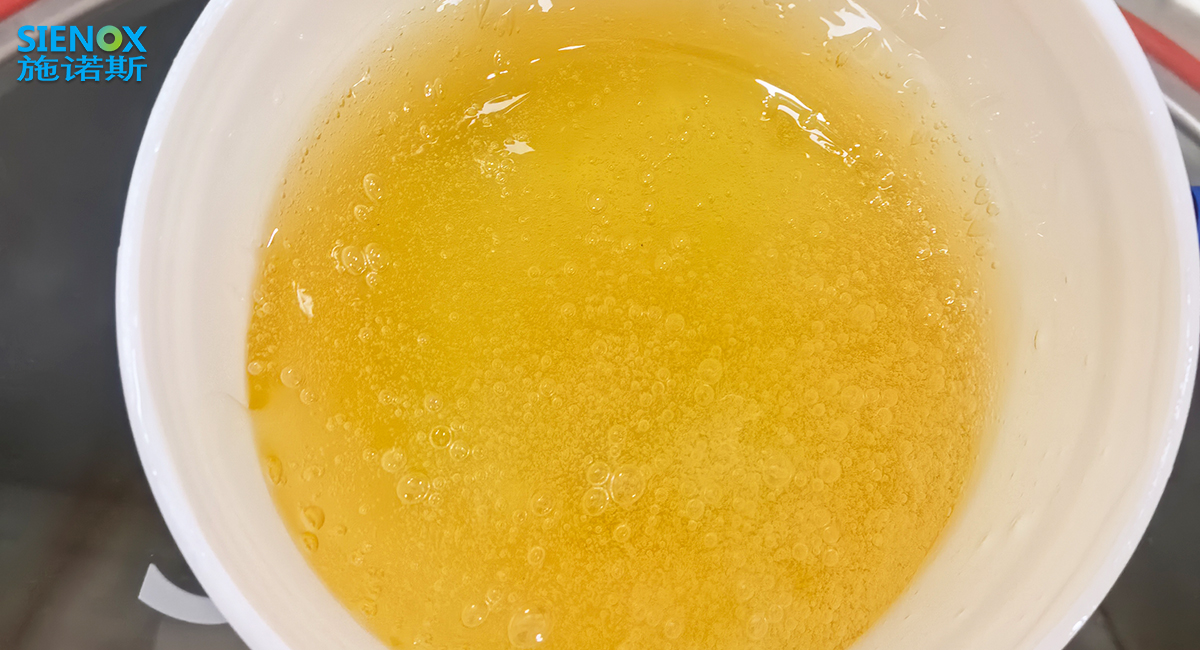
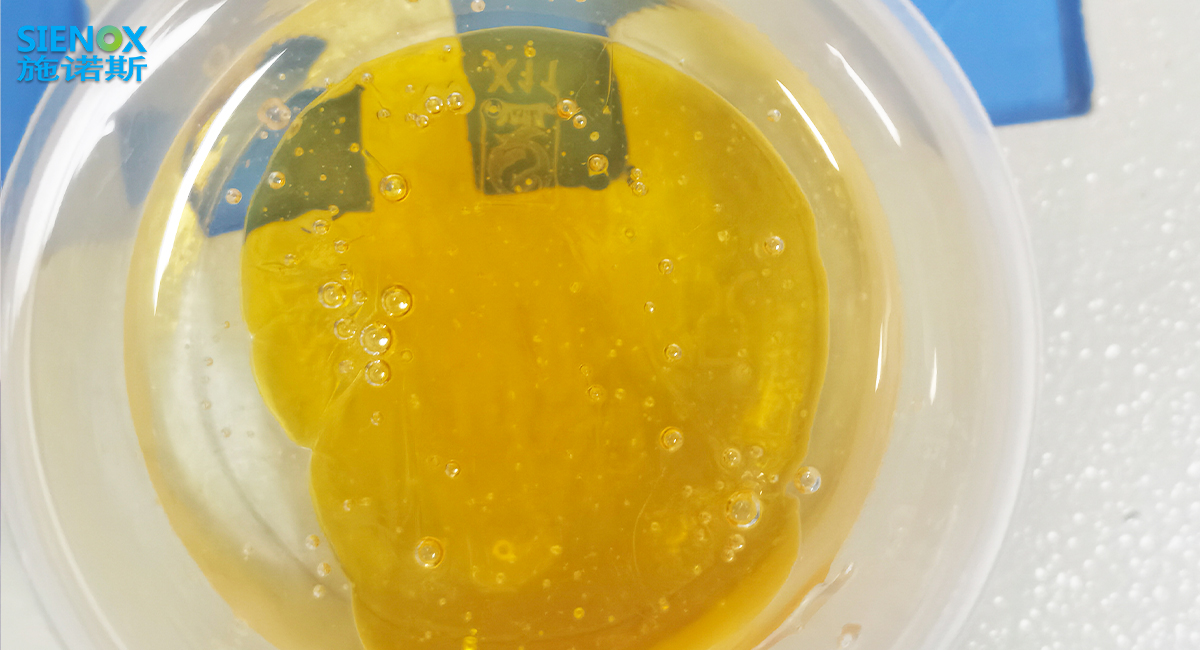
Lab Sample Actual Test Results
AB Glue |
Glue + Powder |
Glass Powder |
Electronic Adhesive + Powder |
Epoxy Resin |
Battery Slurry Powder |
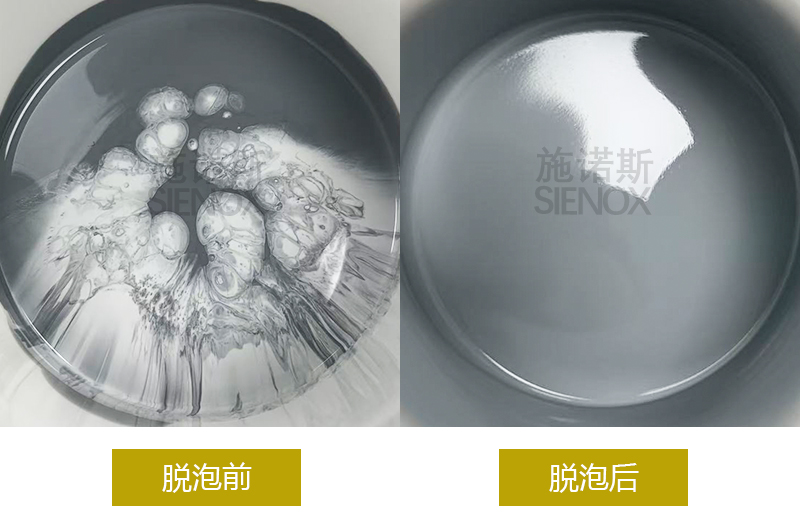
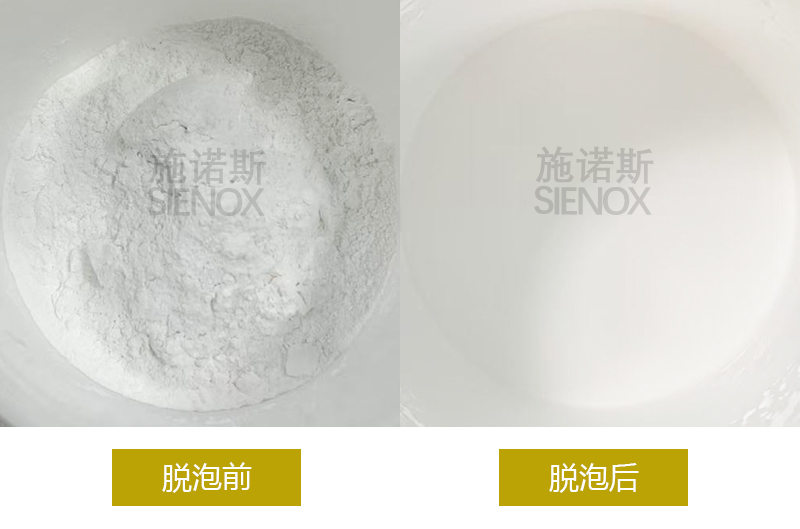
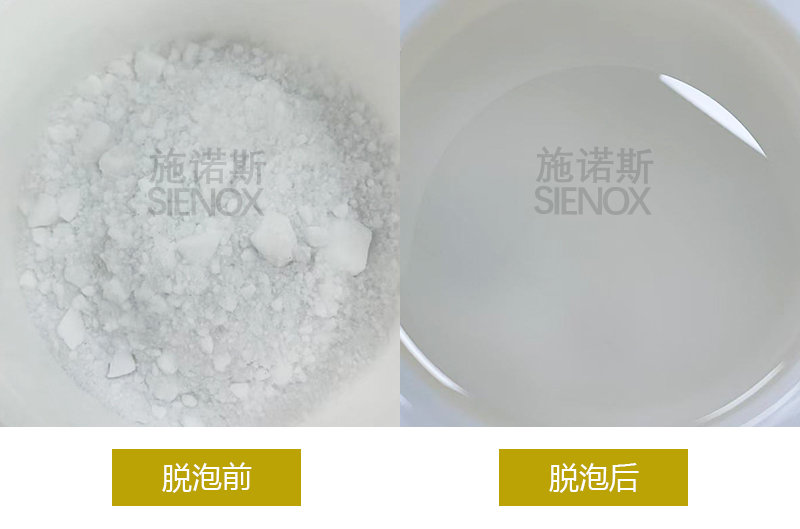
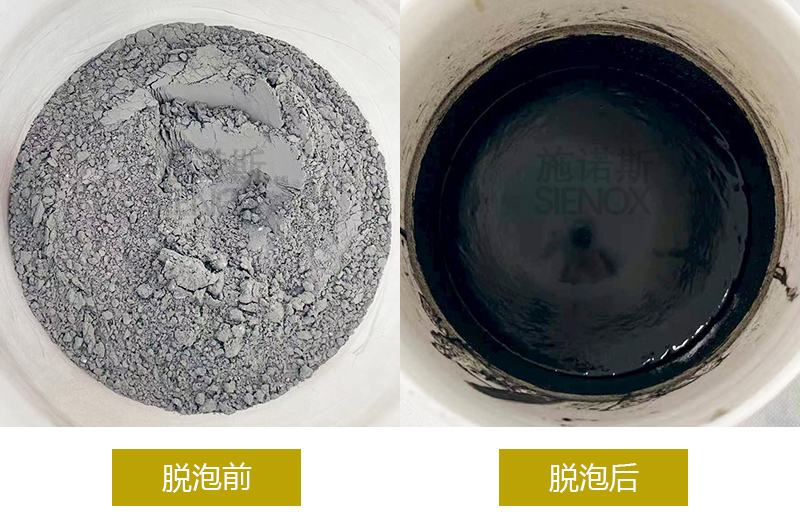
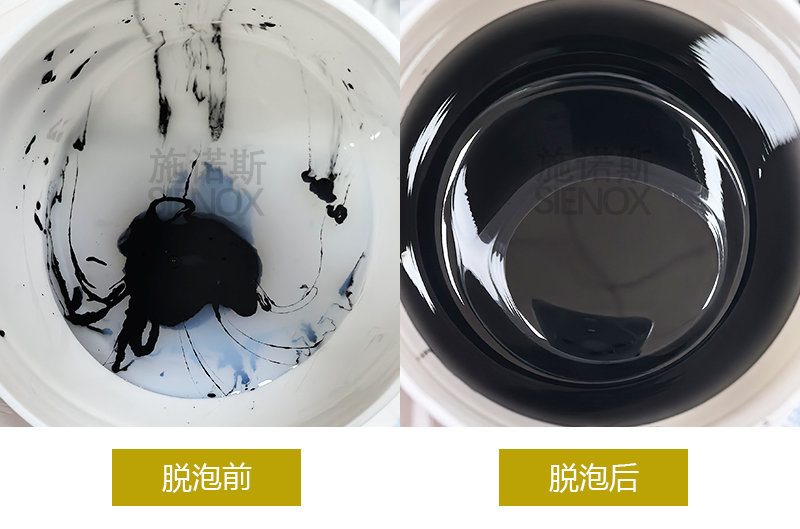
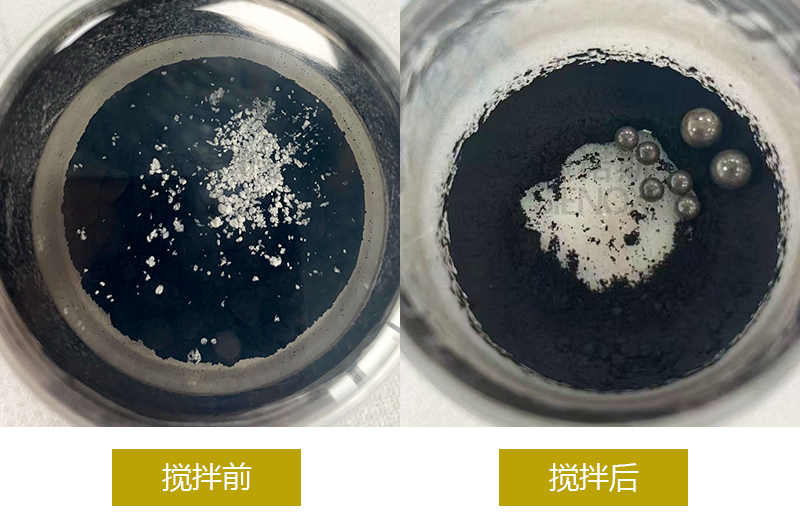
Actual‑test Effect Comparison
Material Defoaming Effect Comparison Before & After
| Material Type | State Before Treatment | After Treatment by GX20L |
| Battery Anode Slurry (Graphite) | Uneven dispersion of graphite powder, conductive agent and binder with agglomerates, unstable viscosity and abundant bubbles, large fluctuation of coating areal density | Uniform dispersion of all components without agglomerates, stable viscosity. No obvious bubbles after vacuum defoaming, consistent coating areal density and reduced battery internal resistance |
| Conductive Silver Adhesive | Silver powder agglomeration and sedimentation, delamination with base material, dense bubbles and large viscosity fluctuation, unstable conductivity | Uniformly dispersed silver powder without agglomeration, bubble-free after vacuum defoaming, consistent viscosity and stable qualified conductive performance |
| Epoxy Structural Adhesive | Sedimentation and stratification of filler and resin, entrapped internal bubbles, large strength fluctuation after curing and high defect rate of bonding surface | Uniformly dispersed fillers without sedimentation, bubble-free after vacuum defoaming, consistent strength after curing and defect-free bonding surface |
* Internal laboratory test data. Actual improvement varies with material formulation. Contact sales for real customer cases.
Customer Delivery & Application Cases
Rooted in manufacturing frontlines, empowering benchmark production lines and key national research institutions across diverse industries.
You May Also Need....
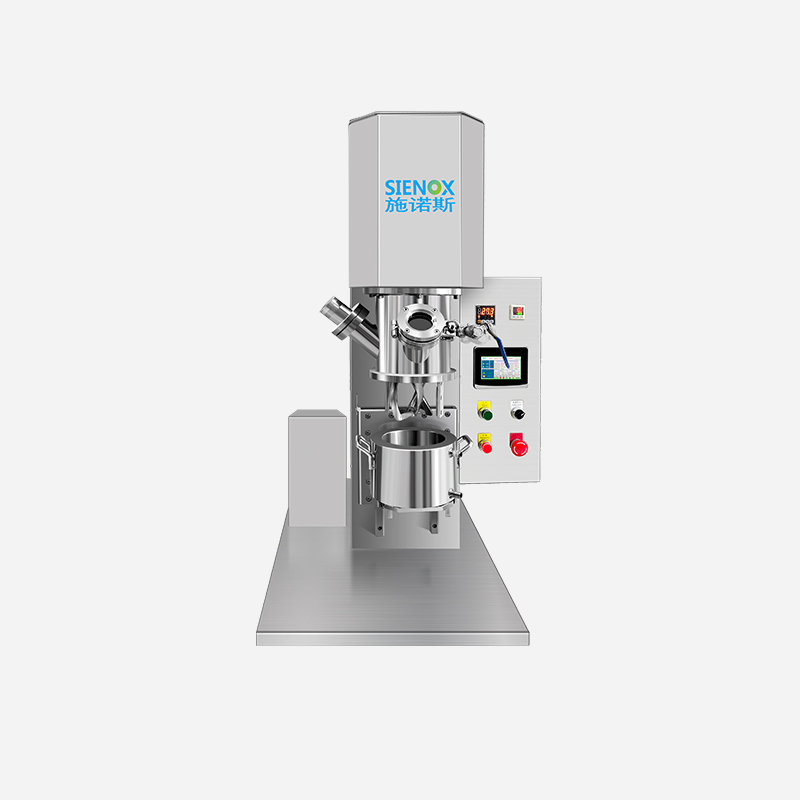
Planetary Mixer SIE‑GX500
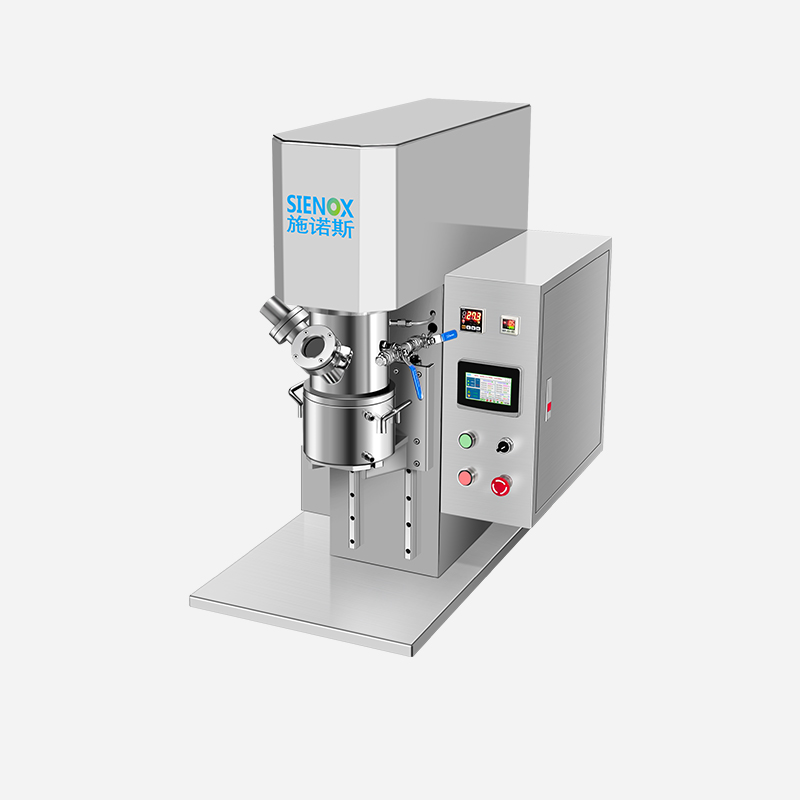
Planetary Mixer SIE‑GX1L
Planetary Mixer SIE‑GX5L
Planetary Mixer SIE‑GX10L