

Planetary Mixing Defoamer

TEL:18925129293


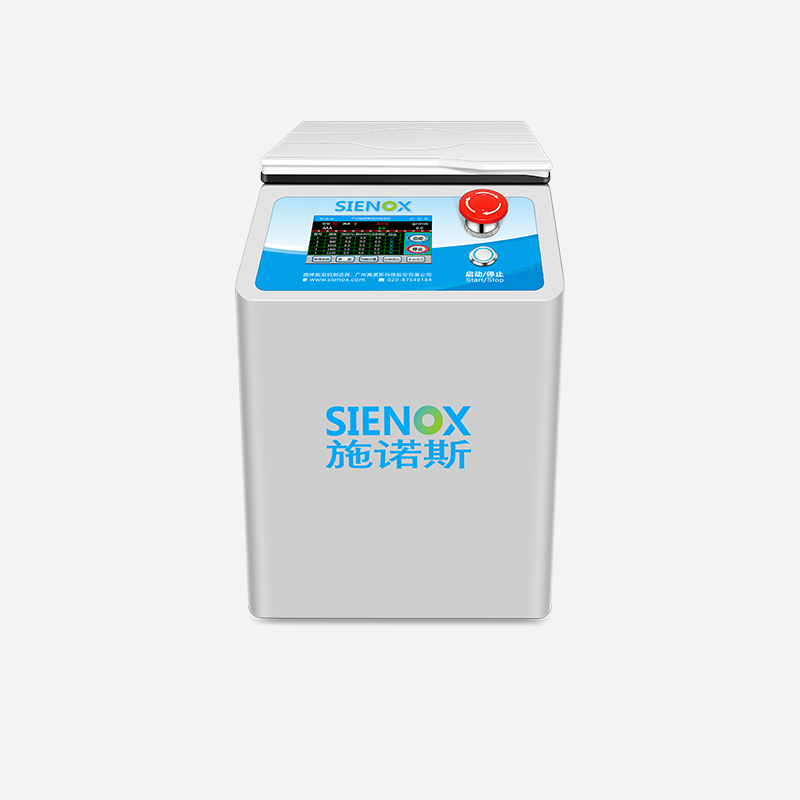
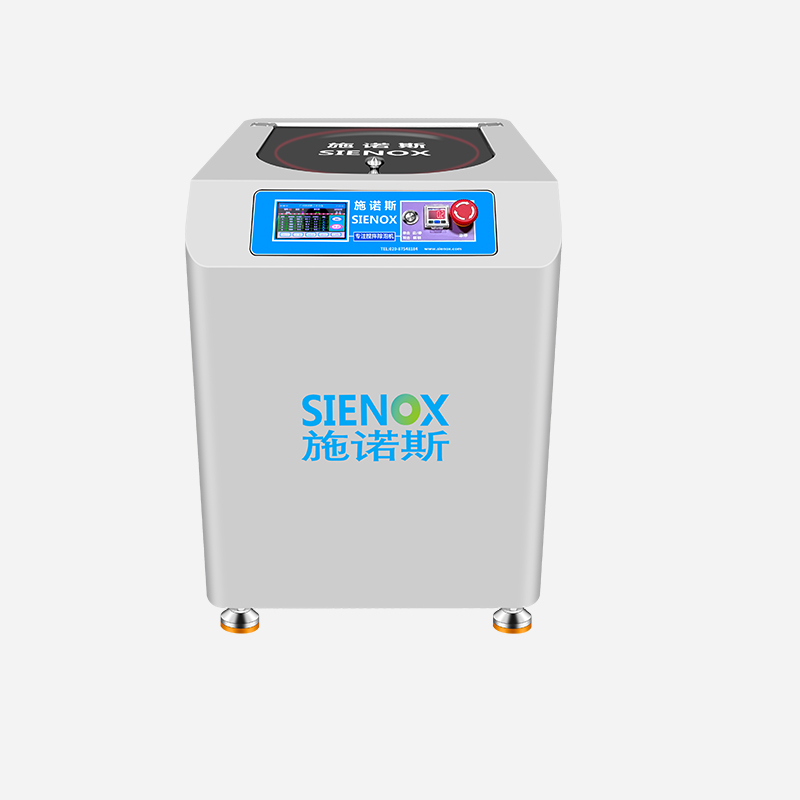
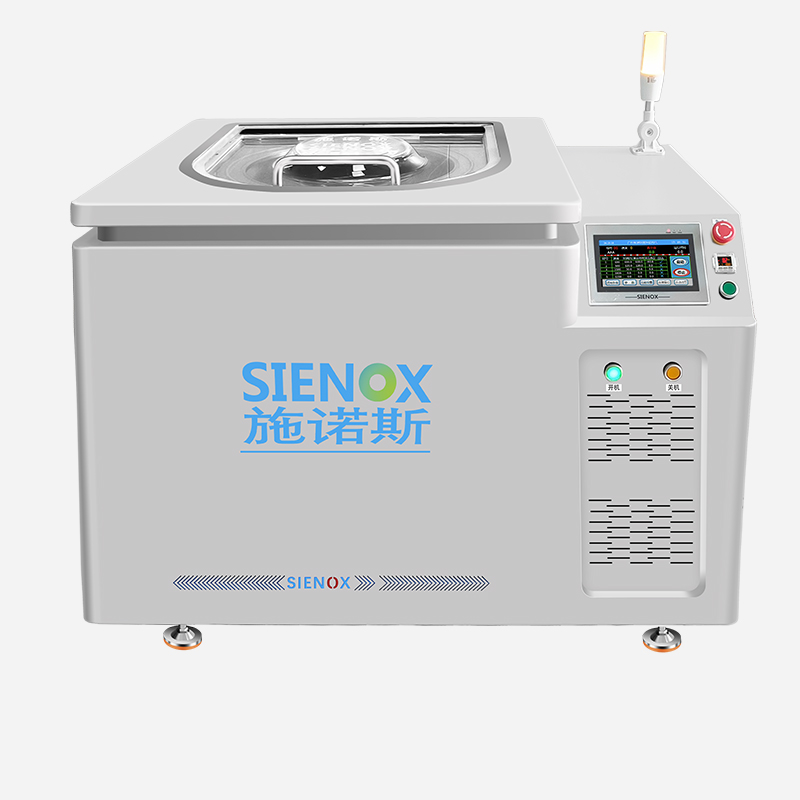
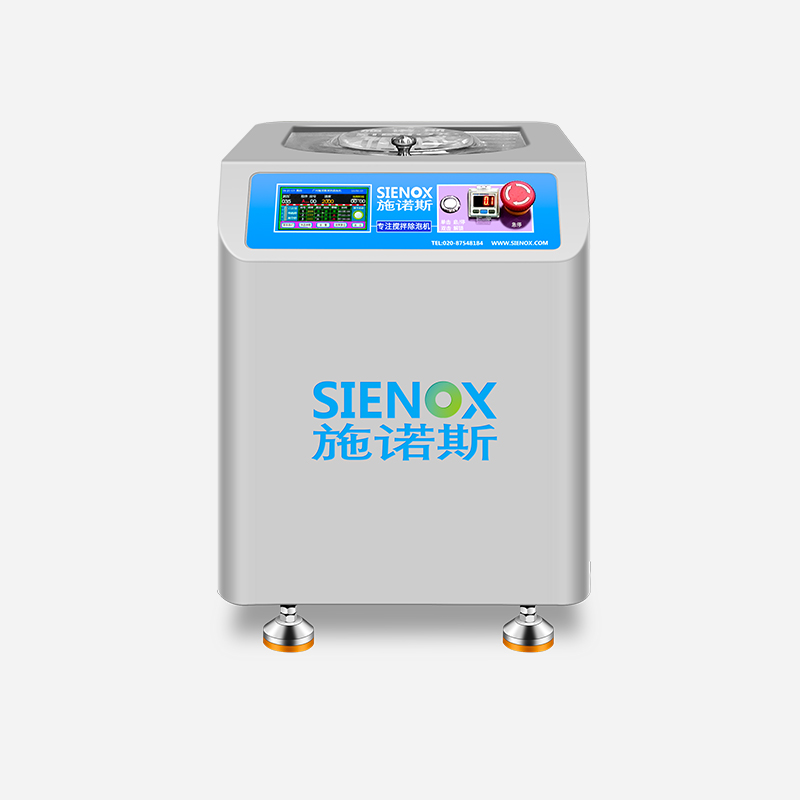
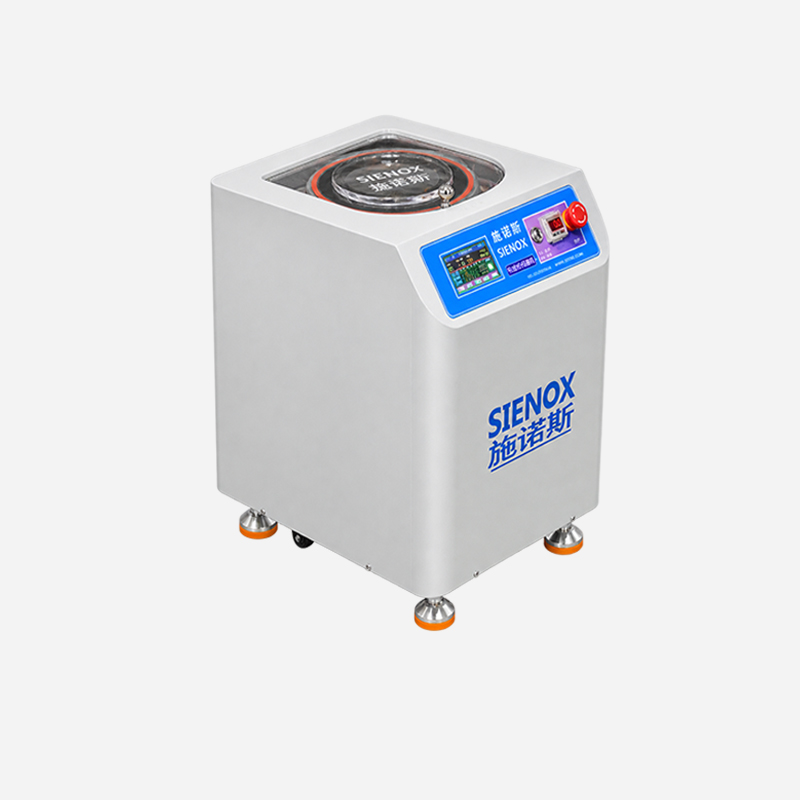
SIENOX Planetary Mixer‑Degasser SIE‑CV300
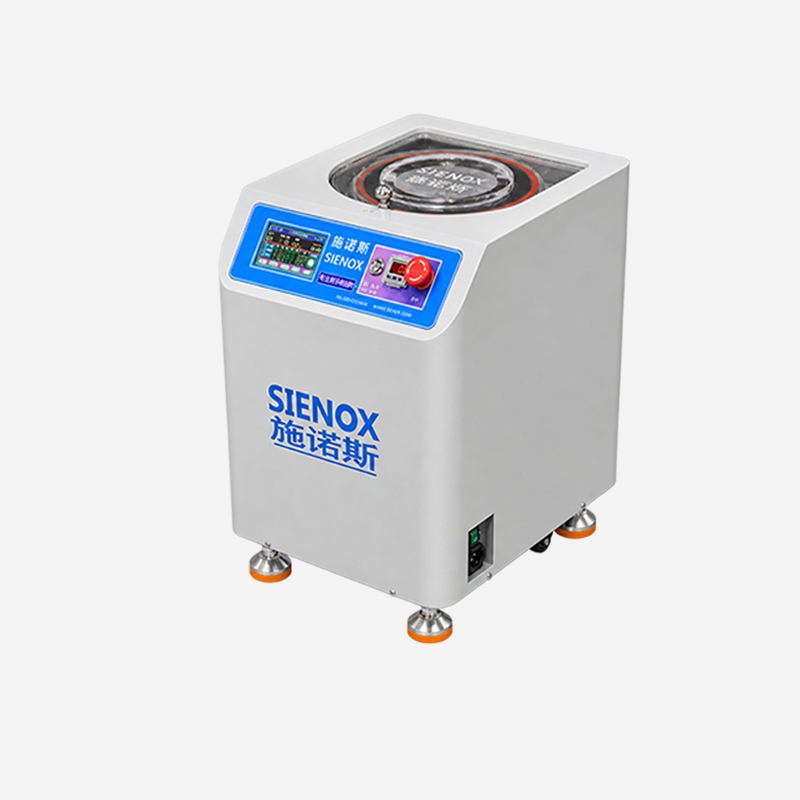
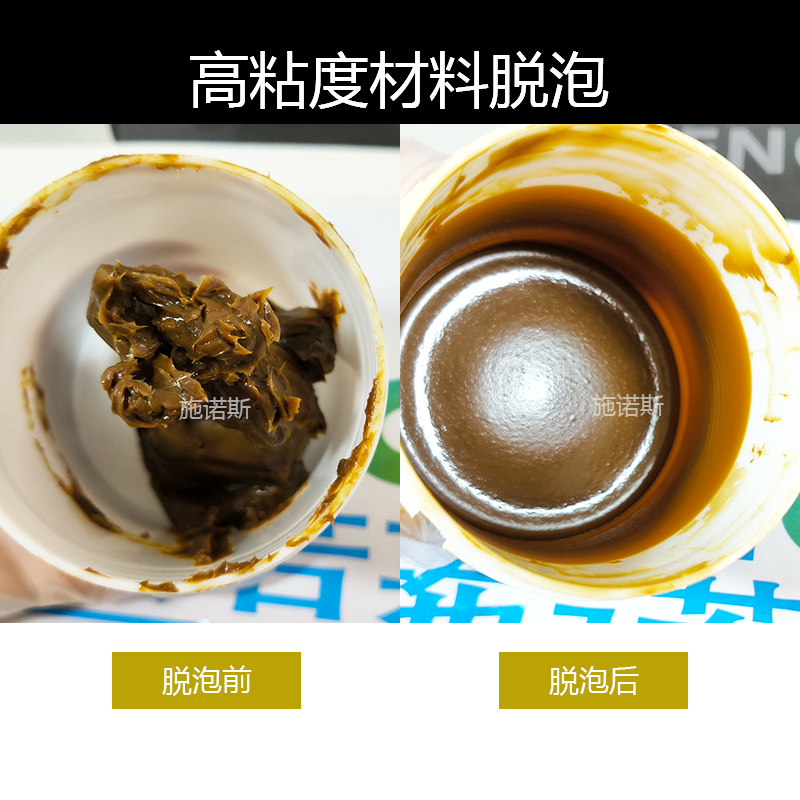
Non‑Contact Revolution‑Rotation Mixing · Mixing and Defoaming Completed Simultaneously
3000rpm Stepless Speed Regulation + Planetary Revolution‑Rotation Design — 99.9% Removal of Nano‑Scale Bubbles
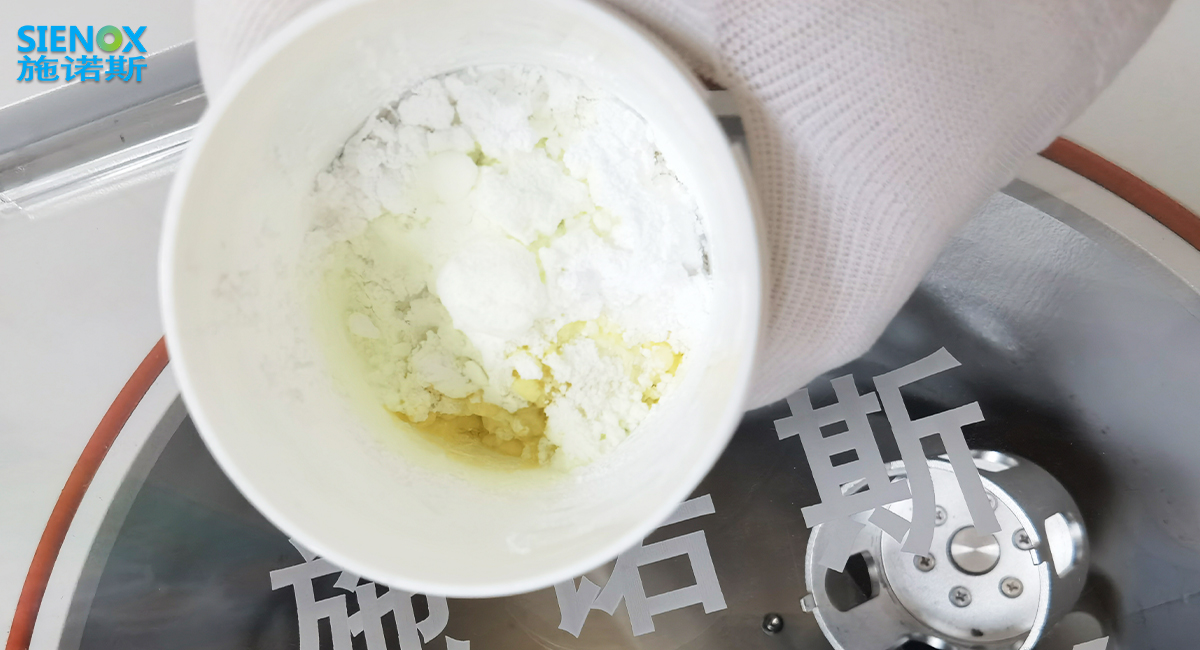
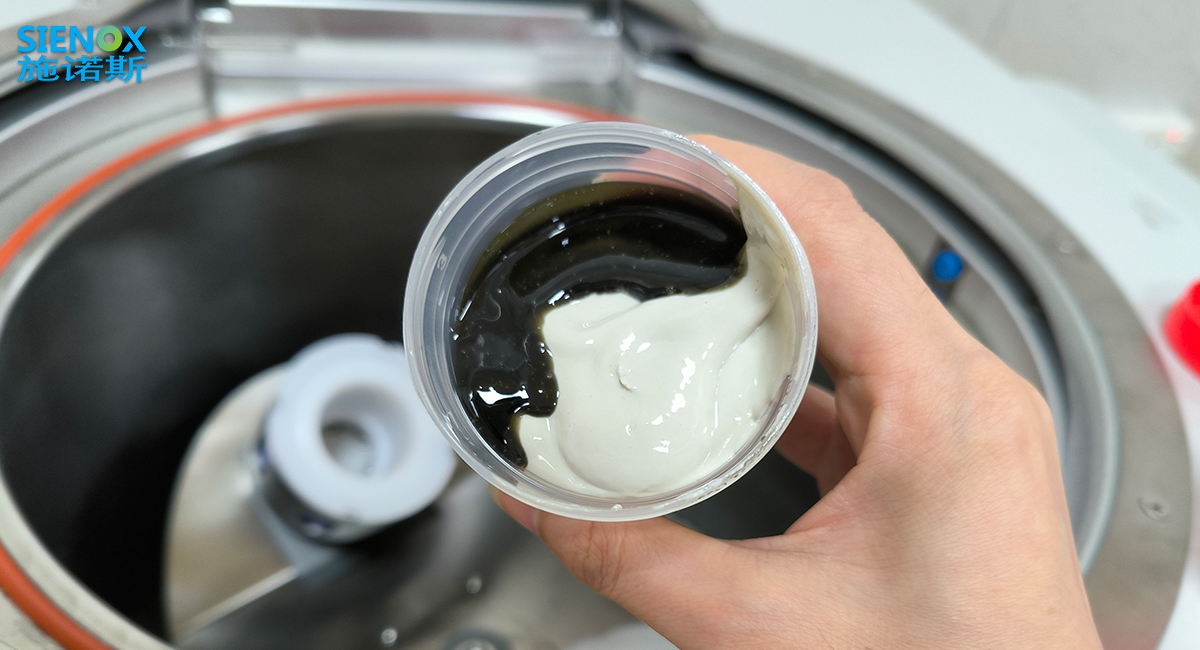
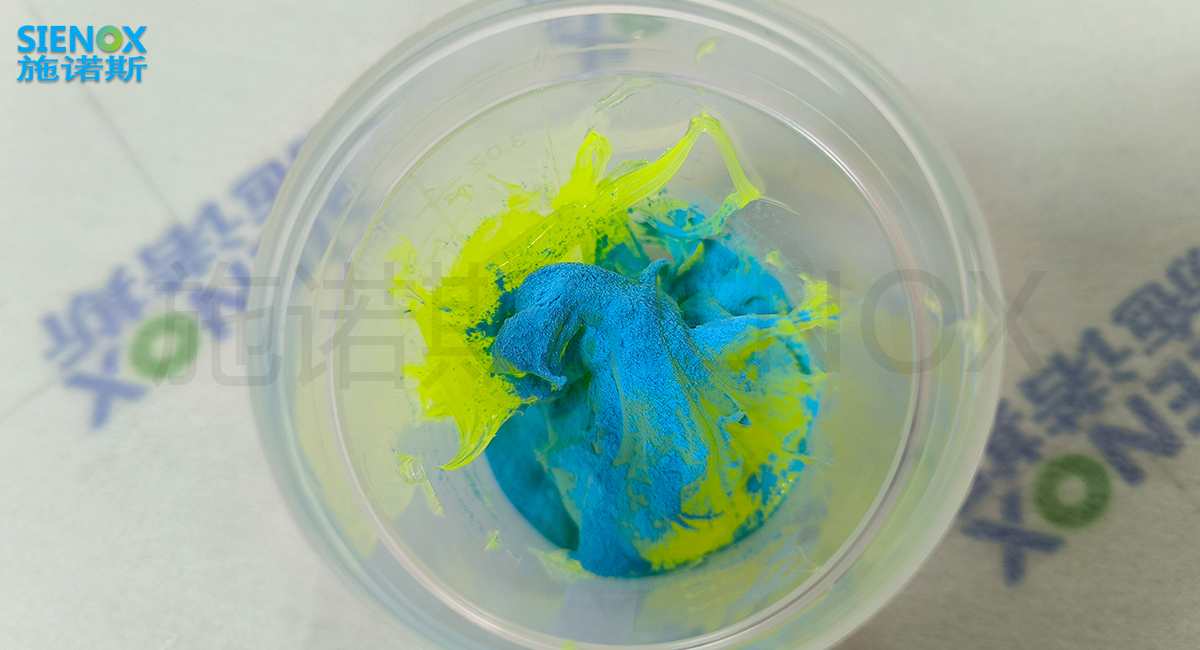
The SIE‑CV300 by Sinos is a planetary mixing‑defoaming machine specially built for laboratory R&D and small‑batch precision processing. It adopts dual‑power core technology with synchronous revolution and rotation. Revolution generates strong centrifugal force to realize full‑range material convection, while rotation delivers directional shear force for high‑efficiency overall mixing. Centrifugal force removes bubbles from materials at the same time, completing mixing and defoaming in one single step.
Full‑process non‑contact mixing lowers the risk of material contamination. Suitable for adhesives, silver paste, silicone rubber, conductive silver adhesive, battery slurry, ink and many other materials.
✓ CE Certified ✓ ISO9001 Quality System ✓ RoHS Compliance ✓ Custom Voltage Available (110V/220V)
Why Must Microbubbles in Materials Be Eliminated?
Residual micro‑bubbles in materials directly affect the yield and performance of end‑products.
Semiconductor Packaging IndustryMicro‑bubbles in conductive silver adhesive and encapsulant create voids in bonding layers and weaken bonding strength, triggering delamination and cracking during thermal cycling tests. Bubbles in silver adhesive may break conductive paths and cause device failure. For high‑density packaging, even 10μm‑scale bubbles can lead to severe defects. | New‑Energy Battery IndustryLithium‑ion battery cathode‑anode slurries trap substantial air during mixing, bringing about pinholes and stripe defects in coating. This results in uneven coating thickness, higher internal resistance and shorter cycle life. Bubbles aggravate agglomeration of nano‑fillers and hurt battery performance consistency. Slurry bubbles on mass‑production lines may scrap entire coating batches. | Optoelectronic Display IndustryBubbles in LED phosphor slurry and optical adhesive cause light scattering, resulting in uneven light output and color‑temperature shift. Micro‑bubbles inside OCA adhesive produce visible display defects during OLED panel lamination. Poor mixing between phosphor and silicone also induces color‑temperature drift and reduces luminous efficiency. |
✨ Dilemmas of conventional methods: Manual stirring or standard impellers draw in air continuously, generating more bubbles as mixing proceeds. Static defoaming takes long hours with limited results. Therefore, a "non‑contact" planetary mixing‑defoaming solution is required, which separates bubbles by centrifugal force while completing material mixing.
Why Choose CV300?
Three Core Advantages Cover Full Laboratory Mixing & Defoaming Workflow
High‑Speed Planetary MixingThe CV300 features 3000rpm stepless adjustable speed. Synchronous revolution and rotation generate dual centrifugal‑shear force for even dispersion even for medium‑high viscosity materials. Centrifugal force continuously removes bubbles during mixing to finish mixing and defoaming in one step. Processing completes in around 1 minute, greatly improving efficiency versus conventional multi‑step processes. | Non‑contact DesignMaterials are mixed by centrifugal force inside sealed containers without impeller contact. Simply change containers for different materials; no cleaning required to effectively prevent cross‑contamination. Non‑contact stirring lowers shear heat and avoids premature curing of heat‑sensitive materials, ideal for semiconductor, medical and other high‑purity‑demanding applications. | Recipe Storage & TraceabilityThe touch screen stores up to 100 sets of process parameters for one‑click recall and guaranteed process repeatability. Optional MES network connection enables automatic data upload to satisfy R&D traceability requirements. Built with 304‑stainless‑steel frame and imported key components for high durability. |
✨ The CV300 integrates three core capabilities: high‑speed planetary mixing, non‑contact design and recipe storage. It covers full‑process demands of laboratory R&D from sample preparation to process validation, making it an ideal choice for material research and small‑batch sample production.
Working Principle
Synchronized operation of dual‑driven revolution and rotation enables one‑step completion of mixing and defoaming.
Step 1: Centrifugal force from revolution Step 2: Shear force from rotation Revolution and rotation run simultaneously. Materials complete the full cycle of "Mixing → Dispersion → Defoaming" inside the sealed container. Constant speed ratio maintained by gear transmission guarantees consistency and repeatability of test data across batches. | 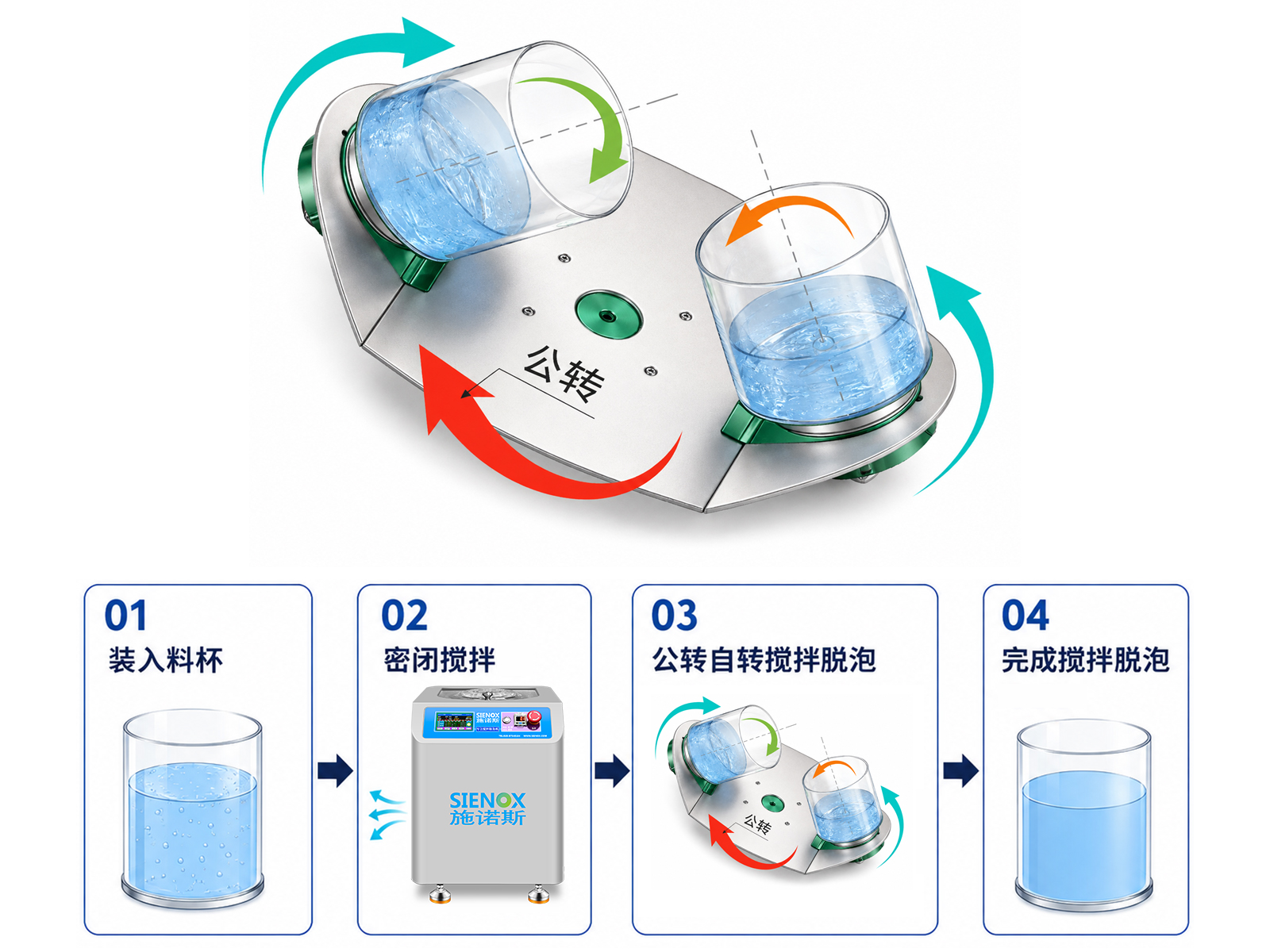 |
Technical Specifications at a Glance
Complete Technical Specifications Overview, Customizable on Demand
| Model | SIE‑CV300 |
| Mixing Capacity | 0–300 mL (standard container) * Larger volume customizable |
| Container Type | Test tube / jar / cup; adapters for syringes & cartridges supported |
| Container Quantity | 1 or 2 jars (user‑selectable) |
| Max Speed | 0 – 3000 RPM (stepless adjustable) |
| Revolution / Rotation Ratio | Fixed planetary ratio |
| Vacuum Level | Optional: –98 kPa / -100 kPa |
| Control System | Touch screen, stores up to 100 recipe sets |
| Power Supply | 220V, 50/60Hz (110V US/JP standard customizable) |
| Dimensions(W×D×H) | 510 × 430 × 500 mm |
| Net Weight | Approx. 95 kg |
| Certifications | CE, ISO9001, RoHS Compliance |
Our Partners
Trusted by leading industrial manufacturing clusters and advanced university laboratories worldwide
FAQ - Frequently Asked Questions
Answers to common questions about product performance and everyday process selection
-
What is the working principle of a centrifugal defoaming machine?
Principle of centrifugal defoaming machine: The bubbles are released by the downward principle of gravity.
-
How is the after-sales service?
The company has professional after-sales service personnel, 24-hour dedicated service, and one-on-one technical support to solve your worries.
-
Why choose SIENOX?
There are many reasons for choosing SIENOX, and the following are some of the main reasons:
1. Professionalism: Our team consists of a group of professional individuals with rich experience and knowledge in their respective fields. We not only understand industry trends and best practices, but also provide practical and feasible solutions.
2. Service quality: We focus on customer needs and satisfaction, and are always committed to providing high-quality services. We not only respond quickly to customer needs, but also provide customized services according to their requirements.
3. Reliability: We adhere to the principles of integrity and professionalism, always adhering to commitments and agreements. Our work methods and deliverables comply with industry standards and best practices, enabling our clients to trust us.
4. Innovation: We continuously explore new methods and tools to provide better services and meet customer needs. We encourage innovation and experimentation, and are willing to accept challenges and change.
5. Cost effectiveness: We provide cost-effective services that not only help customers save costs, but also improve efficiency and productivity. We always prioritize the interests of our customers and provide them with the best solutions.
6. Teamwork: We believe in the power and value of teamwork, and our team members support, collaborate, and respect each other. We establish close cooperative relationships with customers, partners, and other stakeholders to achieve common goals.
The above are just some of the reasons for choosing us. We believe there are many other advantages and values that can be provided to customers. If you are looking for a professional, reliable, and high-quality service provider, we look forward to working with you.
-
How does the stirring and defoaming machine work?
The SIENOX stirring and defoaming machine performs defoaming through centrifugal force at revolution and stirring through shear force formed by revolution and rotation,
Assisted by a vacuum pump to extract gas and achieve a vacuum state, removing nanoscale tiny bubbles. No contact with materials, no secondary pollution, and no secondary waste.
-
What is the function of a defoaming machine?
A defoaming machine is a device used to remove bubbles from liquids. Its function is to assist in the liquid mixing, reaction, coating, printing, infusion and other process steps in the production process, avoiding the generation of bubbles and their impact on the final product. In many industrial and laboratory environments, removing bubbles is essential as they may have a negative impact on product quality, such as affecting surface tension and stability. Defoaming machines typically use various techniques such as vibration, ultrasound, centrifugation, etc. to achieve effective bubble removal. It has a wide range of applications, including but not limited to semiconductors, solar energy, optics, biotechnology, materials science, etc.
Technical Specification List
Compare Models in the Same Series for Accurate Selection
| Model | SIE‑CV300 | SIE‑CV600 | SIE‑CV1000 |
| Mixing Capacity | 0–300 mL (standard container) * Customizable | 0–500 mL (standard container) * Customizable | 0–1000 mL (standard container) * Customizable |
| Container Type | Test tube / jar / cup; adapters for syringes & cartridges supported | Test tube / jar / cup; adapters for syringes & cartridges supported | Test tube / jar / cup; adapters for syringes & cartridges supported |
| Container Quantity | 1 or 2 jars (user‑selectable) | 1 or 2 jars (user‑selectable) | 1 or 2 jars (user‑selectable) |
| Max Speed | 0 – 3000 RPM (stepless adjustable) | 0 – 2000 RPM (stepless adjustable) | 0 – 2000 RPM (stepless adjustable) |
| Revolution / Rotation Ratio | Fixed planetary ratio | Fixed planetary ratio | Fixed planetary ratio |
| Vacuum Level | Optional: –98 kPa / –100 kPa | Optional: –98 kPa / –100 kPa | Optional: –98 kPa / –100 kPa |
| Control System | Touch screen, stores up to 100 recipe sets | Touch screen, stores up to 100 recipe sets | Touch screen, stores up to 100 recipe sets |
| Power Supply | 220V, 50/60Hz (110V US/JP standard customizable) | 220V, 50/60Hz (110V US/JP standard customizable) | 220V, 50/60Hz (110V US/JP standard customizable) |
| Dimensions(W×D×H) | 510 × 430 × 500 mm | 510 × 430 × 500 mm | 610 × 560 × 780 mm |
| Net Weight | 95 kg | 115 kg | 153 kg |
| Certifications | CE | CE | CE |
*** Specifications above are for typical models only. SIENOX provides custom‑tailored solutions according to customer requirements.
Multi‑Industry Solutions
Covers Mixing & Defoaming Applications for Typical Materials in Six Major Industries
Semiconductor / LED PackagingConductive silver adhesive, encapsulant, underfill adhesive, UV adhesive, insulating adhesive... |
New‑Energy BatteryCathode slurry, anode slurry, separator‑coating slurry, electrolyte, battery adhesive... |
Electronic ComponentsEpoxy adhesive, thermal grease, thermal gel, UV adhesive, sealant... |
Advanced Material R&DPhosphor powder, nanomaterials, polymer materials, alumina slurry, ceramic slurry... |
Medical DevicesMedical silicone, bio‑adhesive, ointment gel, dental materials, medical epoxy adhesive... |
3D‑Printing MaterialsPhotosensitive resin, UV resin, ceramic slurry, metal powder slurry... |

Comprehensive Equipment Operation Demo Videos
Gain intuitive, clear, dynamic insight into synchronous defoaming with planetary centrifugal force and high negative pressure.
Actual Test Results of Defoaming Process
Measured Processing Results for Six Typical Materials
Potting Adhesive |
Epoxy Resin |
Photoresist |
Silicone Rubber |
Cosmetic Essence |
Epoxy Resin + Powder Filler |
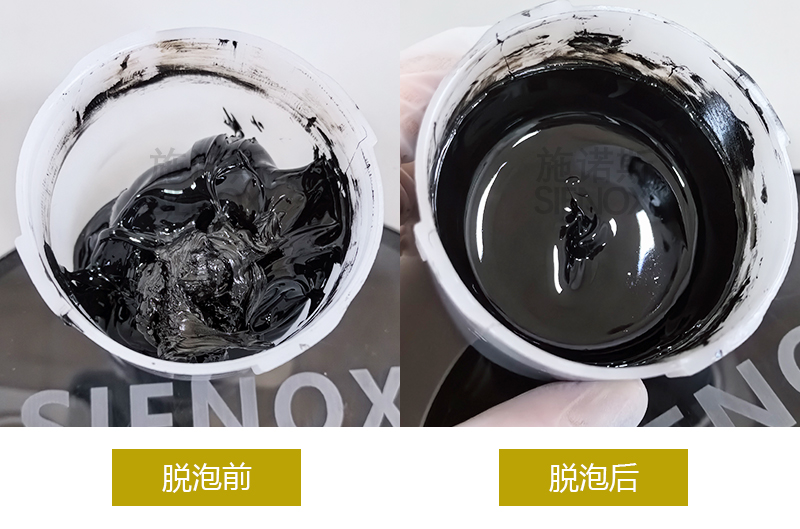
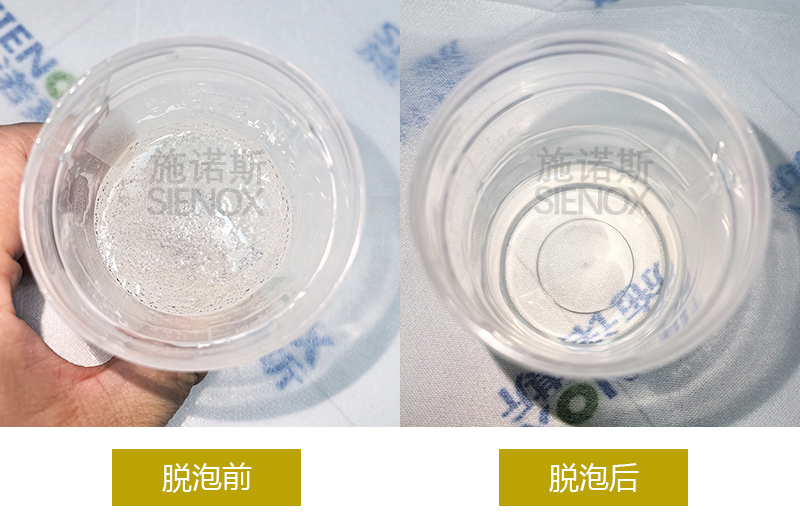
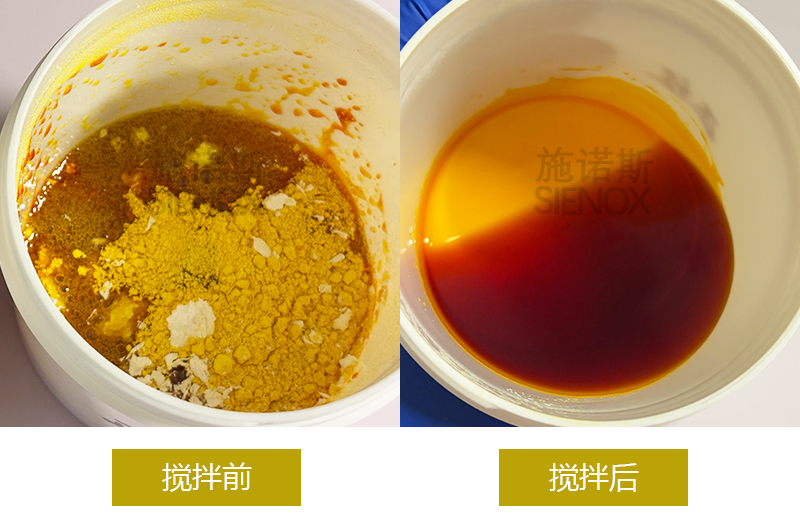
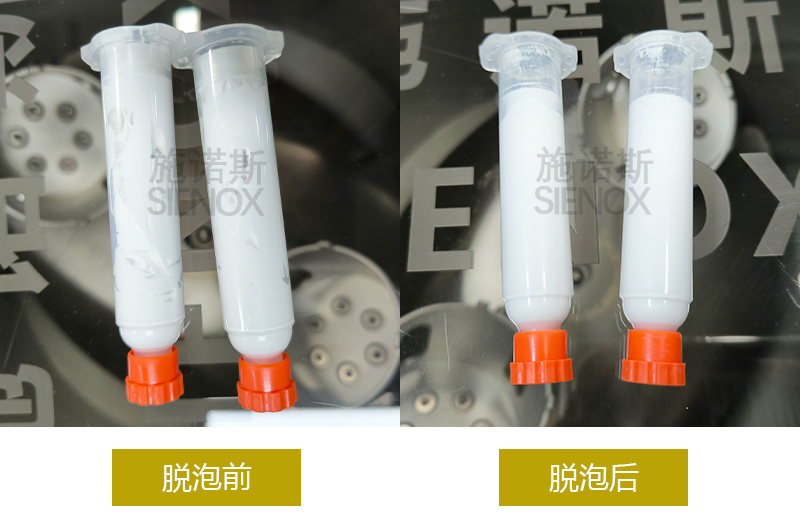
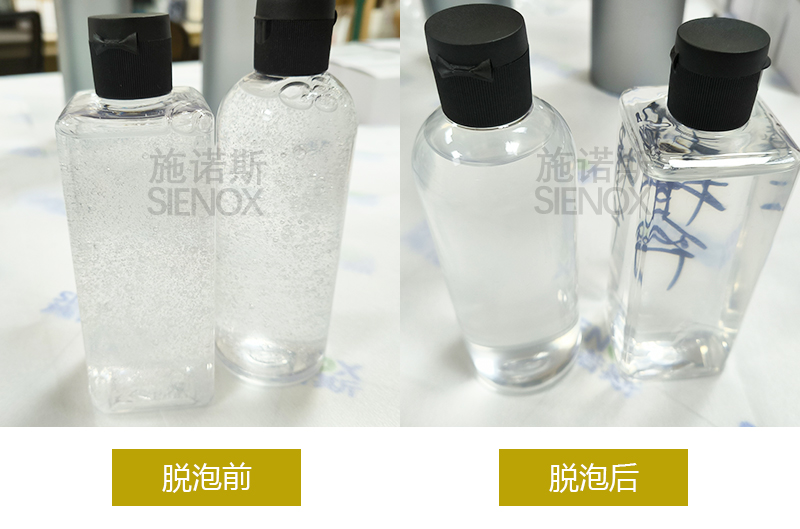
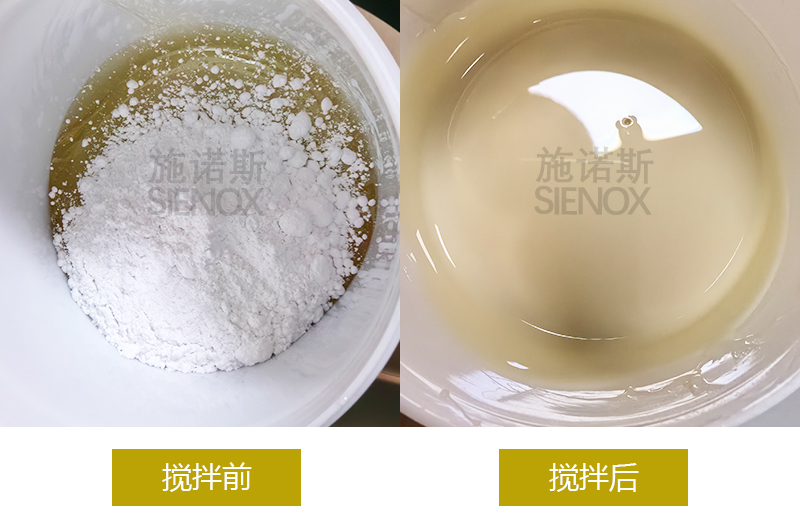
Measured Data Comparison
Before‑and‑After Defoaming Comparison for Three Representative Materials
| Material Type | Status Before Treatment | After CV300 Treatment |
| Silver Paste | Visible bubbles cover the paste surface. Silver powder distributes unevenly with obvious agglomeration and sedimentation. | Smooth and dense paste surface. Silver powder disperses uniformly without agglomeration. Good fluidity and stable electrical‑conductive performance. |
| Battery Cathode Slurry | Large amount of internal bubbles, poor fluidity. Stripes and pinholes occur during coating. | Uniform and free‑flowing slurry with no residual bubbles. Flat coating surface and consistent coating thickness. |
| Epoxy Adhesive (AB‑Glue) | Dense micro‑bubbles inside mixed adhesive with milky turbidity. Uneven surface after curing. | Transparent and clear adhesive without visible bubbles. Smooth surface after curing, dense cross‑section free of voids. |
* Internal laboratory test data. Actual improvement varies with material formulation. Contact sales for real customer references.
Customer Delivery & Application Cases
Rooted in manufacturing frontlines, empowering benchmark production lines and key national research institutions across diverse industries.
Stirring & Defoaming Solution for Powders and Fluids |
AB Structural Adhesive Mixing & Defoaming Solution |
High-Viscosity Colloid & Phosphor Material Mixing and Defoaming Solution |