

Vacuum Defoaming Mixer

TEL:18925129293


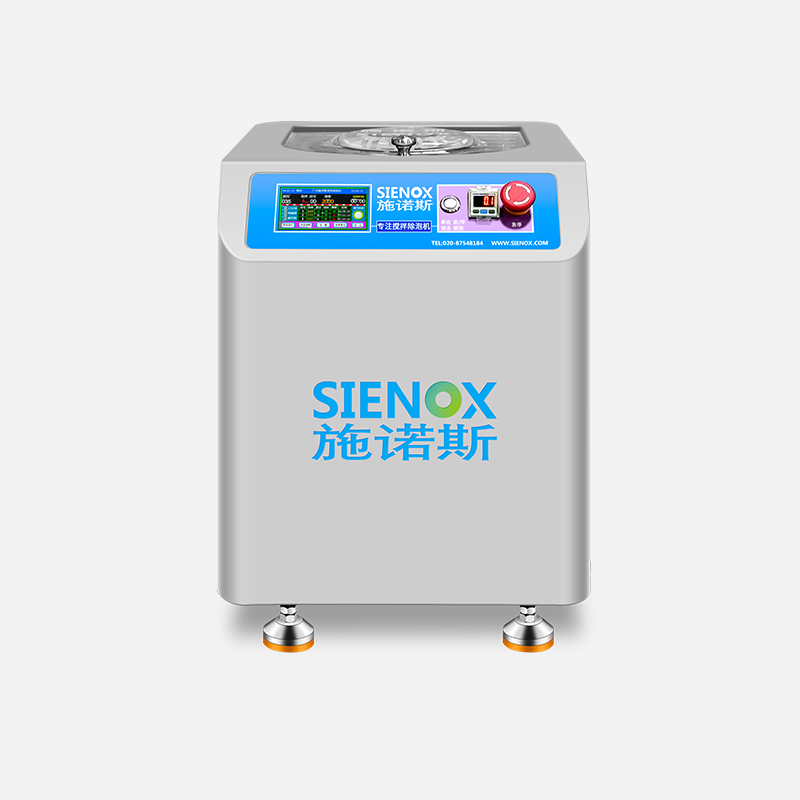
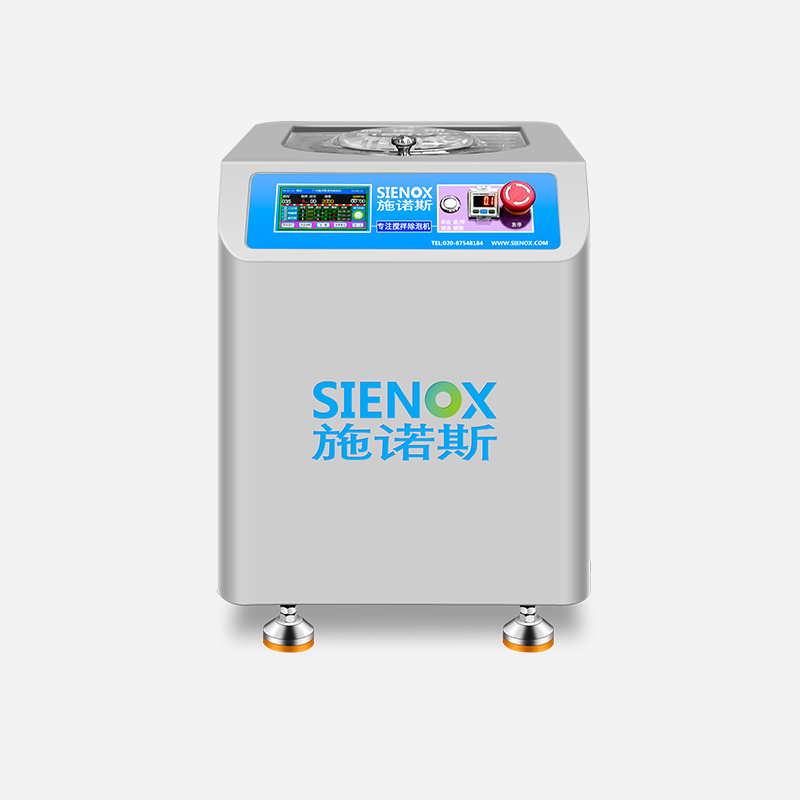
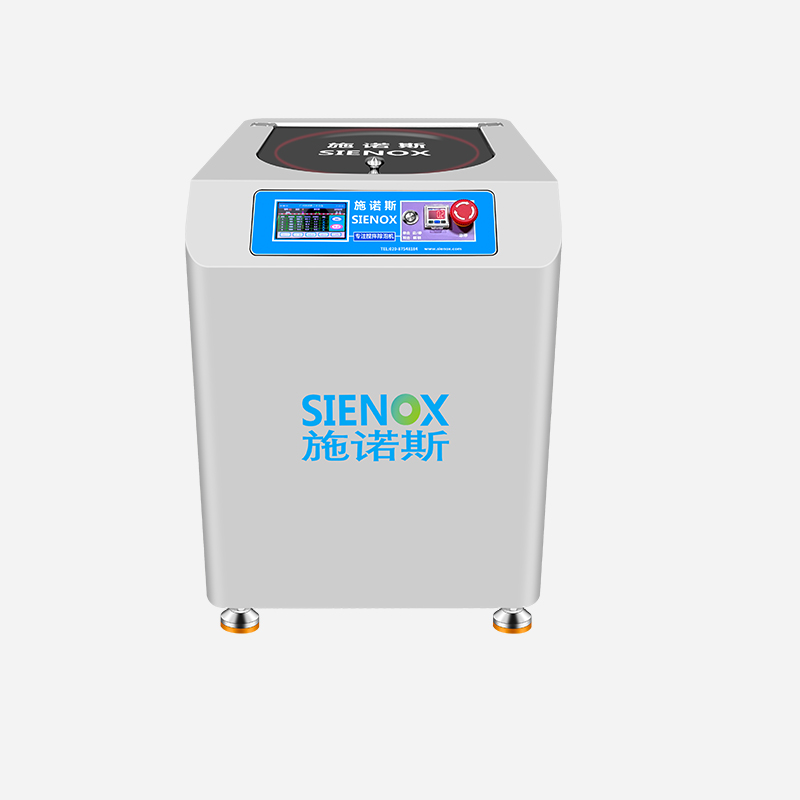
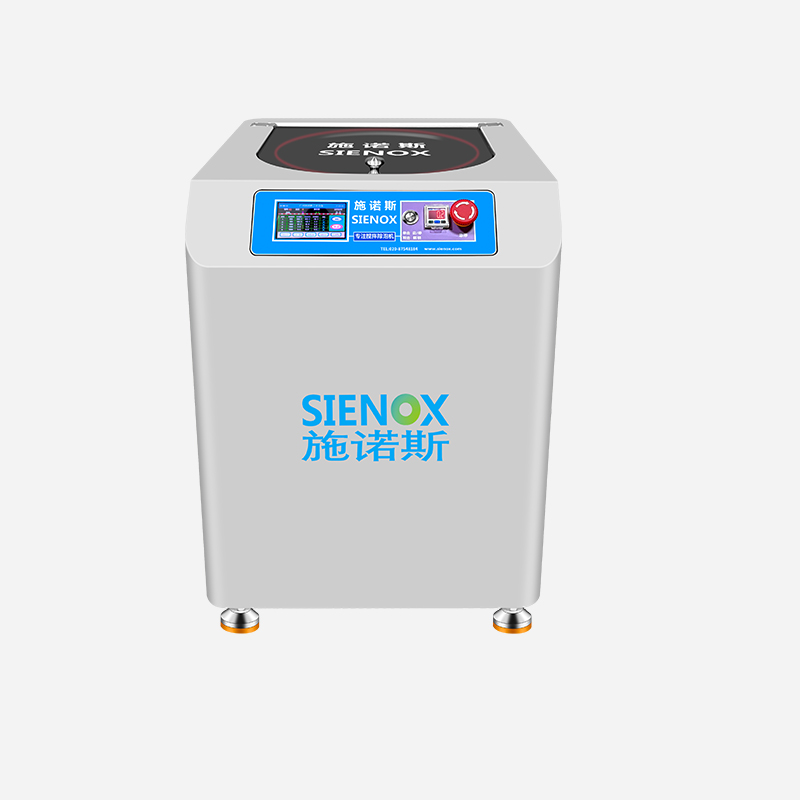
SIENOX Planetary Vacuum Mixer‑Defoamer SIE‑MIX90
Vacuum Defoaming Mixer · Nano‑Scale Bubble Removal
Revolution‑rotation centrifugal mixing + high‑vacuum simultaneous defoaming — 99.9% nano‑scale bubble removal
The SIE‑MIX90 planetary mixing‑defoaming unit handles 0‑1000 mL mixing and defoaming. Dual‑power revolution‑rotation delivers consistent density, uniform dispersion and clean defoaming for medium‑high‑viscosity materials in pilot‑scale production. Customization and one‑stop solutions are available.
✓ CE Certification ✓ FC Certification ✓ ISO9001 Quality System ✓ RoHS Compliance ✓ Custom voltage (110V/220V) supported
Why Must Microbubbles in Materials Be Eliminated?
Residual micro‑bubbles in materials directly affect finished‑product yield and performance
Electronic Component Manufacturing IndustryIn SMT mounting processes, micro‑bubbles inside solder paste cause solder voids and cold solder joints, reducing soldering reliability. Bubble expansion during reflow soldering triggers defects such as solder splashing and bridging. For precision components, excessive void ratio inside solder joints may lead to device failure under thermal cycling and lower overall board yield. | Medical Device Manufacturing IndustryBubbles in medical silicone and bio‑adhesives impair dosage accuracy and consistency and may cause medication deviation. Bubbles in ointments and gels result in uneven filling and inconsistent net content per unit. For implant‑grade materials, tiny bubbles may also bring risks to biocompatibility. | 3D Printing Manufacturing IndustryMicro‑bubbles in photosensitive resin form defect spots on printed layers and weaken mechanical strength and surface quality of molded parts. During large‑volume printing, bubbles in resin generate visible streaks and pits on cured interfaces. Bubbles in metal powder slurries increase internal porosity of sintered parts and degrade final part density. |
✨ Dilemmas of conventional stirring methods: Manual stirring or ordinary impellers actively draw in air, generating more bubbles as stirring proceeds; static defoaming is time‑consuming with limited effectiveness. Hence, a "non‑contact" planetary mixing‑defoaming solution is required to separate bubbles while mixing via centrifugal force.
Why Choose MIX90
Three Core Features Cover Full‑process Requirements for Medium‑capacity Vacuum Defoaming
Large‑capacity Production1000 mL processing capacity meets pilot‑scale‑up and small‑batch production requirements in a single run. Dual‑cup design enables simultaneous processing of two materials or doubled throughput to improve production‑line efficiency. 2000 rpm rotating speed with fixed speed ratio ensures consistency and repeatability for batch processing. | Modular ExpansionOptional heating/cooling temperature control and MES networking system for flexible configuration according to process requirements. One unit covers multiple process scenarios from pilot verification to mass‑production introduction and reduces redundant equipment investment. Temperature‑control module fits heat‑sensitive and high‑viscosity materials; vacuum module improves micro‑bubble removal performance. | Stable & DurableUnique transmission design reduces vibration and noise. Balance sensor real‑time corrects operating eccentricity for stable and reliable long‑term batch operation. Imported core components deliver high durability, lowering maintenance frequency and operating costs. |
✨ The MIX90 integrates three core capabilities: large‑capacity processing, modular expansion and stable operation, making it an ideal device from pilot verification to small‑batch production.
Working Principle
Synchronous dual‑power revolution‑rotation enables one‑step mixing and defoaming
Step 1: Centrifugal Force Generated by Revolution The revolving disc rotates at high speed and generates strong centrifugal force for materials inside the container to drive full‑range material convection for macro‑mixing. Meanwhile, centrifugal force pushes low‑density bubbles toward the rotating axis to gather and escape. Step 2: Shear Force Provided by Rotation Containers rotate around their own axis to produce directional shear force, breaking agglomerated particles for micro‑dispersion. Precisely calculated revolution‑rotation speed ratio ensures full‑range efficient mixing; shear force thins bubble films and accelerates bubble rupture. Step 3: Vacuum‑assisted Enhancement Chamber pressure drops to ‑98 kPa to expand pressure difference inside and outside bubbles. Micron‑sized bubbles expand and burst rapidly. The vacuum system continuously exhausts gas to further improve material density. Synchronized revolution and rotation complete the full‑cycle "mixing → dispersion → defoaming" inside sealed containers. Optional vacuum module improves micro‑bubble removal performance. | 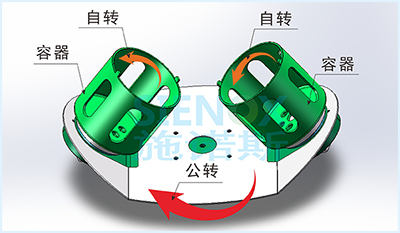 |
Technical Specifications
Complete Technical Specifications Overview, Customizable on Demand
| Model | SIE‑MIX90 |
| Mixing Capacity | 0–1000 mL (standard container) * Larger volume customizable |
| Container Type | Test tube / can / cup; adapters for syringes & cartridges supported |
| Container Quantity | 1 or 2 cans (user‑selectable) |
| Max Speed | 0 – 2000 RPM (stepless adjustable) |
| Revolution / Rotation Ratio | Fixed planetary ratio |
| Vacuum Degree | Standard: –98 kPa / Optional: –100 kPa |
| Control System | Touch screen, stores 100 sets of recipe parameters |
| Power Supply | 220V, 50/60Hz (110V US/JP standard customizable) |
| Dimension(W×D×H) | 610 × 560 × 780 mm |
| Net Weight | 153 kg |
| Certifications | CE, FC, ISO9001, RoHS Compliance |
Our Partners
Trusted by leading industrial manufacturing clusters and advanced university laboratories worldwide
FAQ - Frequently Asked Questions
Answers to common questions about product performance and everyday process selection
-
脱泡机的作用是什么?
脱泡机是一种用于去除液体中的气泡的设备。它的作用在于帮助生产过程中的液体混合、反应、涂布、印刷、灌注等工艺环节,避免气泡的产生和对最终产品的影响。在许多工业和实验室环境中,去除气泡是非常必要的,因为气泡可能会对产品质量产生负面影响,如影响表面张力和稳定性等问题。脱泡机通常采用各种不同的技术,如振动、超声波、离心等,以实现有效的气泡去除。它的应用领域广泛,包括但不限于半导体、太阳能、光学、生物技术、材料科学等。
-
售后服务怎么样?
公司拥有专业的售后服务人员,24小时专人服务,一对一提供技术支持,解决您的后顾之忧。
-
为什么要选择施诺斯?
选择施诺斯的原因有很多,以下是一些主要的原因:
1. 专业性:我们的团队由一群专业的人士组成,他们在各自的领域拥有丰富的经验和知识。我们不仅了解行业趋势和最佳实践,而且还能提供切实可行的解决方案。
2. 服务质量:我们注重客户的需求和满意度,始终致力于提供高质量的服务。我们不仅快速响应客户需求,而且还能根据客户的要求进行定制化服务。
3. 可靠性:我们以诚信和专业精神为宗旨,始终遵守承诺和协议。我们的工作方法和交付成果均符合行业标准和最佳实践,使得我们的客户能够信任我们。
4. 创新性:我们不断探索新的方法和工具,以提供更好的服务并满足客户的需求。我们鼓励创新和实验,并愿意接受挑战和改变。
5. 成本效益:我们提供高性价比的服务,不仅能够帮助客户节省成本,而且还能提高效率和生产力。我们始终以客户的利益为出发点,为客户提供最优的解决方案。
6. 团队合作:我们相信团队的力量和合作的价值,我们的团队成员之间互相支持、协作和尊重。我们与客户、合作伙伴和其他利益相关者建立紧密的合作关系,以实现共同的目标。
以上只是选择我们的部分原因,我们相信还有很多其他的优点和价值可以为客户提供。如果您正在寻找一家专业、可靠、高质量的服务提供商,我们非常期待与您的合作。
-
搅拌脱泡机的工作原理?
施诺斯搅拌脱泡机通过公转的离心力进行脱泡,通过公转与自转形成的剪切力进行搅拌,
再辅助以真空泵抽取气体以达到真空状态,去除纳米级微小气泡。 不接触物料,无二次污染,无二次浪费。
-
施诺斯能提供工程咨询技术服务吗?
施诺斯能为广大客户提供全面的工程和现代化的咨询服务。施诺斯近二十年的搅拌经验,可以为你提供高效的咨询服务。
想要让搅拌机性能更上一层楼,提升系统的整体效能?我们有全面的咨询、工程以及现代化改造服务,为您量身打造解决方案。 在如今竞争激烈的全球化浪潮中,唯有不断创新、持续优化,才能始终跑在对手前面。您的生产工艺和产品日新月异,我们就为您提供最适配的混合技术。不管是新的产品参数,还是既有的工艺条件,我们都能对现有系统和搅拌设备进行全方位的检查与评估,挖掘其中潜藏的流程优化空间和机械性能提升潜力,并且帮您把这些改进切实落地。 要是您的搅拌设备已经跟不上时代步伐,能耗居高不下,或是维护成本让您头疼不已,那就别犹豫,我们的咨询、工程设计和现代化改造服务,就是为您排忧解难的良方。欢迎随时联系我们,携手开启高效生产新征程!
Technical Specification List
Full‑line standardized specifications for accurate process evaluation and equipment selection
| Model | SIE‑MIX60 | SIE‑MIXF301 | SIE‑MIX90 |
| Mixing Capacity | 0–300 mL (standard container) * Customizable | 0–300 mL (standard container) * Customizable | 0–1000 mL (standard container) * Customizable |
| Container Type | Test tube / can / cup; adapters for syringes & cartridges supported | Test tube / can / cup; adapters for syringes & cartridges supported | Test tube / can / cup; adapters for syringes & cartridges supported |
| Container Quantity | 1 or 2 cans (user‑selectable) | 1 or 2 cans (user‑selectable) | 1 or 2 cans (user‑selectable) |
| Max Speed | 0 – 3000 RPM (stepless adjustable) | 0 – 2000 RPM (stepless adjustable) | 0 – 2000 RPM (stepless adjustable) |
| Revolution / Rotation Ratio | Fixed planetary ratio | Freely adjustable | Fixed planetary ratio |
| Vacuum Degree | Standard: –98 kPa / Optional: –100 kPa | Standard: –98 kPa / Optional: –100 kPa | Standard: –98 kPa / Optional: –100 kPa |
| Control System | Touch screen, stores 100 sets of recipe parameters | Touch screen, stores 100 sets of recipe parameters | Touch screen, stores 100 sets of recipe parameters |
| Power Supply | 220V, 50/60Hz (110V US/JP standard customizable) | 220V, 50/60Hz (110V US/JP standard customizable) | 220V, 50/60Hz (110V US/JP standard customizable) |
| Dimension(W×D×H) | 510 × 430 × 500 mm | 510 × 430 × 500 mm | 610 × 560 × 780 mm |
| Net Weight | 95 kg | 115 kg | 153 kg |
| Certifications | CE, FC | CE, FC | CE, FC |
*** The above are typical models only, customized solutions are available upon customer requirements.
Multi‑Industry Solutions
Only partial application scenarios are shown. Free sample testing with your materials is welcome.
SMT Electronic ManufacturingSolder paste, red glue, flux, underfill adhesive, SMT adhesive |
Automotive ManufacturingStructural adhesive, sealant, thermal‑conductive silicone, primer, anaerobic adhesive |
PV ManufacturingSilver paste, aluminum paste, EVA film adhesive, silicone sealant, conductive adhesive |
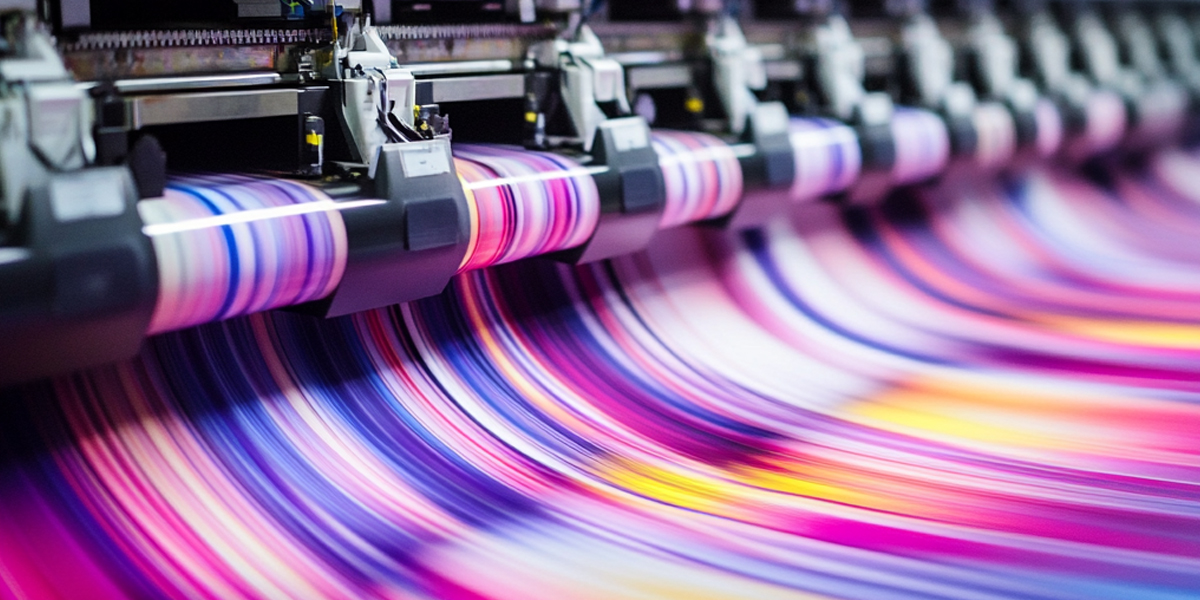
Printing & PackagingUV ink, water‑based ink, varnish, laminating adhesive, screen printing ink |
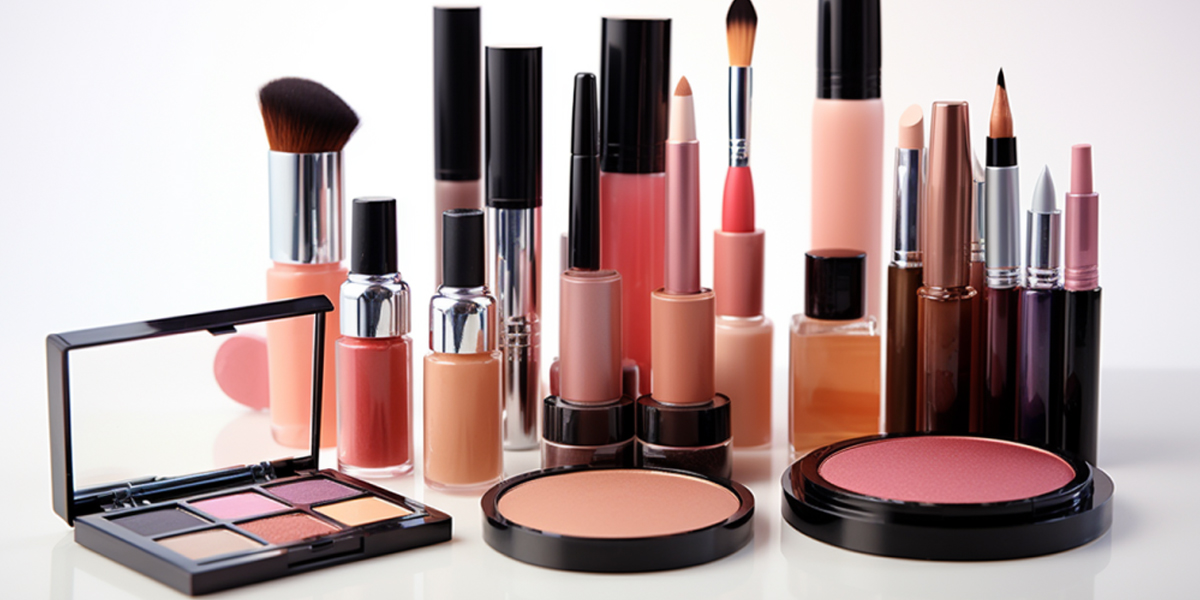
Cosmetics & Daily‑use ChemicalsLotion, cream, gel, foundation, sunscreen |
Ceramic ProcessingAlumina slurry, zirconia slurry, ceramic glaze, electronic ceramic slurry, ceramic binder |



Comprehensive Equipment Operation Demo Videos
Gain intuitive, clear, dynamic insight into synchronous defoaming with planetary centrifugal force and high negative pressure.
Measured Defoaming‑Process Performance
Measured Mixing & Defoaming Performance of Typical Materials
Lubricant |
Potting Adhesive |
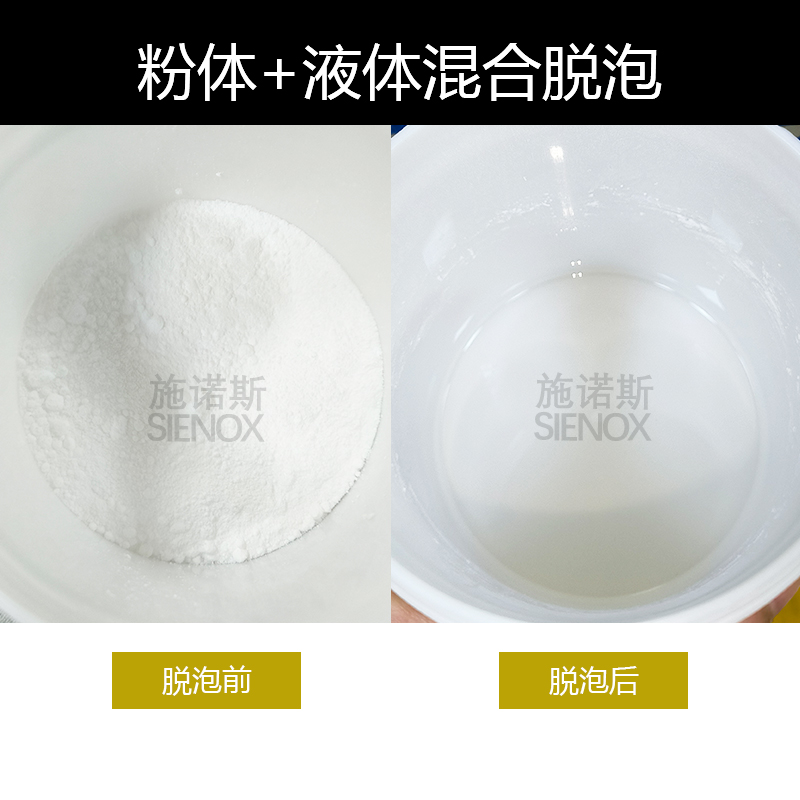
Powder + Adhesive |
AB Glue |
LED Materials |
Epoxy Resin + Powder |
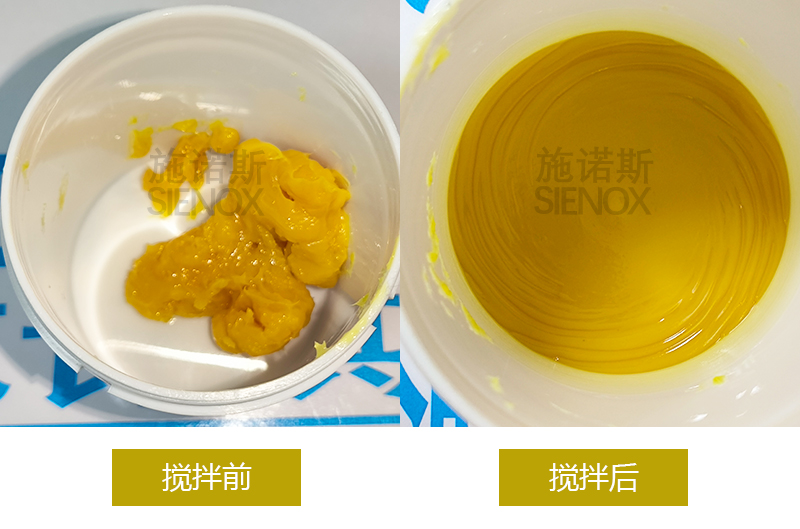
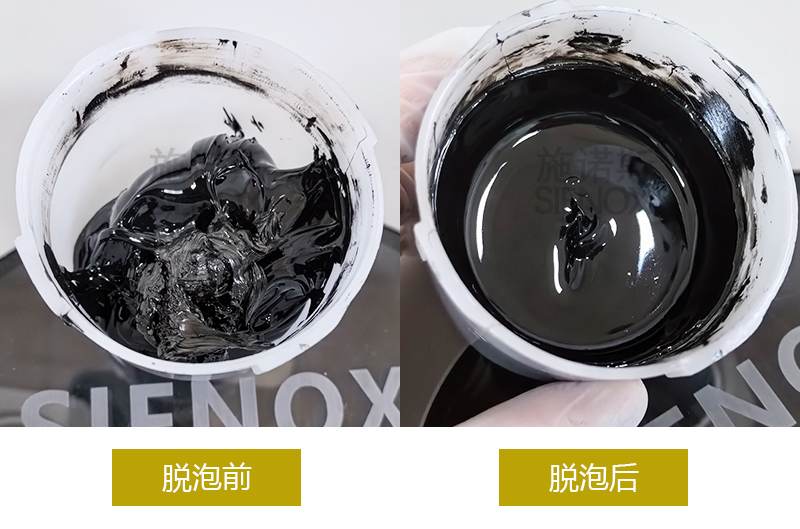
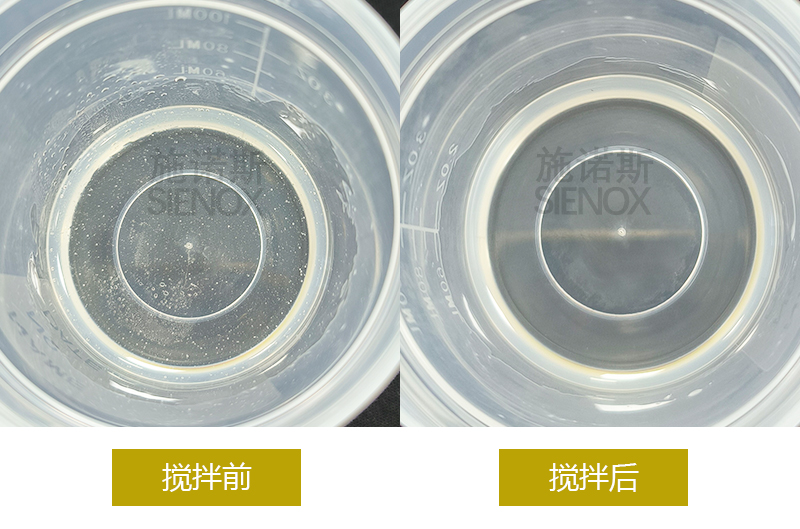
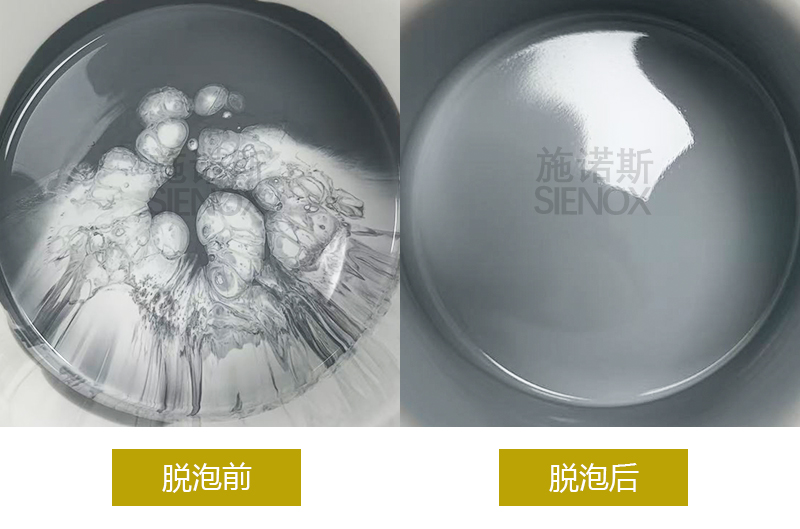
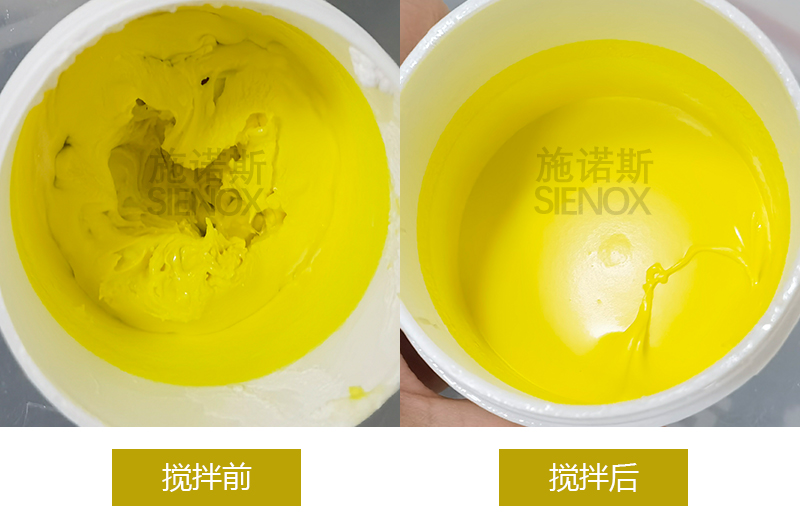
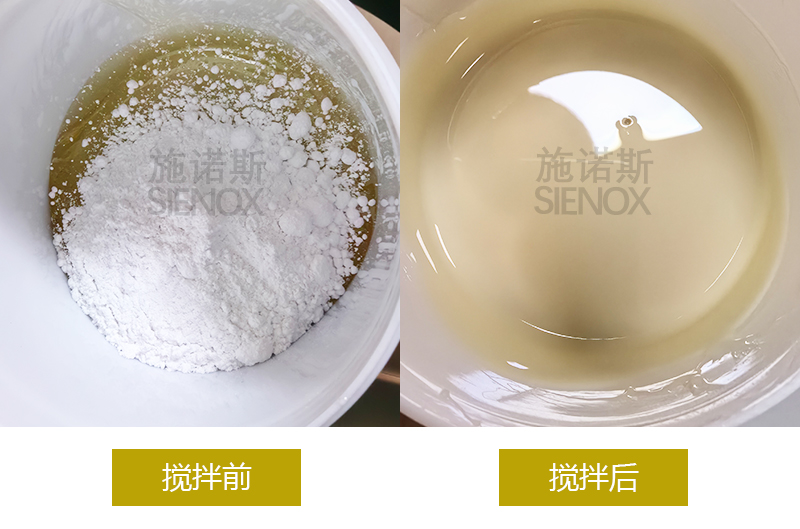
Measured Data Comparison
Material Defoaming Effect Comparison Before & After
| Material Type | Status Before Treatment | After MIX90 Treatment |
| Epoxy Resin (50,000cps) | Visible bubbles, internal voids after curing | Fully bubble‑free & transparent, 22% higher mechanical strength |
| Conductive Silver Paste | Filler sedimentation, unstable resistivity | Uniform filler dispersion, 40% lower resistivity |
| Lithium‑ion Battery Slurry | Coating pinholes, high electrode defect rate | Dense coating, 15% increase in cell energy density |
* Internal lab test data. Actual improvement varies with material formulation. Contact sales for real‑world customer cases.