


News

TEL:18925129293


What needs to be confirmed before defoaming solid electrolyte slurry?
date:2026-10-30author:小施The mass production timeline for all-solid-state batteries is drawing near, and the preparation process of solid electrolyte slurry has become a key item to confirm before project initiation for material manufacturers. Samsung SDI has reaffirmed its plan to mass-produce 900 Wh/L all-solid-state batteries in the second half of 2027, putting the sulfide composite electrolyte route back into focus. This article explains what needs to be verified during defoaming tests of solid electrolyte slurry using laboratory vacuum defoaming mixers from three perspectives: slurry characteristics, mass production progress and verification essentials.
Bubble issues in electrolyte slurry
Sulfide electrolyte powder features fine particles and large specific surface area, which tends to agglomerate when mixed with binders and solvents. Gas adsorbed on powder surfaces gets trapped inside the slurry and forms tiny bubbles. If bubbles are brought into the electrolyte layer, ion transport channels will be blocked and the interfacial impedance rises accordingly. Uncontrolled gas content will greatly increase the risks of pinholes and delamination in subsequent coating and film-forming processes. The process window must be locked at the formula development stage.
Mass production of all-solid-state batteries is approaching
News on October 29: Samsung SDI restated that it will start commercial delivery of 900 Wh/L all-solid-state batteries in the second half of 2027. The energy density is about 40% higher than that of current commercial liquid electrolyte cells (~650 Wh/L). Its first application scenarios target luxury vehicles and humanoid robots. The core is sulfide-based composite electrolyte material with room-temperature ionic conductivity on the order of 10⁻³ S/cm. As solid electrolyte moves from formula R&D to mass production, the demand for process verification of slurry preparation is increasing.
How laboratory equipment supports verification
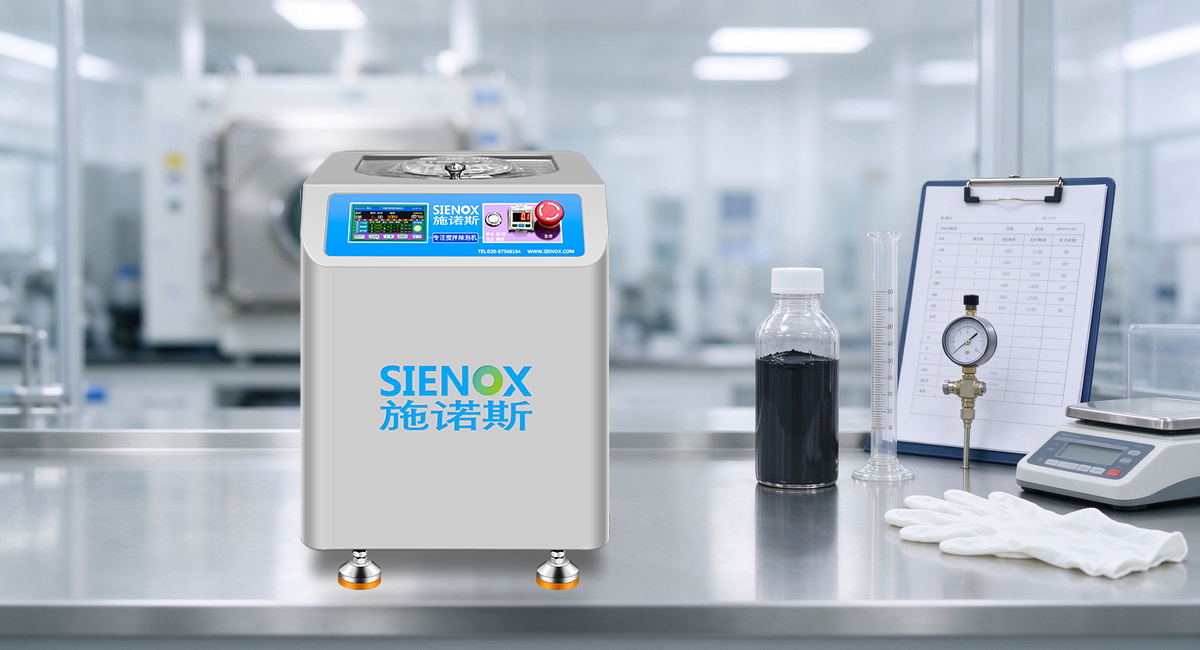
SIENOX MIX60 is a laboratory model for formula verification, with a 300 mL processing volume suitable for parallel evaluation of multiple formulas. It adopts a planetary revolution-rotation structure: rotational shear fully wets and disperses fine powder particles, centrifugal force from revolution pushes bubbles to the surface, and defoaming proceeds simultaneously under -98 kPa vacuum. It reaches a maximum speed of 2000 rpm, with temperature control and atmosphere protection available as custom options tailored to different systems. Its small capacity enables fast comparison of electrolyte formulas, and validated parameters can be scaled up to pilot and production machines.
Tested slurry shows no agglomeration or visible bubbles, with stable viscosity and gas content across batches. As solid electrolyte production lines move toward continuous operation, supporting verification for vacuum defoaming mixers on electrolyte slurry is intensifying. Material enterprises are advised to confirm in advance at the project initiation stage the suitability of laboratory vacuum defoaming mixers for formula development, as well as the supporting capacity of slurry defoaming mixers and lithium battery defoaming mixers for electrolyte slurry preparation. All conclusions are compiled from public industry data; actual test results shall be subject to customer sample verification.
Related recommendations
Centrifugal defoaming machine: An efficient tool for both laboratory and factory.

The extensive application fields of planetary defoaming machines.
How to remove bubbles from glue

The application of vacuum stirring defoaming machine in the defoaming process of silver paste materials.
Perhaps you still need....
行星式真空脱泡搅拌机 SIE-MIX1000plus
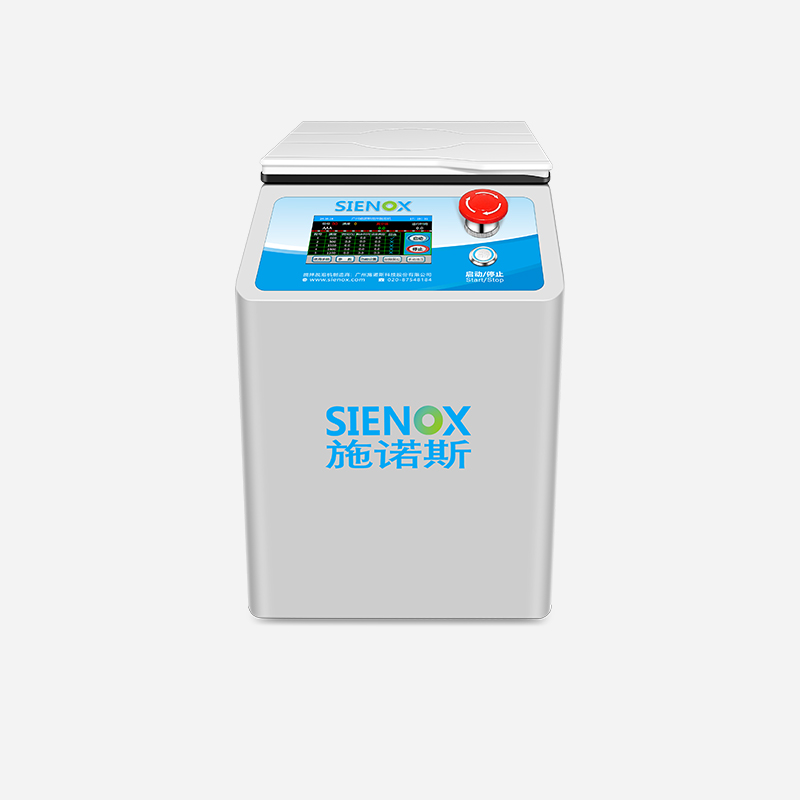
实验室行星式搅拌脱泡机 SIE-SV200
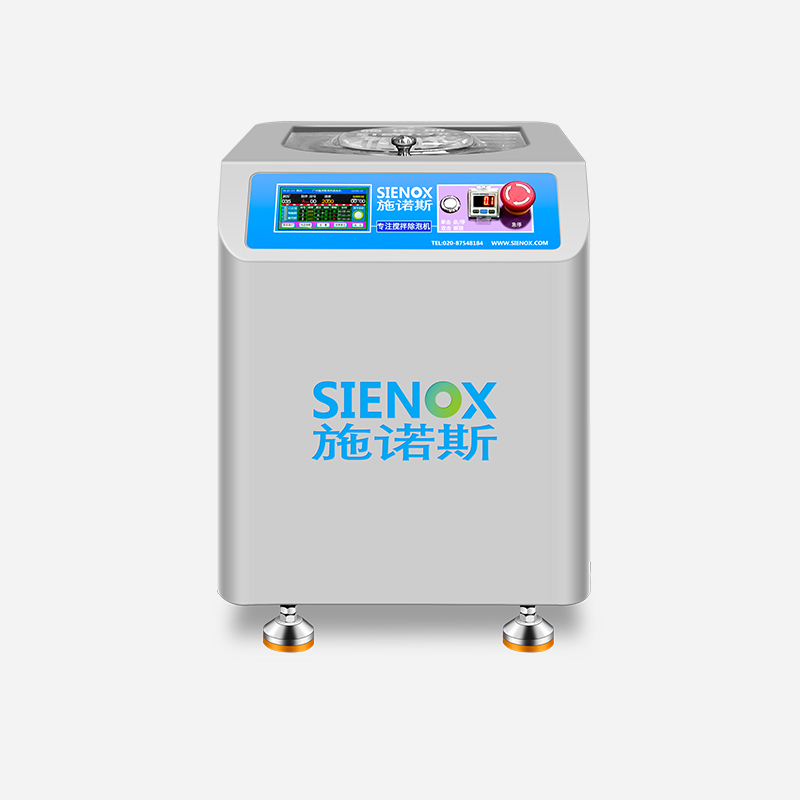
SIENOX行星式脱泡搅拌机 SIE-CV300
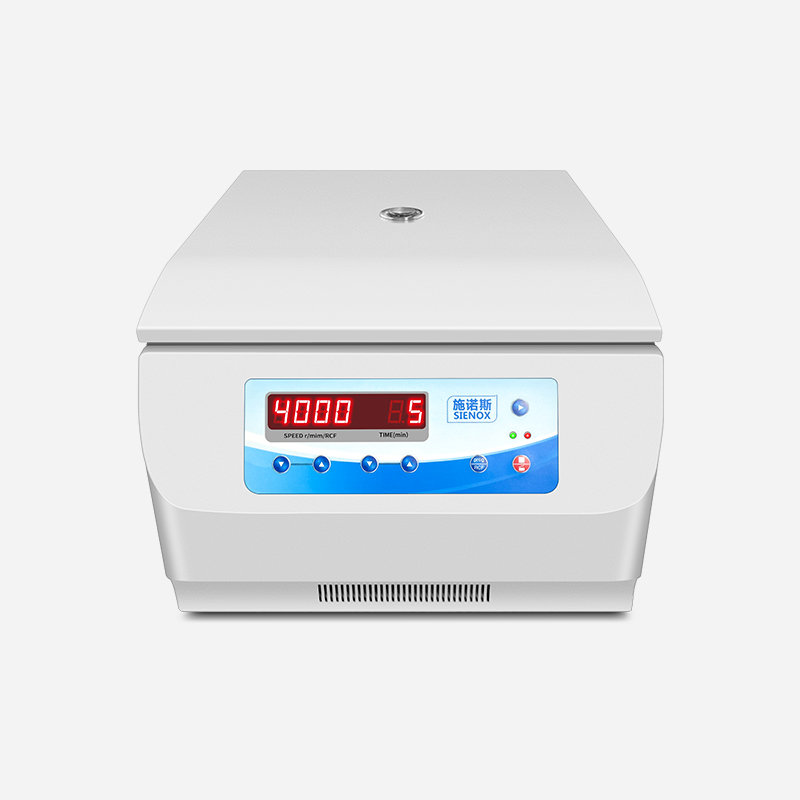
离心脱泡机 SIE-C006
About SIENOX
广州施诺斯(SIENOX),20年脱泡机设备研发与生产的源头厂家
超过1800种材料脱泡案例
纳米级脱泡,满足不同材料多段搅拌除泡需要,支持定制
资质齐全,荣获多项国家专利,联系我们可免费试样