


News

TEL:18925129293


How to Stabilize Defoaming of Sulfide Solid Electrolyte Slurry With Lithium Battery Slurry Defoaming Machines
date:2026-10-13author:小施On October 6, South Korean cathode material firm EcoPro BM announced the signing of a memorandum of understanding on sulfide-based all-solid-state battery material development with Samsung SDI. Targeting commercialization in 2027, the two parties carry out full-chain collaboration ranging from initial material evaluation to mass-production system construction. In early trading on October 12, the solid-state battery concept sector in A-share market rebounded amid fluctuations, with Dexin Technology hitting the daily limit. The news matters not only for electrolytes themselves. Between raw materials and battery cells lies the barrier of slurry processing. Front-end equipment such as lithium battery slurry defoaming machines becomes critical ahead of the 2027 milestone.
Sulfide electrolytes are highly sensitive to moisture and oxygen. Both electrode slurry and electrolyte slurry feature high solid content and prone particle sedimentation. Air bubbles generated during mixing directly impair ion conduction paths and raise interfacial impedance. Before solid-state batteries move from laboratory to pilot lines, manufacturers must mix slurry evenly and remove bubbles under high-cleanliness and hermetic conditions. This differs significantly from the traditional processing of lithium iron phosphate and ternary slurries, and puts stricter requirements on the tightness and vacuum performance of battery slurry mixers.
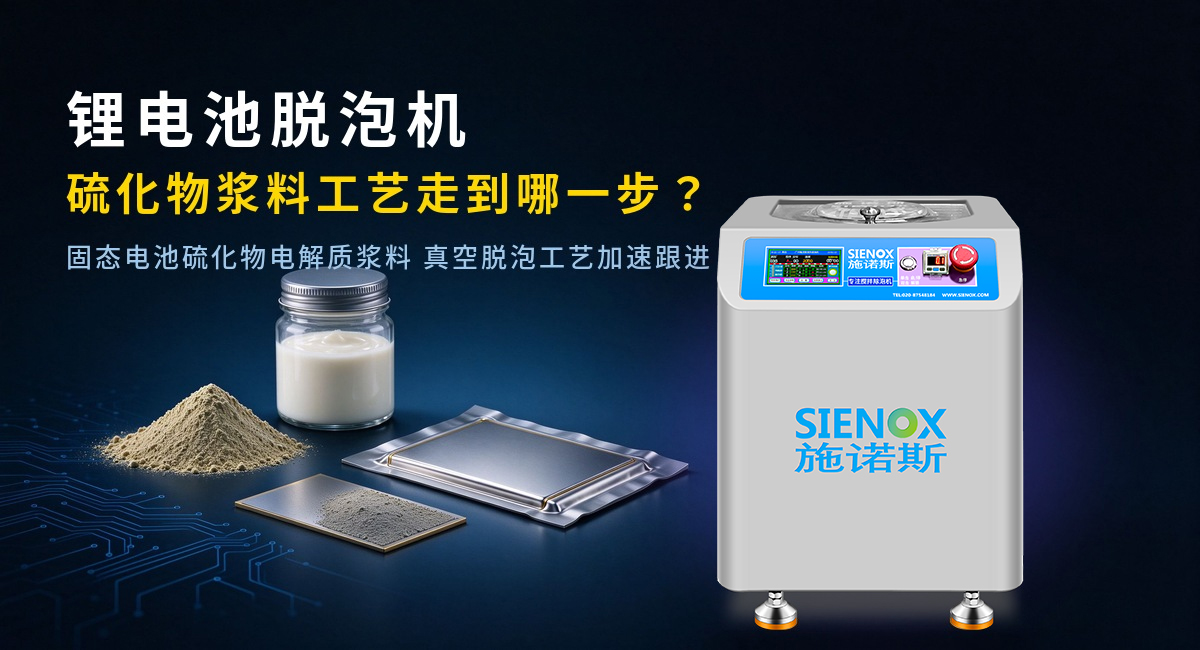
Solution Background: Stabilize Batch Consistency of Sulfide Slurry at Small-batch Stage
An enterprise developing sulfide all-solid-state battery materials needs to stably prepare composite slurry of sulfide electrolyte and cathode materials during material evaluation. The slurry must avoid contact with moisture and oxygen while accommodating high-solid-content powder within a short time frame, which can hardly be achieved by conventional open mixing.
Processing Challenges: Dual Constraints of High Solid Content and Low Moisture & Oxygen Level
Sulfide powder has large specific surface area and tends to agglomerate. Once slurry solid content increases, thixotropy becomes obvious. Ordinary mixing easily creates dead zones and entraps air during turnover. Meanwhile, the material is humidity-sensitive, so exposure time must be controlled throughout the whole process.
Why Choose SIENOX Equipment
SIENOX MIX1000PLUS adopts the planetary revolution and rotation structure commonly used in vacuum defoaming mixers. It operates under vacuum environment (-98KPa) with a maximum rotation speed of 2000rpm, and can complete dispersion and defoaming simultaneously inside a sealed chamber. Temperature control is available as a customized option configured according to temperature requirements of specific slurry systems. Planetary motion enables rapid homogenization of slurry under combined shearing from rotation and stirring from revolution, while internal bubbles are extracted under vacuum. The exposure time of materials to ambient air is greatly shortened.
Processing Procedure
Put proportionally weighed powder and solvent into the dedicated container of MIX1000PLUS, set rotation speed and vacuum degree, run revolution and rotation for several minutes and observe slurry status. The whole process is finished in a sealed vacuum chamber with mixing and defoaming running synchronously. No chamber opening for degassing in the middle of operation.
Processing Results
The treated slurry has no visible bubbles, with stable viscosity and solid content between batches, and can be directly sent to coating or electrolyte layer forming processes. The R&D trial cycle is greatly shortened and material loss is reduced. Relevant parameters are sorted based on public industry process data, and actual test data shall be subject to customer sampling tests.
The 2027 milestone for solid-state batteries is drawing near. The preparation of sulfide electrolyte slurry and electrode slurry will expand from pilot testing to larger-scale production, bringing higher and higher requirements for mixing and defoaming equipment. The technical route combining planetary revolution & rotation with vacuum defoaming shows clear adaptability under process constraints of bubble-free treatment and low moisture-oxygen exposure.
Related recommendations
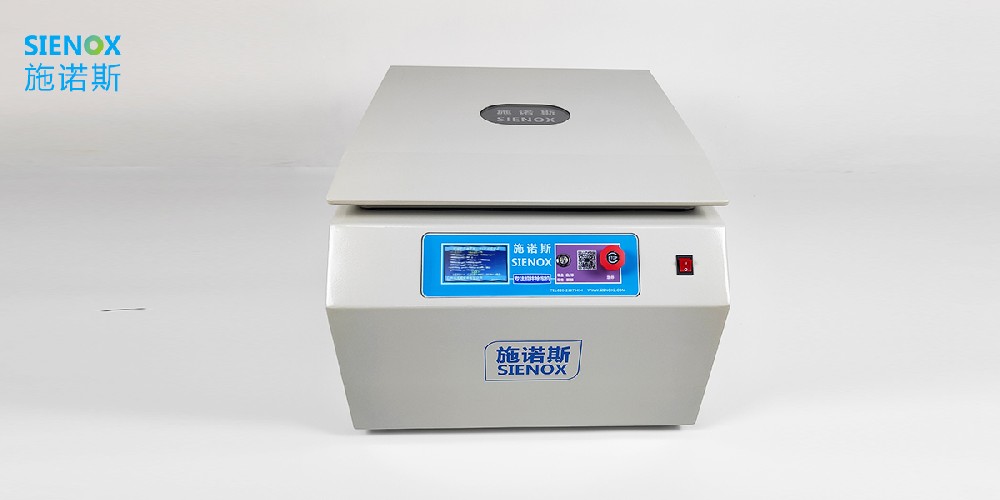
Centrifugal defoaming machine: An efficient tool for both laboratory and factory.

The extensive application fields of planetary defoaming machines.
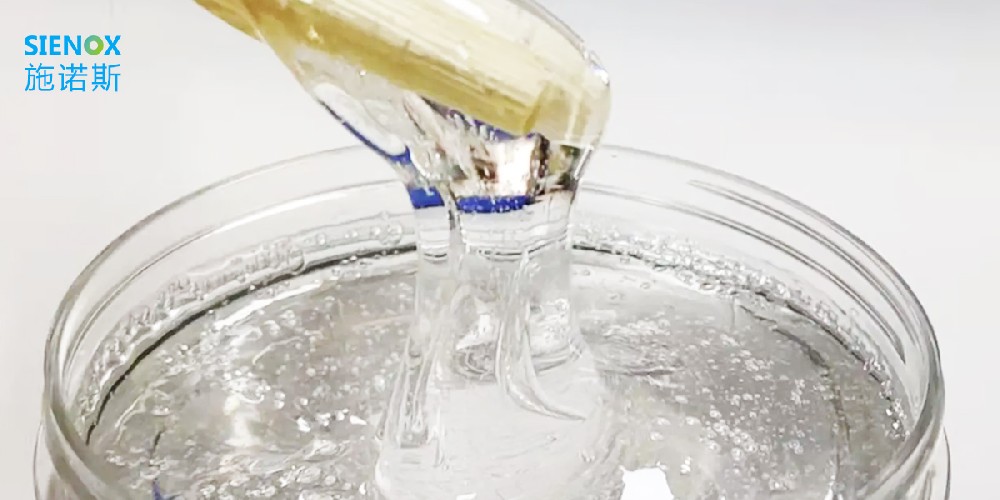
How to remove bubbles from glue

The application of vacuum stirring defoaming machine in the defoaming process of silver paste materials.
Perhaps you still need....
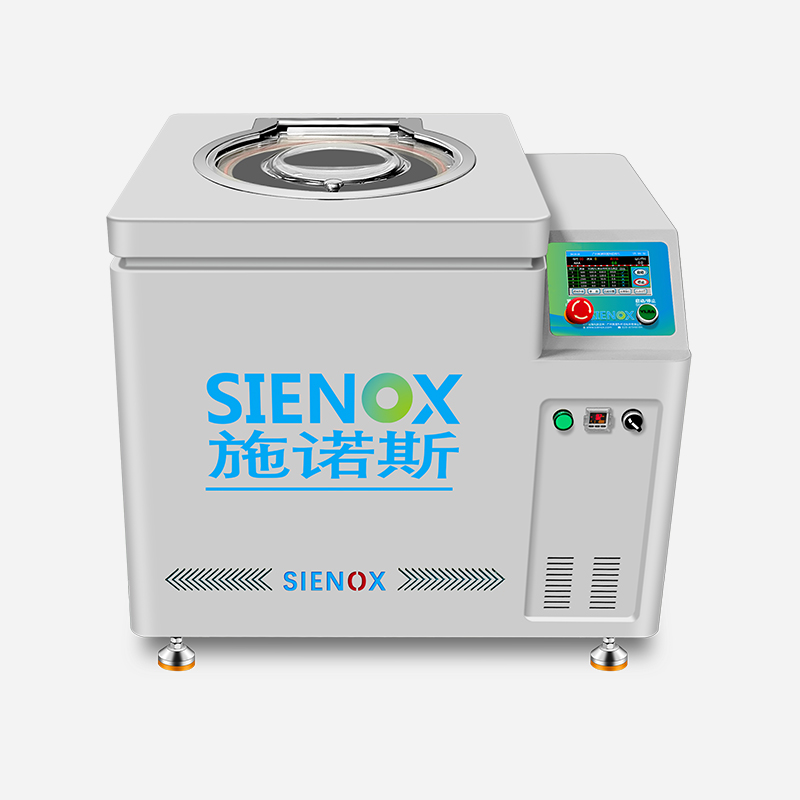
行星式真空脱泡搅拌机 SIE-MIX1000plus
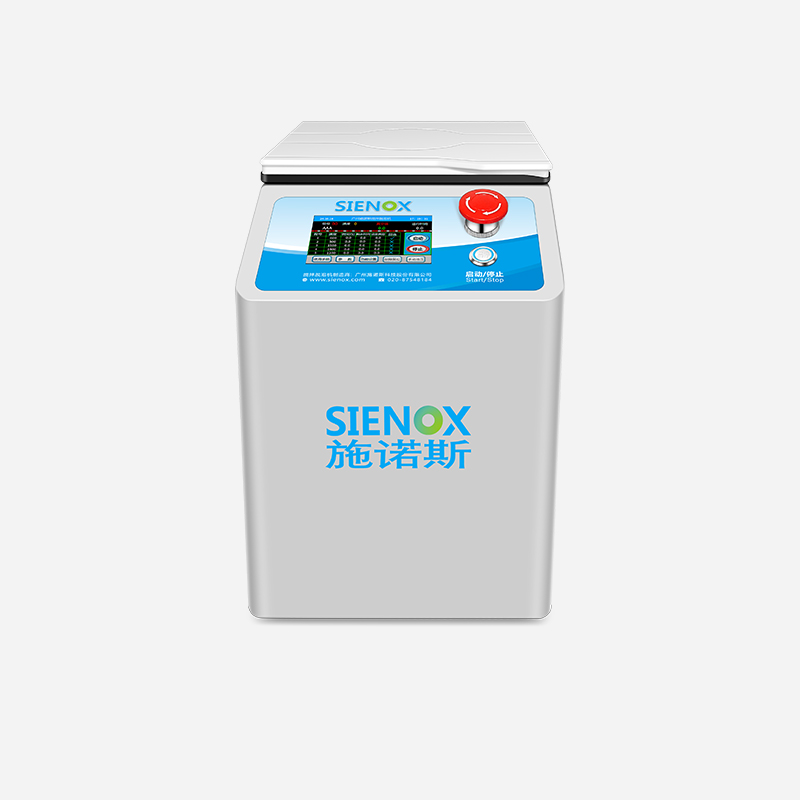
实验室行星式搅拌脱泡机 SIE-SV200
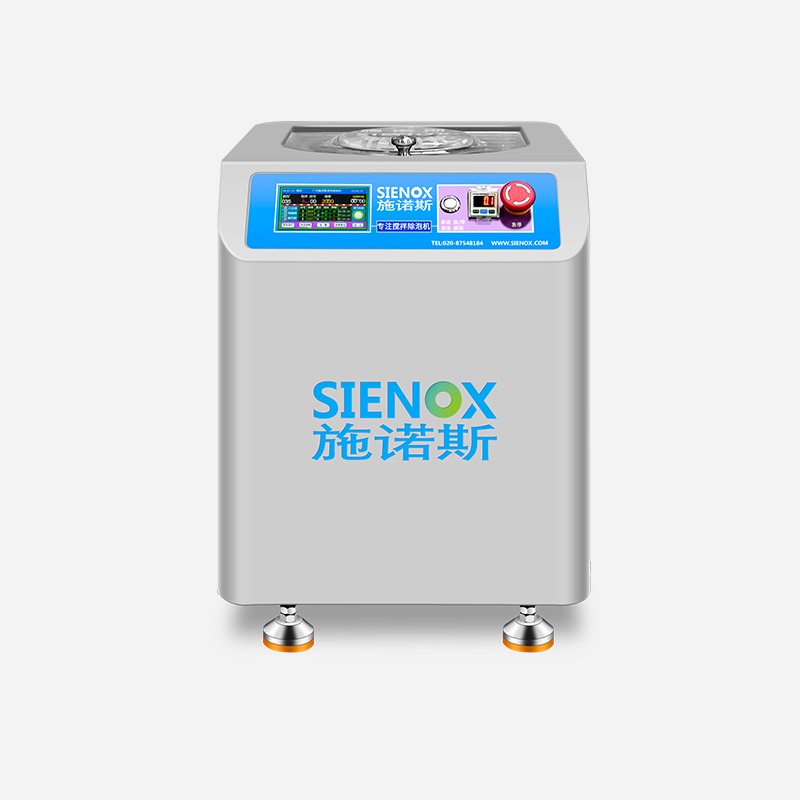
SIENOX行星式脱泡搅拌机 SIE-CV300
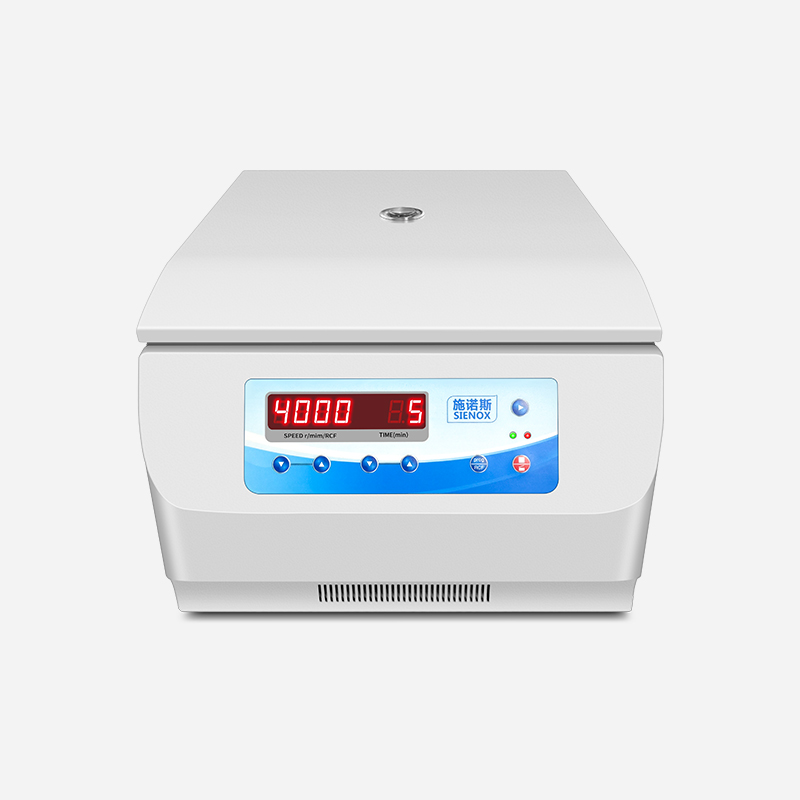
离心脱泡机 SIE-C006
About SIENOX
广州施诺斯(SIENOX),20年脱泡机设备研发与生产的源头厂家
超过1800种材料脱泡案例
纳米级脱泡,满足不同材料多段搅拌除泡需要,支持定制
资质齐全,荣获多项国家专利,联系我们可免费试样