


News

TEL:18925129293


How Solder Paste Mixing & Defoaming Machines Meet New Specifications for Sub-7nm Packaging
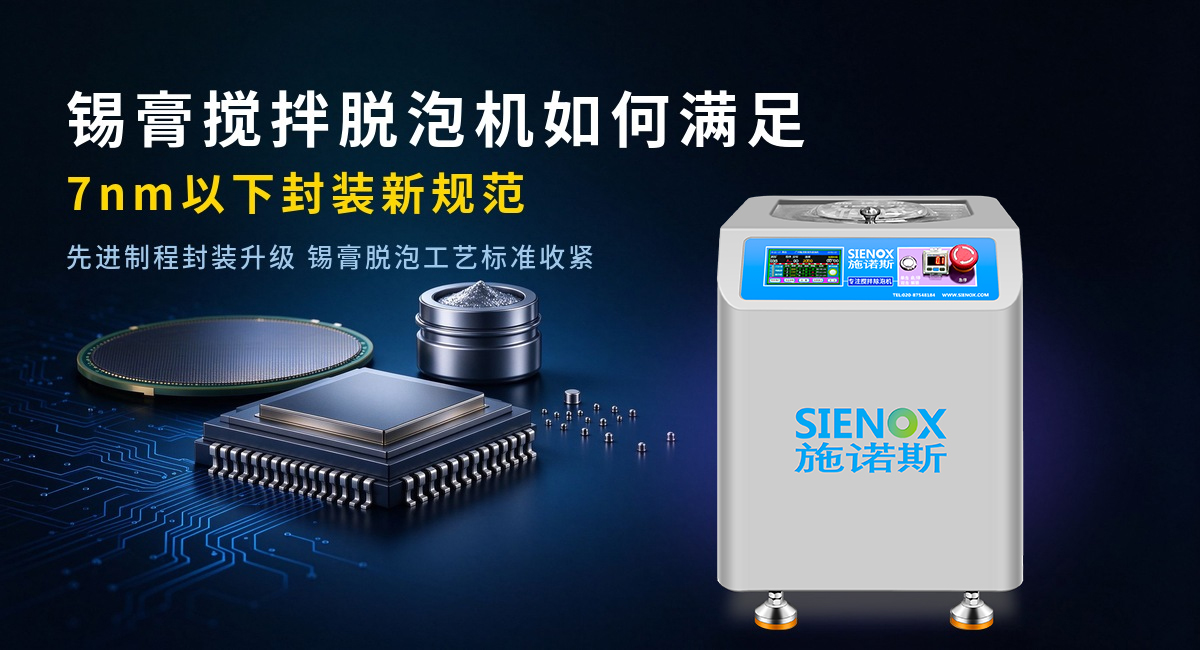
date:2026-10-13author:小施TSMC and SEMI recently jointly released the Chinese version of Green Packaging Interconnection Guidelines for logic chips below 7nm, specifying 12 key process requirements including low alpha particle contamination control, Cu-Sn-Ag lead-free bumps and graphene-reinforced underfill adhesive. 12 Chinese OSAT enterprises have completed preliminary certification, and the capacity ramp-up cycle is shortened to six weeks after certification. Items directly related to defoaming in the new specification — void ratio control of solder joints, stability of ultra-fine powder solder paste and bubble-free underfill adhesive — put rigid requirements on defoaming process before solder paste printing. How solder paste mixing and defoaming machines meet these indicators within the six-week certification window has become a common challenge for packaging material manufacturers and OSAT factories.
Solution Background
An enterprise engaged in packaging materials and OSAT process services needed to complete defoaming and mixing verification for lead-free solder paste samples within a six-week window to support bump fabrication and micro soldering process certification for a sub-7nm logic chip client. The new specification mandates a low void rate for Cu-Sn-Ag lead-free bump solder joints. Solder paste is proportionally mixed from solder powder and flux. Gas may precipitate due to temperature variation and vibration during storage and transportation. If microbubbles remain inside the solder paste before printing, voids will form on solder joints after reflow soldering, directly failing the interconnection reliability requirements of the new specification. The client’s original solder paste mixing equipment suffered trapped bubbles, rapid temperature rise and unstable batch consistency when processing ultra-fine powder solder paste. They hoped to achieve compliance within the certification period with SIENOX vacuum defoaming mixers.
Processing Challenges
There are three hard indicators for this process verification under the new specification. First, stability of ultra-fine solder paste. Solder powder for sub-7nm logic chip packaging features small particle size and large specific surface area. Air is easily wrapped during flux wetting of solder powder, which directly affects solder joint void ratio. Second, temperature control. Ultra-fine solder paste is sensitive to shearing and temperature rise; excessive stirring or temperature increase will change flux viscosity and impair printability and retest consistency. Third, batch-to-batch consistency. The new specification shortens post-certification capacity ramp-up to six weeks, which means the defoaming process must be stable and repeatable at small-batch verification stage. Temperature control is a critical process parameter for solder paste and can be customized to stabilize paste temperature. SIENOX can adapt to customers’ specific process temperature curves.
Why Choose SIENOX Equipment
SIENOX solder paste mixing defoaming machine adopts planetary revolution and rotation plus vacuum defoaming. Under compound motion of revolution and rotation, mild turnover is formed inside solder paste. Solder powder and flux are mixed uniformly without direct blade shearing, and trapped microbubbles are continuously extracted under vacuum, meeting the void ratio requirement of solder joints defined in the new specification. Targeting the six-week certification timeline, the MIX60 mixing defoamer is selected, with 300ml processing volume, maximum vacuum degree of -98KPa and rotation speed covering commonly used ranges for ultra-fine solder paste. Single-batch processing can be finished within several minutes. Equipped with customized temperature control module to stabilize solder paste temperature, it helps packaging material manufacturers and OSAT labs complete certification and verification rapidly in laboratory and small-batch trial production scenarios.
Processing Procedure
Technicians load fixed-quantity solder paste samples into dedicated disposable defoaming cups as required by the client, preset vacuum to -98KPa and set the ratio of revolution and rotation speed according to typical parameters for ultra-fine solder paste. After startup, the machine performs planetary mixing and defoaming synchronously inside the vacuum chamber. The liquid surface state is observed during operation, and the speed ratio is fine-tuned based on solder powder particle size and paste viscosity to avoid introducing new bubbles caused by excessive rotation speed. Custom temperature control module is configured in accordance with the client’s process curve to ensure defoaming within target temperature range and reduce the drift of flux performance that influences retest consistency. After each batch, samples are taken for printability and void rate testing. The next batch starts only after meeting the indicators of the new specification.
Processing Results
The processed solder paste shows good printability. Subsequent reflow soldering verification by the client proves the void rate meets the Cu-Sn-Ag bump requirements for sub-7nm packaging. It passed thermal cycling and reliability tests and satisfies interconnection specifications for sub-7nm packaging. The client later introduced the same model into small-batch production lines for defoaming verification and sample delivery of new-formula solder paste, finishing capacity ramp-up within six weeks after certification. With the implementation of Green Packaging Interconnection Guidelines on OSAT production lines, application scenarios of solder paste mixing defoaming machines and vacuum defoaming mixers in bump fabrication, micro soldering and pre-treatment of underfill adhesive will be further expanded.
Related recommendations
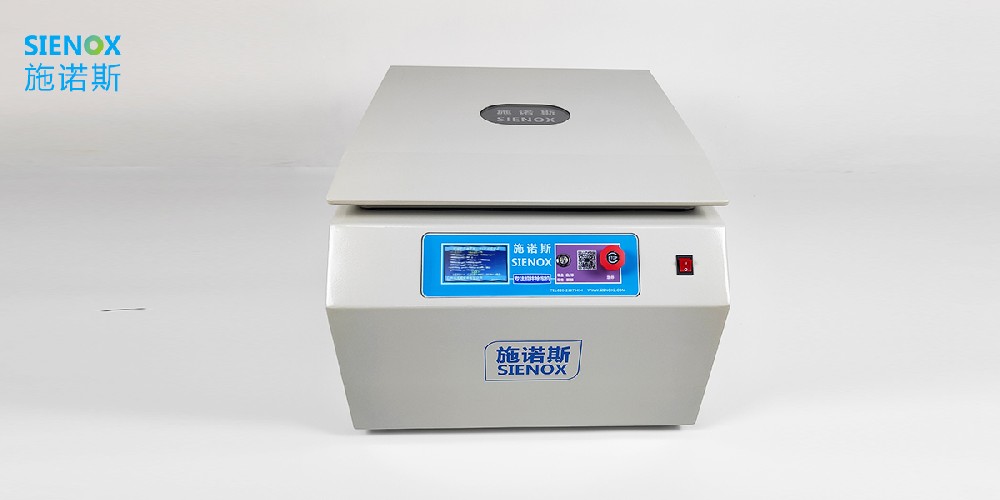
Centrifugal defoaming machine: An efficient tool for both laboratory and factory.

The extensive application fields of planetary defoaming machines.
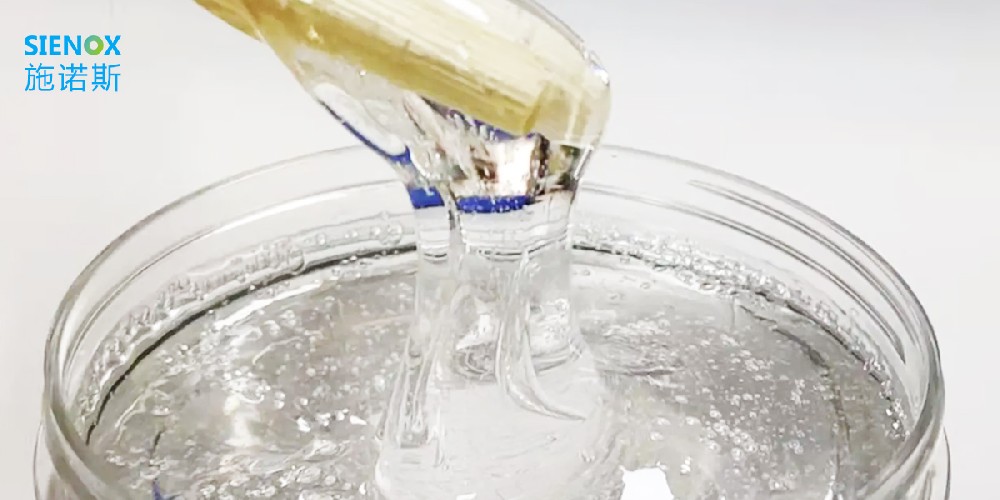
How to remove bubbles from glue

The application of vacuum stirring defoaming machine in the defoaming process of silver paste materials.
Perhaps you still need....
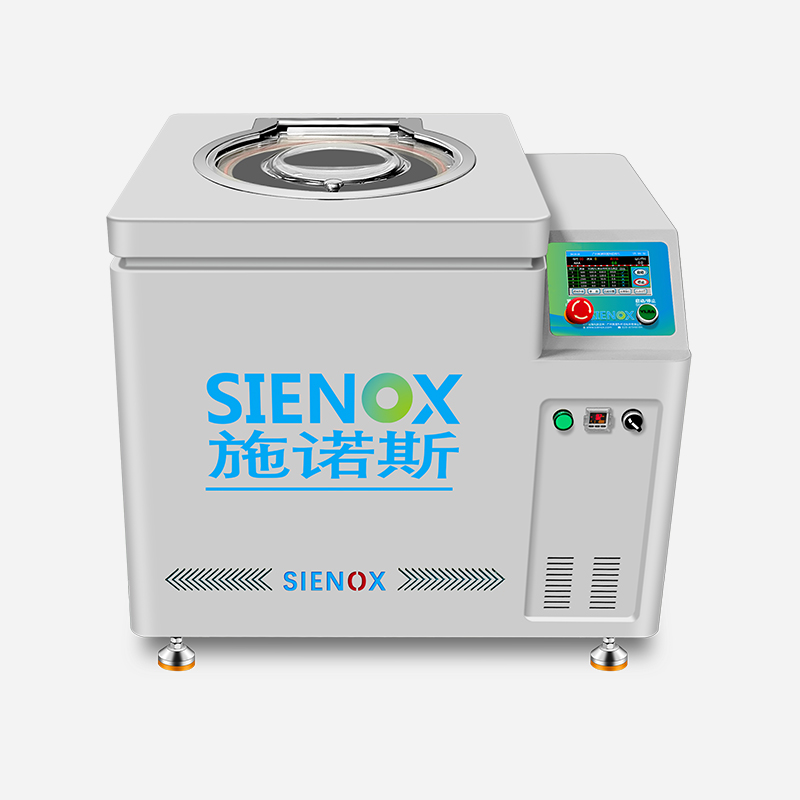
行星式真空脱泡搅拌机 SIE-MIX1000plus
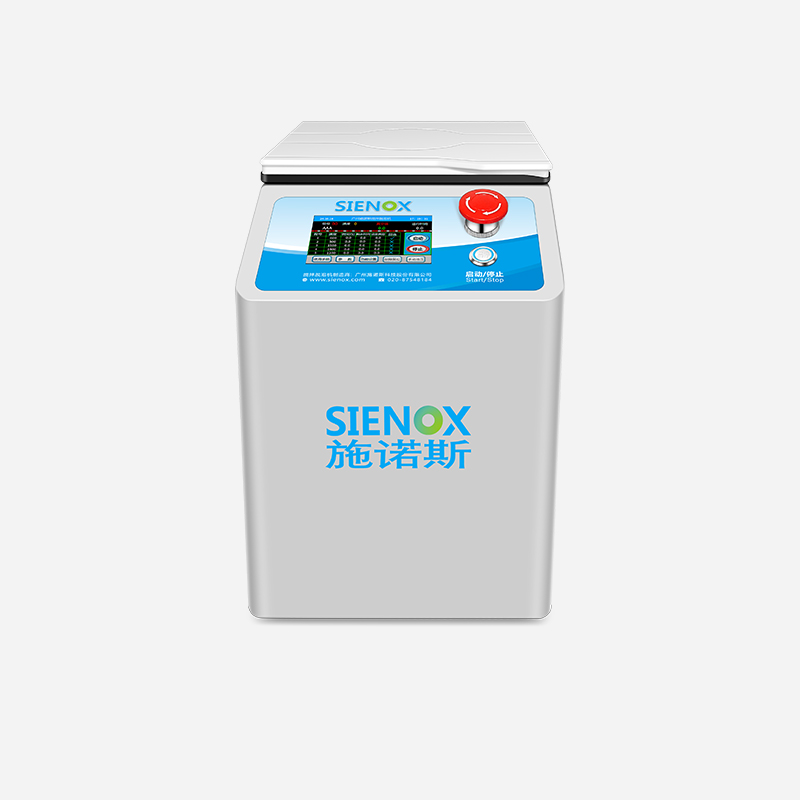
实验室行星式搅拌脱泡机 SIE-SV200
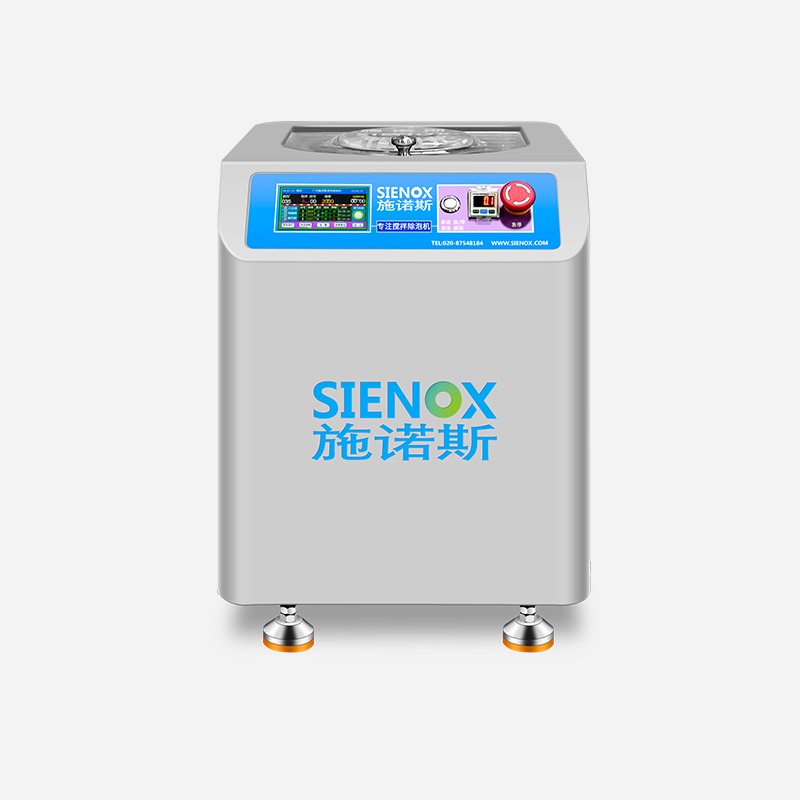
SIENOX行星式脱泡搅拌机 SIE-CV300
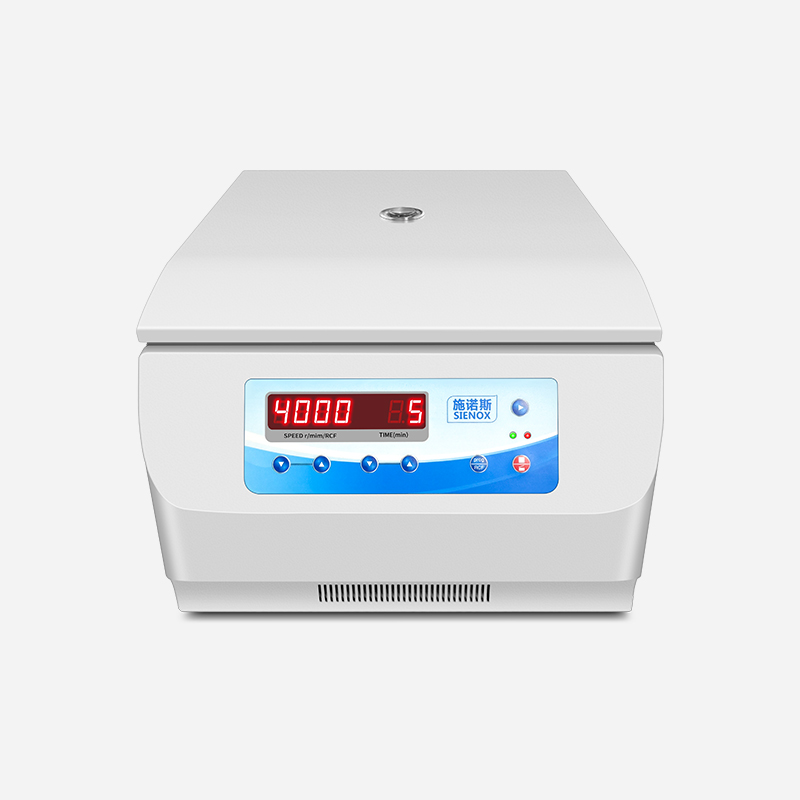
离心脱泡机 SIE-C006
About SIENOX
广州施诺斯(SIENOX),20年脱泡机设备研发与生产的源头厂家
超过1800种材料脱泡案例
纳米级脱泡,满足不同材料多段搅拌除泡需要,支持定制
资质齐全,荣获多项国家专利,联系我们可免费试样