


News

TEL:18925129293


How Lithium Battery Slurry Defoaming Machines Keep Pace With 400,000 Tons New Capacity Expansion
date:2026-10-13author:小施On October 8, the 400,000-ton annual lithium iron phosphate project of Xuzhou Xinrui Lithium Material Co., Ltd. under GCL Group officially started construction in Xuzhou, Jiangsu. With a total investment of 4 billion RMB, its construction period is only 11 months. Meanwhile, five domestic lithium iron phosphate projects released progress updates simultaneously, with a total planned capacity of approximately 1.32 million tons. From project startup to mass production takes less than one year. Cathode material enterprises must complete formula finalization and equipment verification on slurry pilot lines during the production line construction window. Whether lithium battery slurry defoaming machines can shorten the process setting cycle directly determines if the 400,000-ton capacity can ramp up on schedule.
Solution Background
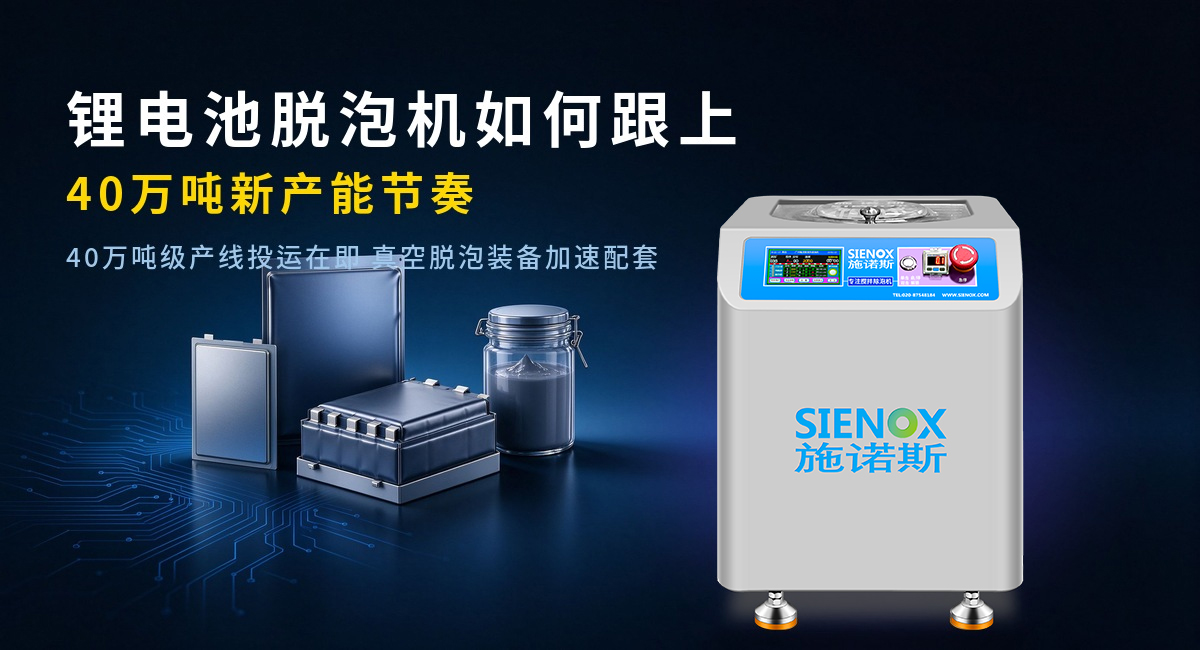
An enterprise producing lithium iron phosphate cathode materials built a new cathode slurry pilot line alongside the 400,000-ton cathode capacity project. It needed to finish formula verification, defoaming process confirmation and mass-production equipment selection for high-solid-content lithium iron phosphate slurry within the 11-month construction period. Cathode slurry is mixed from lithium iron phosphate, conductive agents, binders and solvents, then processed through coating, drying and calendering to make electrode sheets. Microbubbles remaining in slurry will form pinholes after coating and pits after drying, affecting areal density consistency of electrode sheets and cycle life of battery cells. The enterprise’s original dispersion equipment suffered long defoaming cycles, unstable batch performance and time-consuming cleaning during batch switching, which cannot support parallel verification of multiple formulas. They adopted SIENOX battery slurry mixers to complete pilot process development within a tight timeline.
Processing Challenges
Schedule pressure serves as the core challenge for this process verification. On one hand, the construction window for the 400,000-ton capacity is only 11 months. The pilot line has to carry out parallel verification for multiple solid-content gradients and formula schemes, and equipment changeover speed directly decides the verification schedule. On the other hand, lithium iron phosphate slurry has high solid content and high powder density. Its viscosity rises sharply with increased solid content, and bubbles wrapped by fine particles are difficult to escape. Agglomeration of conductive additives leads to uneven conductive network on local areas of electrode sheets. The feeding volume per batch in pilot stage falls between laboratory small tests and mass production, requiring equipment to balance processing efficiency and flexibility for batch switching. Temperature control is a key process parameter for cathode slurry and can be customized for the equipment. SIENOX can make adjustments according to clients’ specific temperature requirements.
Why Choose SIENOX Equipment
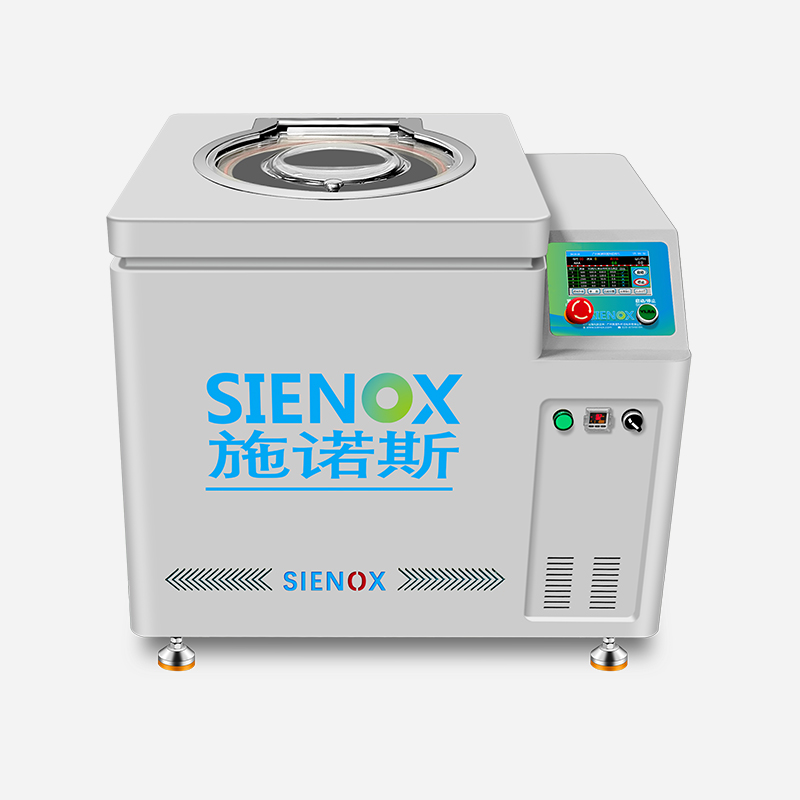
SIENOX adopts planetary revolution and rotation plus vacuum defoaming. While revolving, the container also rotates, forming macro tumbling and micro shearing inside slurry. Microbubbles within high-solid-content systems are continuously brought close to liquid surface and extracted under vacuum. No stirring blades immerse into the material, preventing new bubbles and secondary shearing damage to powder. To meet the tight schedule of this pilot line, the MIX1000PLUS vacuum mixing defoamer is selected. It has a processing volume of 1000ml, vacuum up to -98KPa and maximum rotation speed of 2000rpm, covering common parameter ranges for lithium iron phosphate slurry from pilot test to small-batch production. Disposable defoaming cup design enables fast cup replacement and cleaning. Multi-formula verification can proceed without long downtime, helping cathode material manufacturers catch up with the 400,000-ton capacity rollout in the process scaling stage.
Processing Procedure
Process technicians weigh lithium iron phosphate powder, conductive agent and binder according to the formula and pre-mix them inside the defoaming cup before installing the cup onto the machine. The vacuum degree is set to -98KPa, and the revolution-to-rotation speed ratio is configured for high-solid slurry. The machine completes planetary mixing and defoaming synchronously inside the vacuum chamber. To meet the schedule for parallel multi-formula verification, technicians arrange batches by solid-content gradient. Only the defoaming cup needs to be replaced for the next formula after each run, without deep equipment cleaning. Custom temperature control module is activated for temperature-sensitive formulas to finish defoaming within target temperature range and reduce waiting time for subsequent coating procedure.
Processing Results
The treated cathode slurry contains no obvious visible bubbles. Coated test sheets feature uniform areal density, and defects including pinholes and pits are reduced compared with original process. Batch-to-batch consistency of viscosity and solid content is improved. The process finalization cycle for single formula is shortened compared with previous equipment, and the schedule of parallel multi-formula verification is completed within the 11-month construction window. The client deployed MIX1000PLUS for pilot slurry preparation and new formula verification, and is evaluating larger-volume models for mass production line planning. With the launch of multiple 400,000-ton-level cathode capacity projects, supporting demand for lithium battery slurry defoaming machines and battery slurry mixers in lithium iron phosphate and ternary cathode production lines will keep rising.
Related recommendations
Centrifugal defoaming machine: An efficient tool for both laboratory and factory.
The extensive application fields of planetary defoaming machines.
How to remove bubbles from glue
The application of vacuum stirring defoaming machine in the defoaming process of silver paste materials.
Perhaps you still need....
行星式真空脱泡搅拌机 SIE-MIX1000plus
实验室行星式搅拌脱泡机 SIE-SV200
SIENOX行星式脱泡搅拌机 SIE-CV300
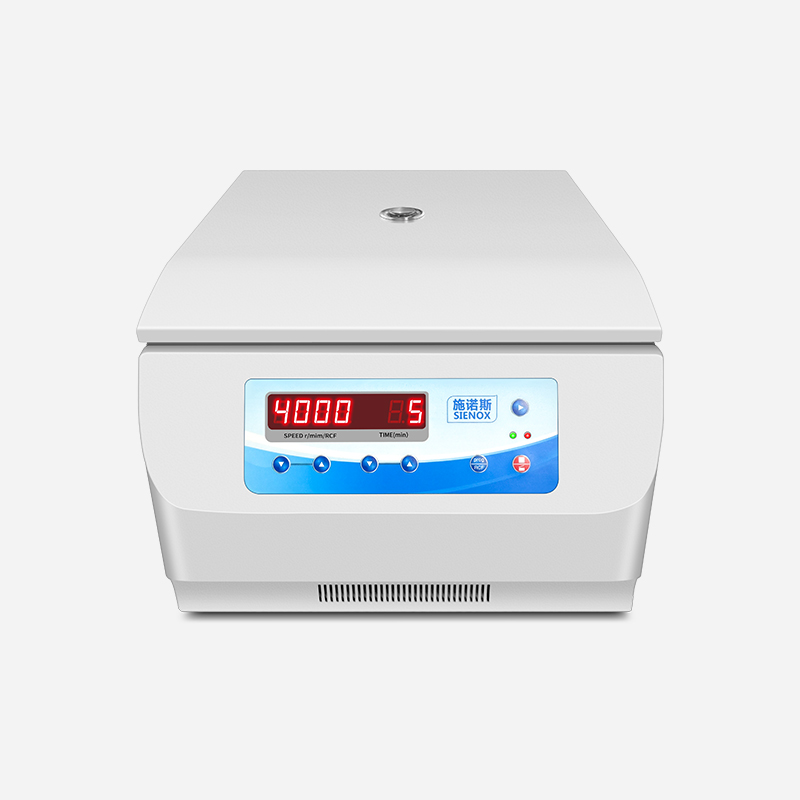
离心脱泡机 SIE-C006
About SIENOX
广州施诺斯(SIENOX),20年脱泡机设备研发与生产的源头厂家
超过1800种材料脱泡案例
纳米级脱泡,满足不同材料多段搅拌除泡需要,支持定制
资质齐全,荣获多项国家专利,联系我们可免费试样