


News

TEL:18925129293


How to Adjust Epoxy Resin Mixing Formulas Amid Raw Material Price Hikes
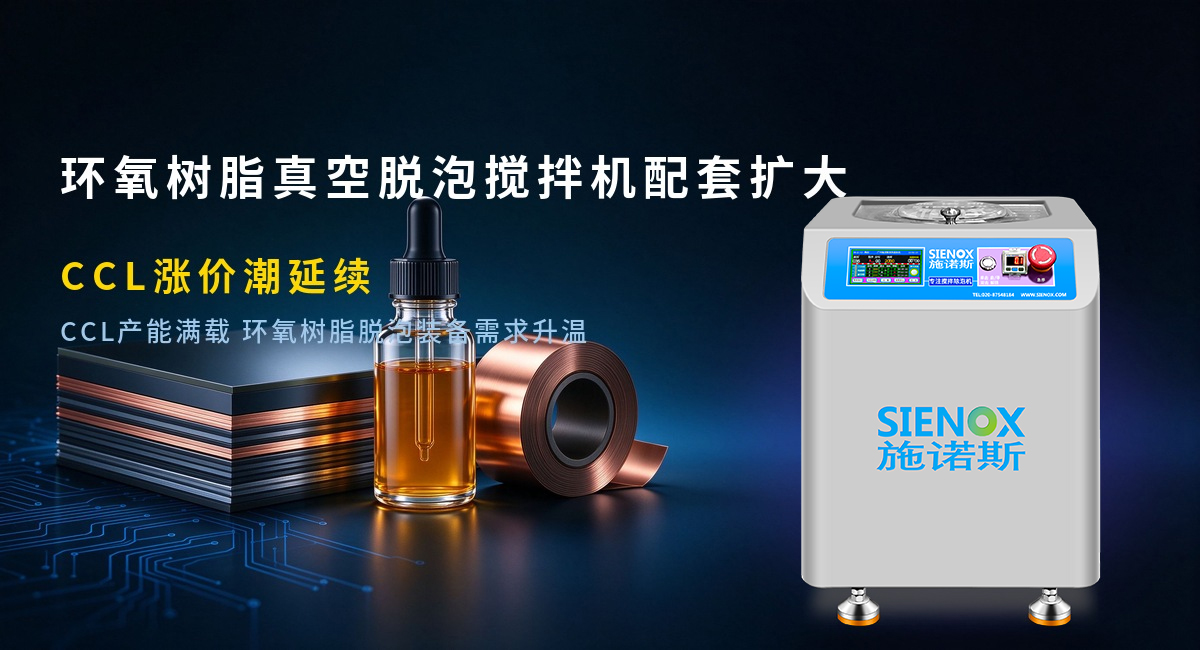
date:2026-10-13author:小施During the National Day holiday, the AI hardware sector of Taiwan stock market led the gains, with PCB and copper clad laminate (CCL) sectors delivering outstanding performance. Orders for the new-generation AI server platforms ramp up in Q4. Larger substrate sizes lead to shortages of ABF resin, electronic fiberglass cloth and copper foil. Electronic fiberglass cloth prices keep rising in October, bringing growth in both order volume and price. Requirements for bubble control in CCL resin mixing are raised, and supporting demand for epoxy resin vacuum defoaming mixers in CCL material preparation and electronic glue mixing scenarios expands accordingly.
Solution Background
A material enterprise engaged in epoxy resin glue preparation for CCL needed batch defoaming of mixed liquid containing epoxy resin, curing agent and fillers when supplying prepreg impregnating resin for high-speed CCL clients. Air bubbles are easily trapped during epoxy preparation. Residual bubbles will form local dry spots or dielectric defects during prepreg impregnation and hot pressing, undermining interlayer bonding and high-frequency performance of plates. The client’s original dispersion equipment suffered long defoaming cycles and unstable batch consistency for high-viscosity epoxy systems, so they intended to optimize glue mixing processes with SIENOX vacuum defoaming mixers.
Processing Challenges
The viscosity of epoxy resin systems rises rapidly with temperature and curing reaction progress. Adding fillers such as aluminum hydroxide and silica in high-filled formulas further increases viscosity and lengthens the escape path of air bubbles. Meanwhile, epoxy systems are sensitive to mixing uniformity; uneven dispersion between curing agent and base resin causes inconsistent local curing. CCL glue mixing belongs to batch production with relatively large feeding volume per run, requiring the equipment to balance defoaming performance and processing efficiency. Temperature control is a critical process parameter for epoxy glue mixing, available as customized configuration to stabilize glue temperature and prevent local pre-curing.
Why Choose SIENOX Equipment
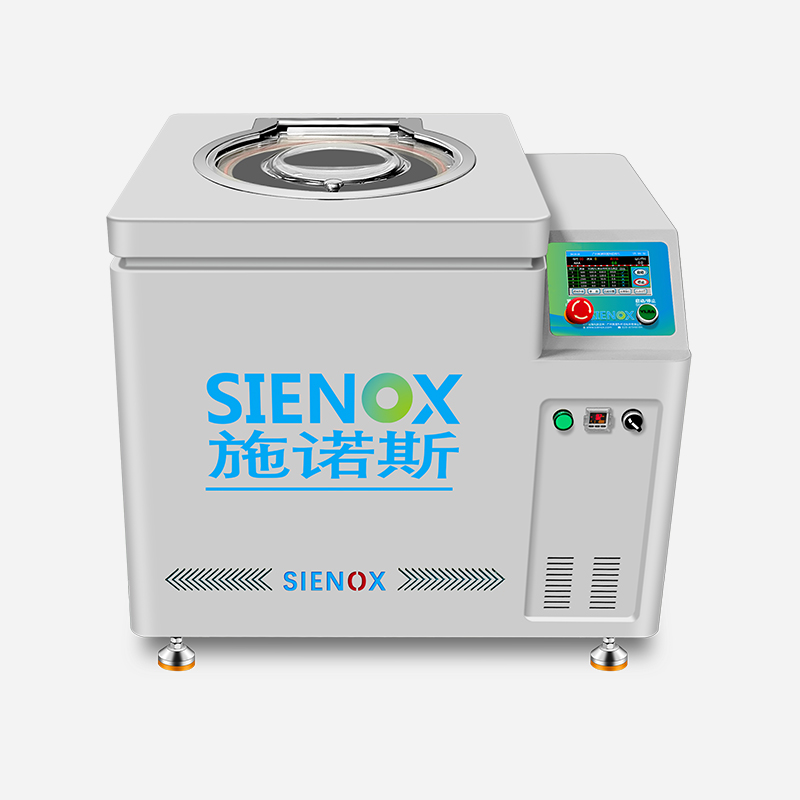
SIENOX epoxy resin vacuum defoaming mixer adopts planetary revolution and rotation combined with vacuum mode. Under compound container motion, macroscopic turnover and micro shearing are generated inside epoxy resin systems. Fillers and resin are mixed evenly without stirring blades, and trapped microbubbles are continuously extracted under vacuum environment. This solution adopts the MIX1000PLUS vacuum defoaming mixer with 1000ml processing volume, maximum vacuum of -98KPa and top rotation speed of 2000rpm, suitable for pilot and small-batch glue mixing. Custom temperature control module is equipped to ensure defoaming and mixing of epoxy systems within preset temperature range.
Processing Procedure
Operators weigh epoxy resin, curing agent and functional fillers according to process formula, load them into dedicated defoaming container and install the container into the machine. Before startup, vacuum is pumped down to -98KPa, then revolution and rotation speed ratio is set based on common parameters for high-viscosity epoxy systems. The machine completes mixing and defoaming inside vacuum chamber. Bubble escape on liquid surface is monitored during operation, and rotation speed is fine-tuned according to filler proportion and viscosity. Custom temperature control is activated for temperature-sensitive formulas to process glue within process temperature window and shorten waiting time for subsequent impregnation procedure.
Processing Results
The treated epoxy glue has no obvious visible bubbles. Local dry spots and micropore defects are reduced in prepreg impregnation tests, and consistency of viscosity and gel time between batches is improved. The client uses this model for pilot line glue mixing and new formula verification, and evaluates larger-volume models for mass production line planning. With sustained demand for high-speed CCL for AI servers and transmitted price hikes of upstream materials, application scenarios of epoxy resin vacuum defoaming mixers and high viscosity vacuum defoaming mixers in CCL, electronic adhesive and composite material glue mixing will be further broadened.
Related recommendations
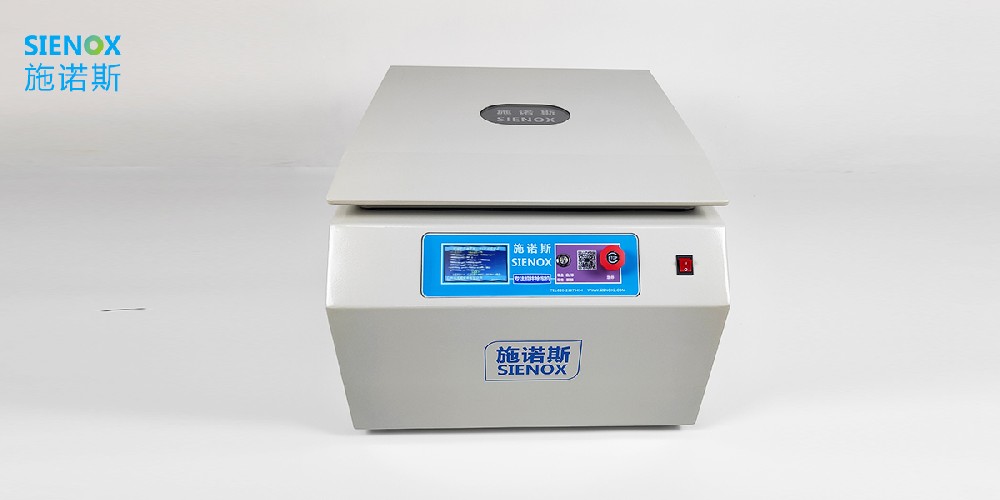
Centrifugal defoaming machine: An efficient tool for both laboratory and factory.
The extensive application fields of planetary defoaming machines.
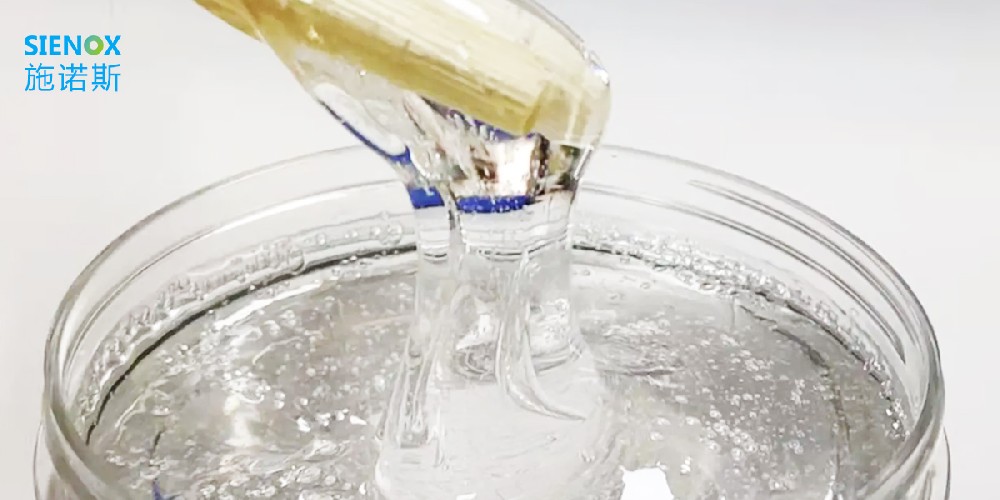
How to remove bubbles from glue

The application of vacuum stirring defoaming machine in the defoaming process of silver paste materials.
Perhaps you still need....
行星式真空脱泡搅拌机 SIE-MIX1000plus
实验室行星式搅拌脱泡机 SIE-SV200
SIENOX行星式脱泡搅拌机 SIE-CV300
离心脱泡机 SIE-C006
About SIENOX
广州施诺斯(SIENOX),20年脱泡机设备研发与生产的源头厂家
超过1800种材料脱泡案例
纳米级脱泡,满足不同材料多段搅拌除泡需要,支持定制
资质齐全,荣获多项国家专利,联系我们可免费试样