


News

TEL:18925129293


Supporting Scope of Lithium Battery Defoaming Machines Expands As CATL European Plant Goes Into Production
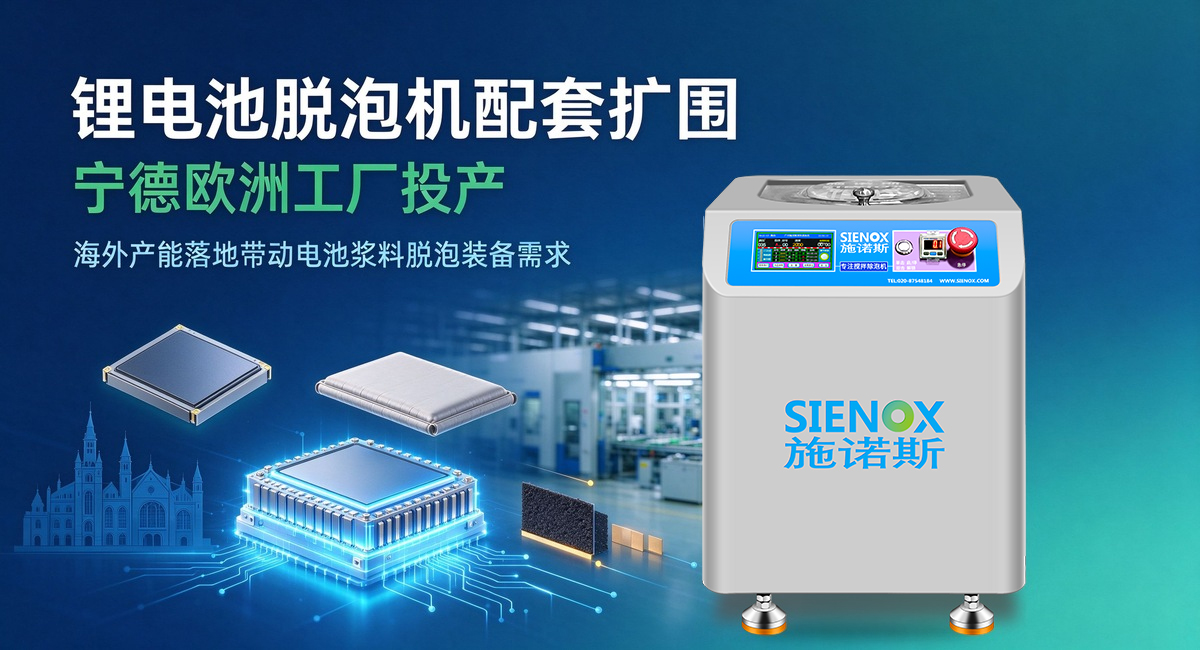
date:2026-10-13author:小施On September 30, CATL’s new cell factory in Debrecen, Hungary officially started production. With a planned capacity of 100GWh and total investment of approximately 7.34 billion euros, it ranks among the large-scale power battery production bases invested by Chinese enterprises overseas. As overseas capacity transitions from construction to mass production, the preparation, dispersion and defoaming of battery slurry have become critical for stable production line operation, and supporting equipment such as lithium battery defoaming machines are attracting growing attention.
Solution Background
Power battery production lines have clear requirements for slurry treatment. Cathode and anode slurries are high-viscosity and high-solid-content systems. Residual bubbles after preparation will directly affect coating uniformity and electrode density, and further impact cell consistency and cycle life. The Hungary plant supplies European vehicle manufacturers, which demand higher batch stability and yield. Therefore, the slurry defoaming step after stirring is included in the process baseline.
Processing Challenges
Battery slurry features high viscosity. Conventional stirring tends to trap a large number of fine bubbles deep inside the material. Static standing or low-efficiency defoaming cannot meet production tact time. The slurry system is temperature-sensitive and temperature rise needs to be controlled during processing. Meanwhile, different formulas (LFP, ternary, etc.) have distinct rheological properties, imposing high requirements on equipment speed range, processing volume and process window.
Why Choose SIENOX Equipment
SIENOX vacuum defoaming mixer adopts planetary revolution and rotation combined with vacuum treatment. Materials are mixed and dispersed under compound motion of revolution and rotation. Bubbles are continuously extracted under vacuum environment. The non-contact stirring avoids contamination and temperature rise caused by stirring blades. This solution selects the MIX1000PLUS model with 1000ml processing volume, suitable for slurry verification and production needs of pilot lines and small-batch production lines. The equipment reaches a vacuum degree of -98KPa and rotating speed of 2000rpm, covering most battery slurry formula windows. A temperature control module can be customized for temperature-sensitive processes.
Processing Procedure
Take a power battery material enterprise as an example. Its ternary cathode slurry previously adopted static defoaming after conventional stirring, and the residual bubble rate within each batch fluctuated obviously. After switching to MIX1000PLUS, the slurry mixes rapidly under planetary revolution and rotation, while the vacuum chamber pumps air simultaneously. The single processing cycle is greatly shortened. Operators set rotation speed and vacuum degree according to formulas. The equipment runs stably and delivers consistent slurry output.
Processing Results
Verified by small-batch production line tests, residual bubbles in slurry are greatly reduced. Pinholes and defects during coating are decreased, and the surface quality of electrodes becomes more uniform. The enterprise solidifies this process into standard operating procedures for slurry verification during new formula introduction, and plans to continue using the same series of equipment in subsequent pilot line construction.
The gradual release of overseas battery capacity is making slurry processing equipment standard production line supporting facilities. For lithium battery material and cell manufacturers, reliable slurry defoaming is the foundation of stable mass production.
Related recommendations
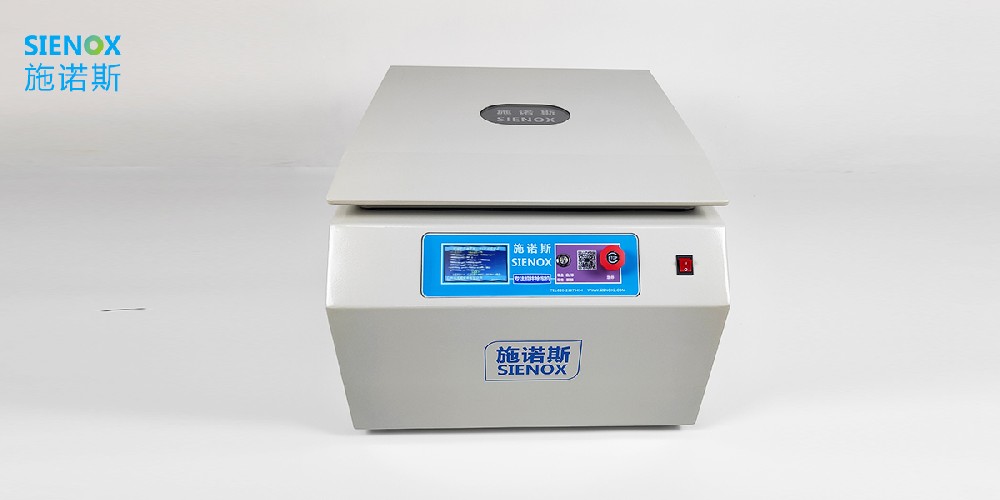
Centrifugal defoaming machine: An efficient tool for both laboratory and factory.
The extensive application fields of planetary defoaming machines.
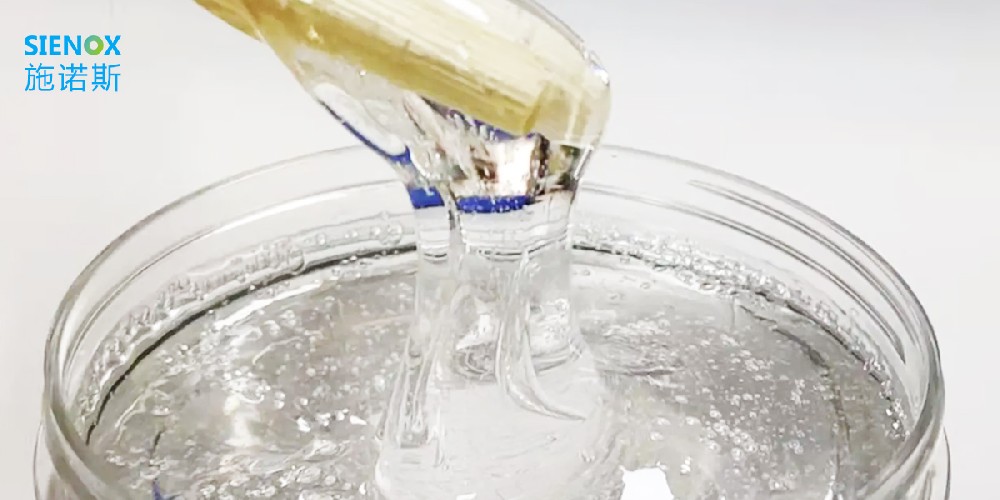
How to remove bubbles from glue
The application of vacuum stirring defoaming machine in the defoaming process of silver paste materials.
Perhaps you still need....
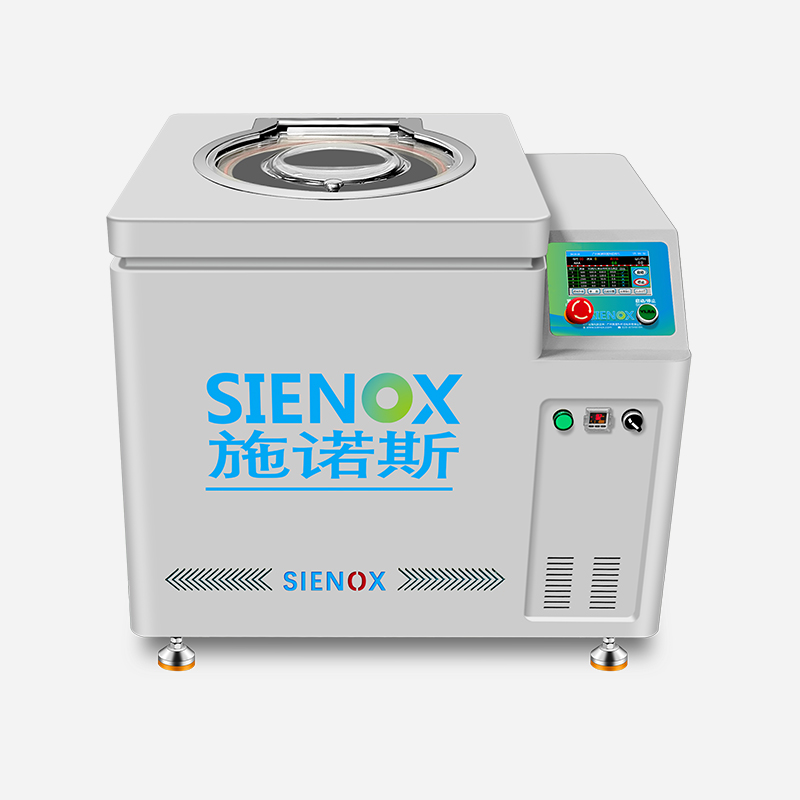
行星式真空脱泡搅拌机 SIE-MIX1000plus
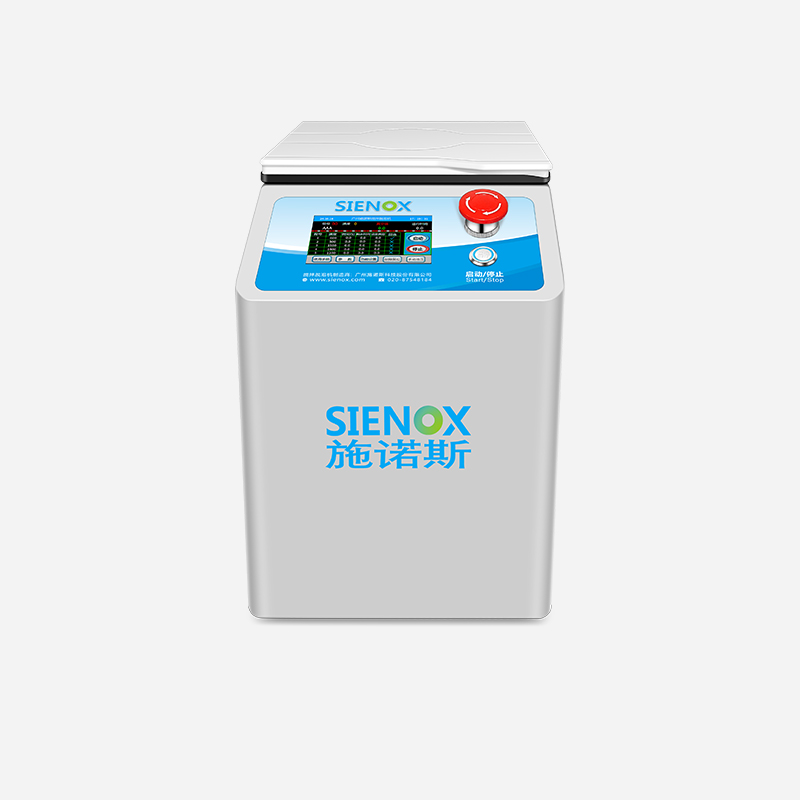
实验室行星式搅拌脱泡机 SIE-SV200
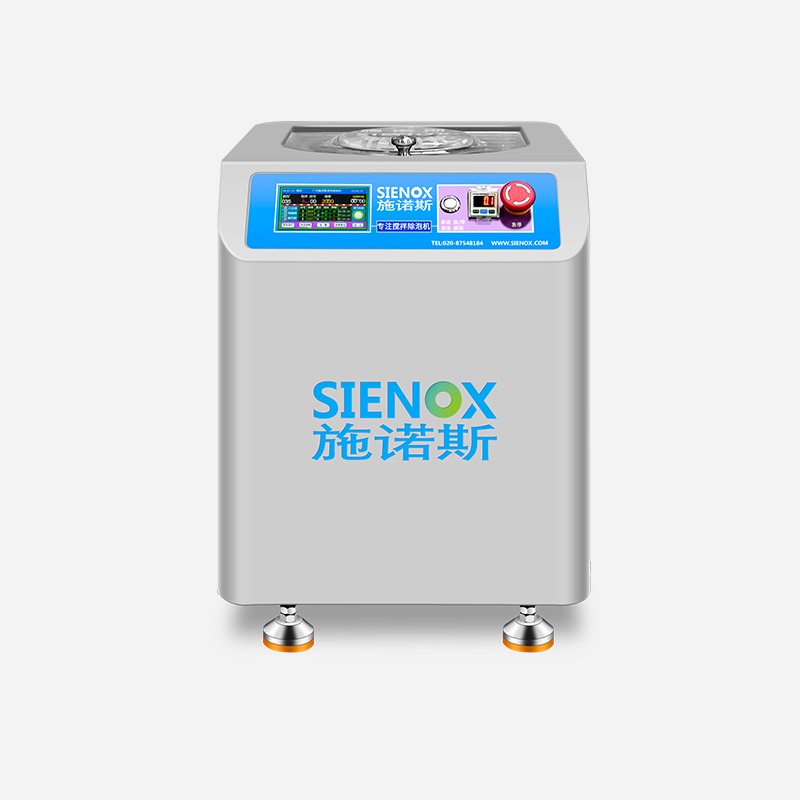
SIENOX行星式脱泡搅拌机 SIE-CV300
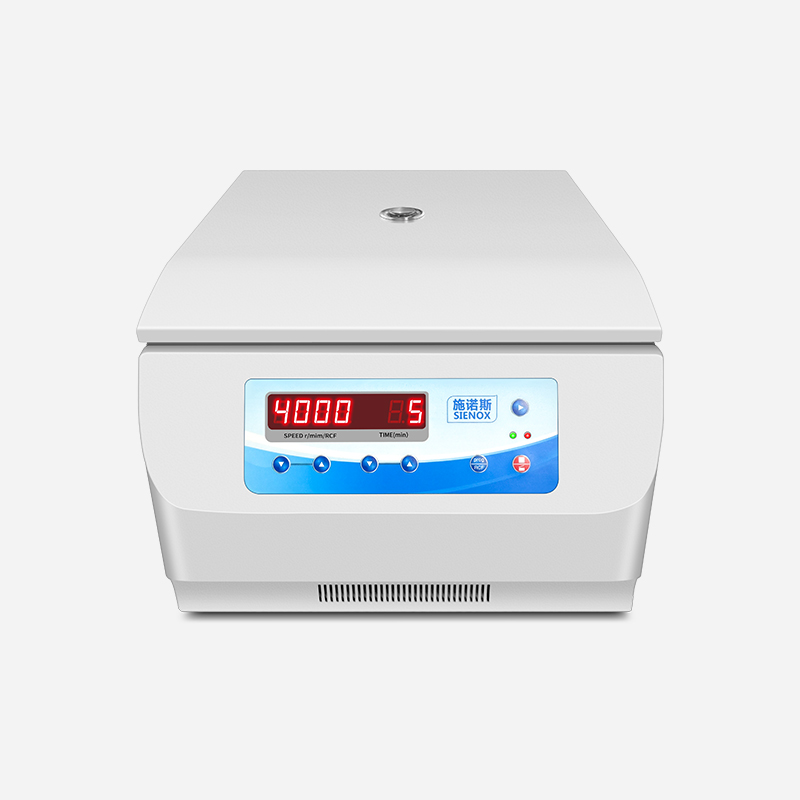
离心脱泡机 SIE-C006
About SIENOX
广州施诺斯(SIENOX),20年脱泡机设备研发与生产的源头厂家
超过1800种材料脱泡案例
纳米级脱泡,满足不同材料多段搅拌除泡需要,支持定制
资质齐全,荣获多项国家专利,联系我们可免费试样