


Ceramic Powder

TEL:18925129293


Silver Paste Material
date:2026-09-11author:小施SIENOX Silver Paste Material Solution
Working Condition Requirements
• Material Type: Silver Paste (Conductive Silver Paste / Electronic Slurry)
• Initial State: Contains abundant micron-scale bubbles. Silver powder features high density and tends to settle and delaminate. Direct filling or printing easily causes pinholes and broken lines, which seriously impairs conductivity and product yield.
• Processing Target: Uniformly remove micron-sized bubbles in silver paste, disperse silver powder particles evenly within the organic carrier, ensure consistent conductivity and uniform printing/coating of the slurry, and meet high-precision process requirements for semiconductor packaging, photovoltaic cells and electronic components.
Comparison Before and After Improvement
Before Improvement — Pain Points of Traditional Processes
Silver paste is a key conductive material for industries including semiconductors, photovoltaics and electronic components. Its quality directly determines product conductivity and yield. Nevertheless, silver paste contains numerous micron bubbles and high-density silver powder prone to sedimentation, bringing multiple challenges to conventional processing:
• Difficult removal of micron-scale bubbles: High viscosity of silver paste and fine silver powder particles make static storage or low-speed stirring ineffective for eliminating micron bubbles, resulting in pinholes, broken lines and uneven films during printing & coating.
• Silver powder sedimentation and delamination: Silver powder has much higher density than organic carriers. Long-term static placement leads to excessive silver powder concentration at the bottom and surplus carrier on the upper layer, causing large fluctuations of conductivity between batches.
• High-speed dispersion damages particles: Traditional high-speed dispersers deliver excessive shear force, which may damage silver powder morphology, alter slurry rheological properties and reduce printing precision.
• Poor consistency: Silver paste demands extremely high homogeneity. Conventional methods create uneven silver powder distribution across batches, triggering fluctuation of printed resistance and unstable yield.
Solution
• Vacuum Defoaming + Planetary Motion: Under vacuum conditions, planetary rotation & revolution generates powerful shear and convection, gradually lifting and extracting micron bubbles inside silver paste for thorough defoaming.
• Gentle & Uniform Dispersion: Planetary motion delivers 360° dead-zone-free mixing. Silver powder particles are re-dispersed under mild and uniform force field without morphology damage.
• High Batch Consistency: Parameterized control over rotating speed, duration and vacuum level guarantees consistent results for every batch and stable printed resistance.
• Compatible with High-precision Scenarios: Processed silver paste applies to high-precision processes such as semiconductor packaging, photovoltaic cell grid line printing and electrode coating of electronic components, greatly lifting product yield.
Advantages of Mixing & Defoaming Machine
• Efficient Removal of Micron Bubbles: Vacuum environment combined with planetary motion effectively eliminates micron bubbles in silver paste and eliminates risks of printing pinholes and broken lines.
• Uniform Dispersion Without Damage: Gentle and uniform planetary motion of rotation and revolution realizes damage-free dispersion of silver powder and preserves original slurry rheology.
• Precisely Controllable Parameters: Adjustable rotating speed, processing time and vacuum degree for accurate parameter optimization tailored to different silver paste formulas.
• Excellent Batch Consistency: Standardized workflow ensures even silver powder distribution across batches and minor fluctuation of printed resistance.
• High Efficiency & Time Saving: Complete mixing and defoaming within several minutes to greatly boost production efficiency.
• Compatible with High-precision Processes: Treated silver paste meets high-precision printing / coating requirements for semiconductor packaging, photovoltaic cells and electronic components.
Test Conditions
Item | Parameter |
Model | SIE-MIX90 |
Test Material | Silver Paste (Conductive Silver Paste) |
Test Rotating Speed | 1500 rpm |
Test Duration | 3 min |
Vacuum Degree | -95KPa |
Sample Provider | * Research Institute |
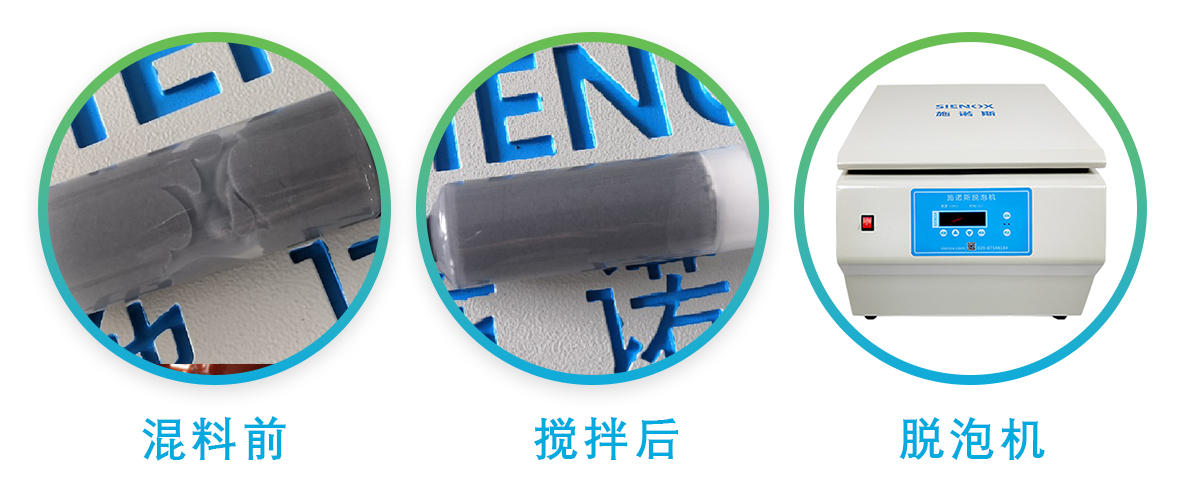
Comparison Before and After Mixing
Comparison Item | Before Mixing | After Mixing |
Bubble Content | Plenty of micron-scale bubbles with tiny visible pores | Bubbles almost eliminated, dense and uniform slurry |
Silver Powder Distribution | Silver powder settled and delaminated, high concentration at bottom, dilute upper layer | Silver powder evenly dispersed in carrier with high overall consistency |
Slurry Appearance | Rough surface with pores and particle agglomeration | Smooth and delicate surface with uniform texture |
Printing Result | Pinholes, broken lines and uneven film formed after printing | Complete and continuous printed lines, flat and uniform film |
Conductivity | Large resistance fluctuation and poor batch consistency | Stable resistance and greatly improved batch consistency |
Mature Application Fields
✅ Semiconductor Packaging
✅ Photovoltaic Cells
✅ Electronic Components
✅ Flexible Circuits
✅ Conductive Coatings
✅ Sensor Manufacturing
SIENOX has accumulated more than 1800 cases of material mixing and defoaming. Free sample test and machine trial available.
Related recommendations

Silver Paste Material

Ceramic slurry bubbles cleared in one go! Measured density
Perhaps you still need....
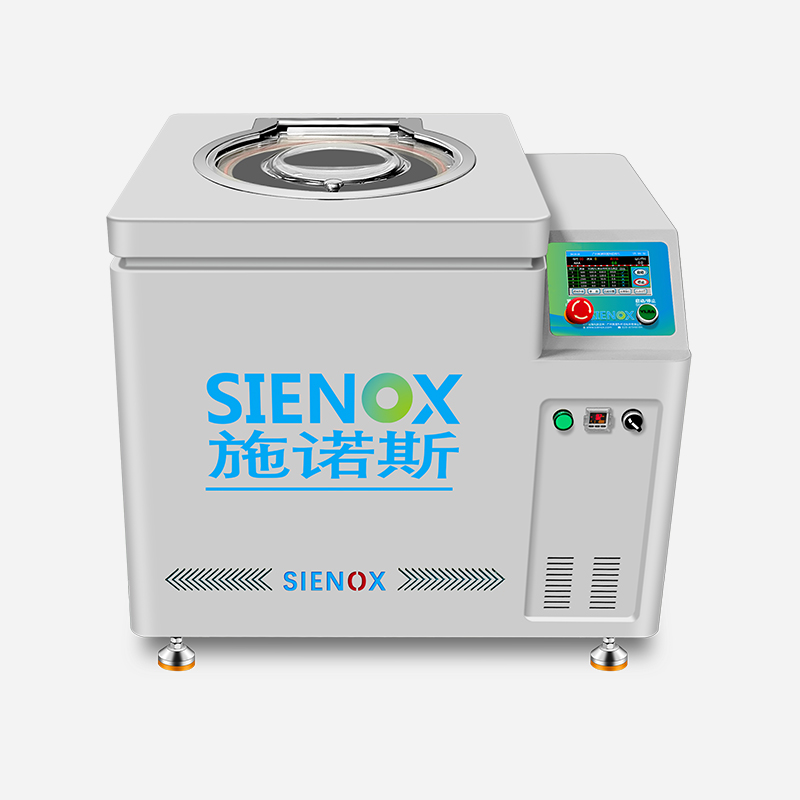
行星式真空脱泡搅拌机 SIE-MIX1000plus
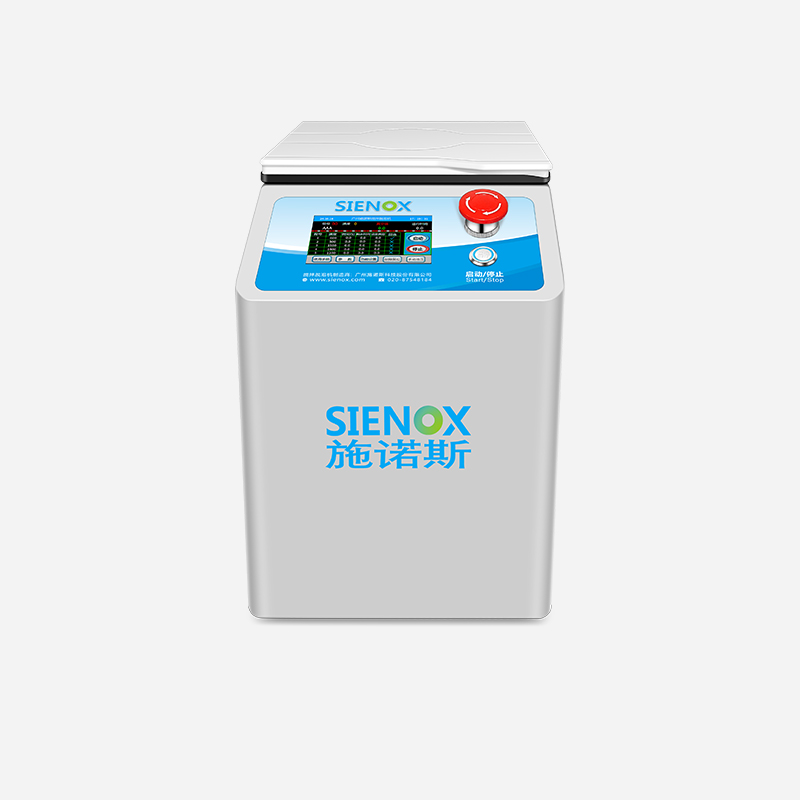
实验室行星式搅拌脱泡机 SIE-SV200
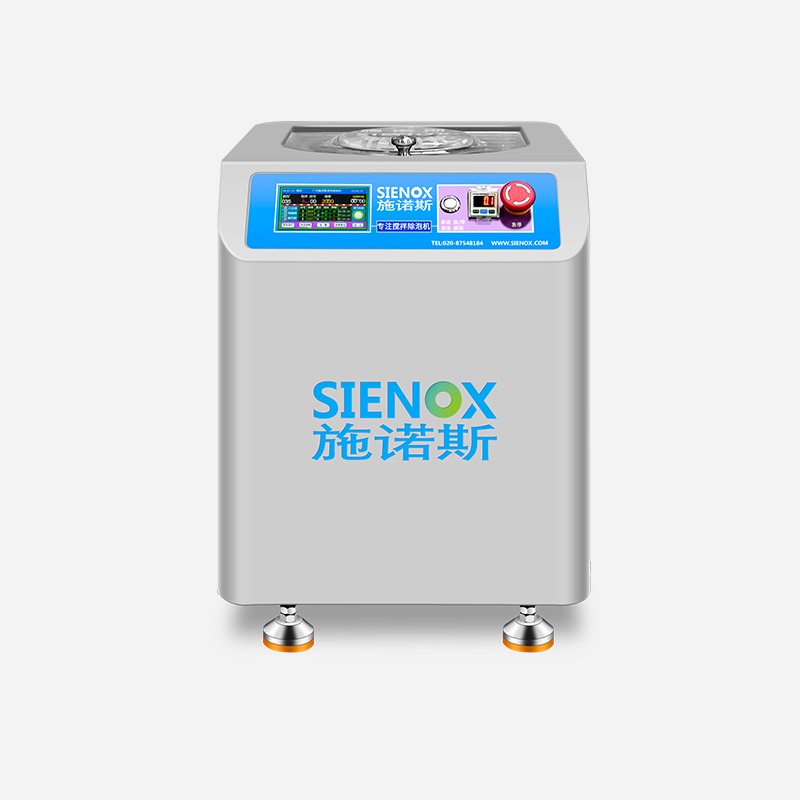
SIENOX行星式脱泡搅拌机 SIE-CV300
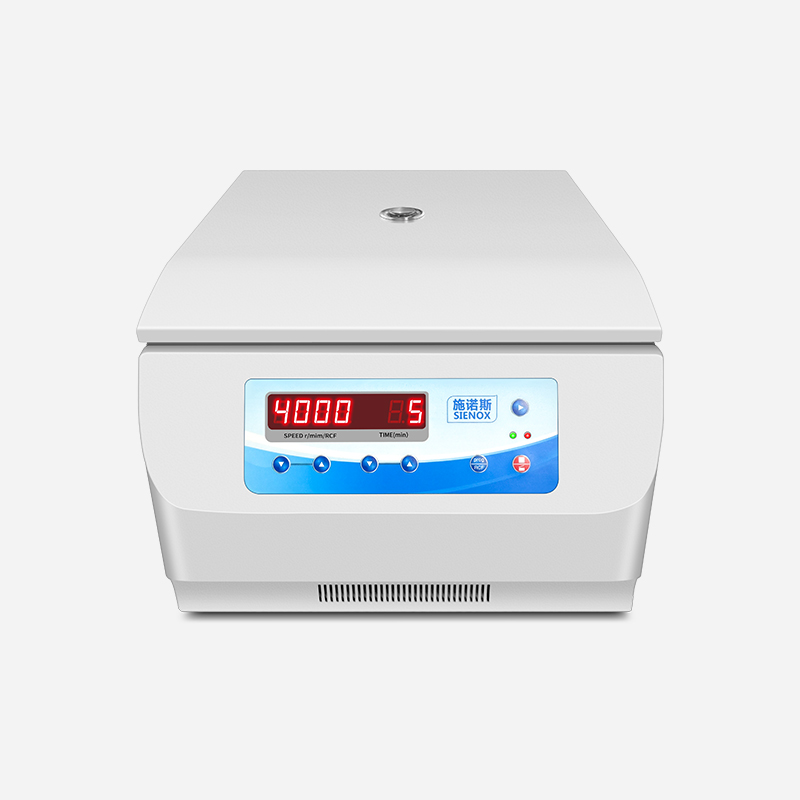
离心脱泡机 SIE-C006
About SIENOX
广州施诺斯(SIENOX),20年脱泡机设备研发与生产的源头厂家
超过1800种材料脱泡案例
纳米级脱泡,满足不同材料多段搅拌除泡需要,支持定制
资质齐全,荣获多项国家专利,联系我们可免费试样