


Ceramic Powder

TEL:18925129293


Ceramic slurry bubbles cleared in one go! Measured density
date:2026-09-11author:小施Ceramic Slurry Bubbles Eliminated in One Go! Density Measurement
From tape casting, injection molding to spraying, covering slurry defoaming for electronic ceramics, structural ceramics and functional ceramics
Ceramic Slurry is a high solid content suspension system mixed by ball milling or stirring of ceramic powder (alumina, zirconia, silicon carbide, barium titanate, PZT, etc.) and organic carriers (binder, dispersant, plasticizer, solvent). It is widely used in tape casting (MLCC/substrate), slip casting (structural parts), hot die casting (precision parts), ceramic spraying and gel casting processes. Bubbles entrained in ceramic slurry directly cause defects such as pores, uneven density, dielectric layer fracture and bending deformation after sintering. Especially, it greatly affects dielectric properties, breakdown voltage of electronic ceramics and mechanical strength of structural ceramics. Through self-developed planetary mixing and defoaming technology, Sinos provides a complete solution from powder dispersion to vacuum defoaming for all types of ceramic slurries.
◆ Material Properties
Common Ceramic Powders Al₂O₃、ZrO₂、SiC、BaTiO₃、PZT、AlN、Si₃N₄ | Organic Carrier Systems PVB/MEK tape casting system, PEG/glycerin injection molding system, paraffin hot die casting system, acrylic dispersion system | Solid Content Range 40~65vol% (45~55vol% for tape casting slurry, 35~50vol% for slip casting slurry, 55~65vol% for hot die casting) |
Slurry Viscosity Range 50~150,000 cps (50~500cps for tape casting slurry, 1,000~20,000cps for slip casting, 50,000~150,000cps for hot die casting) | Powder Particle Size D50=0.2~5μm (submicron grade for electronic ceramics) to D50=5~50μm (structural ceramics) | Typical Application Scenarios Tape casting, slip casting, hot die casting, gel casting, ceramic spraying |
◆ Mature Application Fields
📱 MLCC Multilayer Ceramic Capacitors BaTiO₃ barium titanate tape casting slurry, dielectric layer thickness 1~10μm, slurry viscosity 50~300cps. Bubbles directly affect dielectric layer integrity and breakdown voltage. | 🔌 Ceramic Substrates & Packaging Al₂O₃/AlN alumina or aluminum nitride tape casting slurry, used for IGBT substrates and LED heat dissipation substrates, slurry viscosity 200~800cps, high thermal conductivity and insulation required. | 🦷 Zirconia Dental / Medical Ceramics 3Y-TZP zirconia slip casting or gel casting slurry for dental crowns, implants and artificial joints, slurry viscosity 5,000~30,000cps, high density and biocompatibility required. |
📡 Piezoelectric Ceramic Components PZT lead zirconate titanate tape casting or slip casting slurry for ultrasonic transducers, filters and actuators, slurry viscosity 1,000~10,000cps. Bubbles affect polarization uniformity. | 🔧 Structural Wear-resistant Ceramic Parts Al₂O₃/SiC alumina or silicon carbide slip casting slurry for wear-resistant parts such as sealing rings, bearings, liners and nozzles, slurry viscosity 3,000~20,000cps. | 🔋 Solid-State Battery Ceramic Electrolytes LLZO/LLZTO solid electrolyte ceramic slurry for thin-film electrolyte layers by tape casting, slurry viscosity 100~2,000cps. Bubbles cause interruption of ion conduction. |
🏭 Industrial Ceramic Coatings Al₂O₃/ZrO₂ ceramic spraying suspension for thermal barrier coatings and wear-resistant coatings on aero-engine blades, slurry viscosity 500~5,000cps. | 🔥 High-Temperature Kiln Furniture & Refractories Mullite/corundum slip casting slurry for kiln furniture such as shelves, saggers and crucibles, slurry viscosity 5,000~15,000cps, requiring thermal shock resistance and long service life. | 🎓 Scientific Research & New Material Development New ceramic formula development and process parameter verification for universities and research institutes, small-batch slurry preparation and defoaming test, unlimited viscosity range, free sample testing. |
◆ Core Problems Caused by Bubbles
⚠️ Porosity & Insufficient Density After Sintering Bubbles in the slurry leave voids during drying and sintering, reducing sintered body density. Electronic ceramics require relative density ≥97% (≥99% for MLCC). Residual bubbles directly shift dielectric constant and reduce breakdown voltage. | ⚠️ Dielectric Layer Fracture & Electrical Performance Failure For thin-layer devices such as MLCC, a single bubble can cause penetrating micron-scale defects in dielectric layers, resulting in short circuit or insulation failure. Every 0.1% increase of gas content in tape casting slurry may multiply defect rates. |
⚠️ Uneven Shrinkage, Warpage & Cracking Uneven bubble distribution causes inconsistent shrinkage in different regions of green body. Internal stress concentration occurs during drying and sintering, triggering warpage, deformation or even penetrating cracks, making dimensional accuracy unguaranteed. | ⚠️ Surface Pinholes & Deteriorated Surface Finish Burst of surface bubbles forms pinholes and pits, raising surface roughness of cast films and slip cast parts. Subsequent grinding & polishing cost increases, and parts may be scrapped in severe cases. |
◆ Recommended Process — Planetary Mixing & Defoaming
Step 1 Powder Pre-Dispersion Add ceramic powder into organic carrier (binder + solvent + dispersant) in batches. Pre-stir at low speed to wet powder preliminarily and prevent dry powder agglomerates from trapping air. | Step 2 Ball Milling / High-Speed Dispersion Ball mill or high-speed disperse powder to target D50, and fully mix powder with carrier. A large amount of air is entrained at this stage, significantly raising slurry gas content. |
Step 3 Vacuum Mixing & Defoaming Start planetary stirring under -95KPa vacuum. Revolution + rotation continuously flips slurry to expand, float and burst bubbles. Most entrained gas is removed within 3~8 minutes. | Step 4 Direct Tape Casting / Slip Casting After Defoaming Discharge directly to tape caster or casting process after vacuum release without container transfer to avoid secondary air entrapment. Fully enclosed operation ensures stable and controllable slurry gas content. |
◆ Recommended Equipment
MIX60 — Laboratory planetary mixer defoamer, single processing capacity 5~60g, suitable for electronic ceramic slurry formula development and tape casting parameter verification, supports -95KPa vacuum defoaming.
MIX90 — Pilot-scale mixing defoamer, single processing capacity 200~900g, suitable for batch preparation of medium viscosity ceramic slurry (≤80,000cps), universal model for structural ceramics / piezoelectric ceramics.
MIX1000PLUS — Large-capacity flagship model, max single processing capacity 2000g, specialized for high solid content & high viscosity ceramic slurry (≤200,000cps), suitable for mass production of MLCC / substrate slurry.
MIX2000 — Industrial mass production model, single processing capacity over 2000g, equipped with automatic loading & unloading system to meet the cycle requirement of mass ceramic production.
◆ Test Cases
▶ Case 1: BaTiO₃ Barium Titanate MLCC Tape Casting Slurry
Test Material | BaTiO₃ barium titanate powder (D50=0.3μm) + PVB/MEK tape casting system, solid content 50vol% |
Slurry Viscosity | Approx. 150 cps |
Test Model | MIX60 |
Vacuum Degree | -95KPa |
Rotation Speed | Revolution 1500rpm / Rotation 1000rpm |
Treatment Time | 3 min |
Treatment Temperature | Room temperature (25℃), sealed and protected from light |
✅ Defoaming Result: Cross-section porosity of tape casting slurry <0.3%, thickness uniformity of cast film ±1.5%. Relative density after sintering ≥99.2%, breakdown voltage >15KV/mm, dielectric loss tanδ<0.02, meeting the integrity requirements of dielectric layers for high-capacity MLCC.
▶ Case 2: Al₂O₃ Alumina Structural Ceramic Slip Casting Slurry
Test Material | Al₂O₃ alumina powder (D50=8μm) + PEG/glycerin water-based slip casting system, solid content 55vol% |
Slurry Viscosity | Approx. 5,000 cps |
Test Model | MIX90 |
Vacuum Degree | -95KPa |
Rotation Speed | Revolution 1800rpm / Rotation 1200rpm |
Treatment Time | 5 min |
Treatment Temperature | Room temperature (25℃) |
✅ Defoaming Result: Cross-section porosity of slip-cast green body <0.5%, no cracking after drying. Relative density after sintering ≥98.5%, flexural strength ≥380MPa, Vickers hardness HV12.5, no surface pinhole defects, meeting requirements for structural parts such as sealing rings and bearings.
▶ Case 3: ZrO₂ Zirconia Dental Ceramic Gel-Casting Slurry
Test Material | 3Y-TZP zirconia powder (D50=0.5μm) + acrylamide monomer gel casting system, solid content 58vol% |
Slurry Viscosity | Approx. 2,000 cps |
Test Model | MIX90 |
Vacuum Degree | -95KPa |
Rotation Speed | Revolution 2000rpm / Rotation 1500rpm |
Treatment Time | 5 min |
Treatment Temperature | Room temperature (25℃), light-shielded operation |
✅ Defoaming Result: Cross-section porosity of gel-cast green body <0.3%. Relative density after sintering ≥99.5%, flexural strength >1000MPa, fracture toughness KIC>8MPa·m^1/2, good translucency, satisfying mechanical and aesthetic requirements for dental all-ceramic crowns and bridges.
◆ Comparison Before and After Improvement
Comparison Item | Manual Stirring / Atmospheric Mixing | Static Vacuum Defoaming Tank | Sinos Planetary Mixing & Defoaming |
Slurry Porosity | 3~10% | 1~3% | <0.3% |
Relative Density After Sintering | 90~95% | 95~98% | ≥99% |
Powder Dispersion Uniformity | Severe agglomeration, uneven distribution | Cannot improve dispersion, only degas | Uniform dispersion without agglomeration |
Tape Cast Film Thickness Uniformity | Deviation ±5~10% | Deviation ±3~5% | Deviation ±1.5% |
Yield Rate | 55~70% | 80~90% | >98% |
Processing Time | 30~60 min (poor effect) | 20~40 min (degas only) | 3~8 min (mixing + defoaming) |
🎯 Free Sample Test
Send us your ceramic slurry samples, we will test defoaming parameters and issue reports.
Related recommendations

Silver Paste Material

Ceramic slurry bubbles cleared in one go! Measured density
Perhaps you still need....
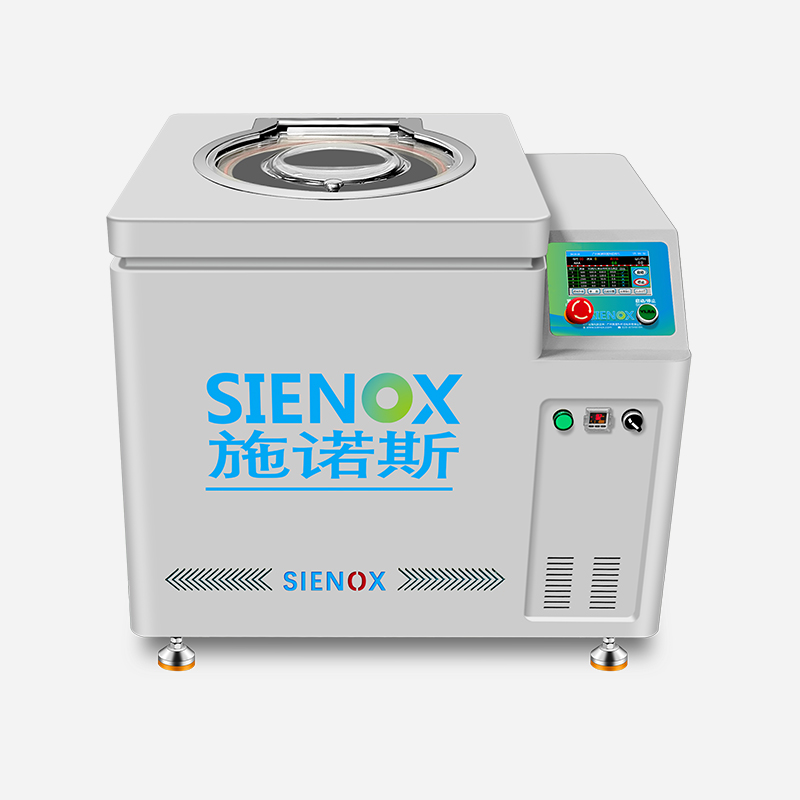
行星式真空脱泡搅拌机 SIE-MIX1000plus
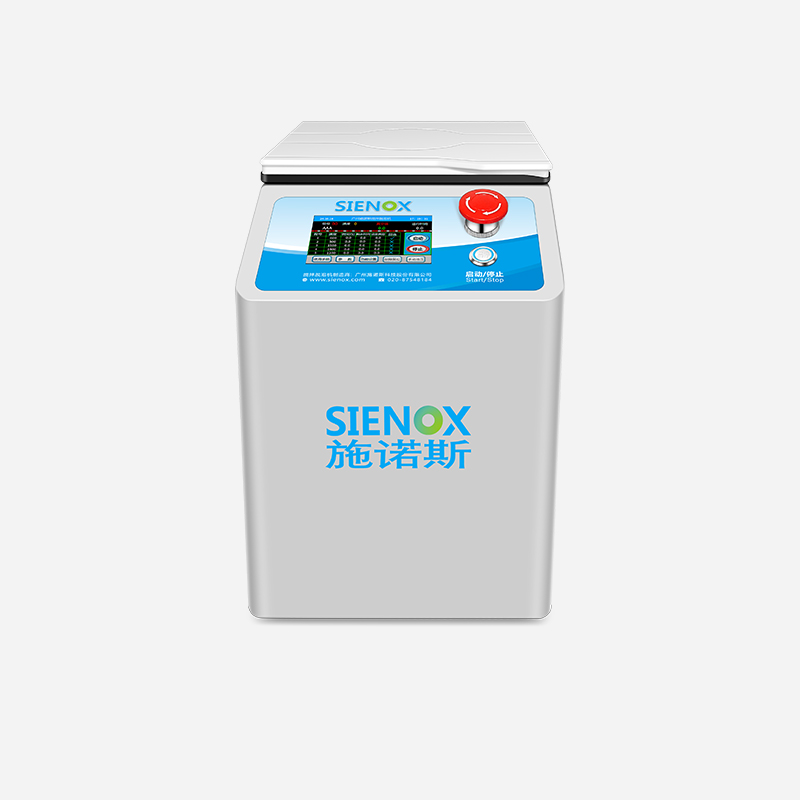
实验室行星式搅拌脱泡机 SIE-SV200
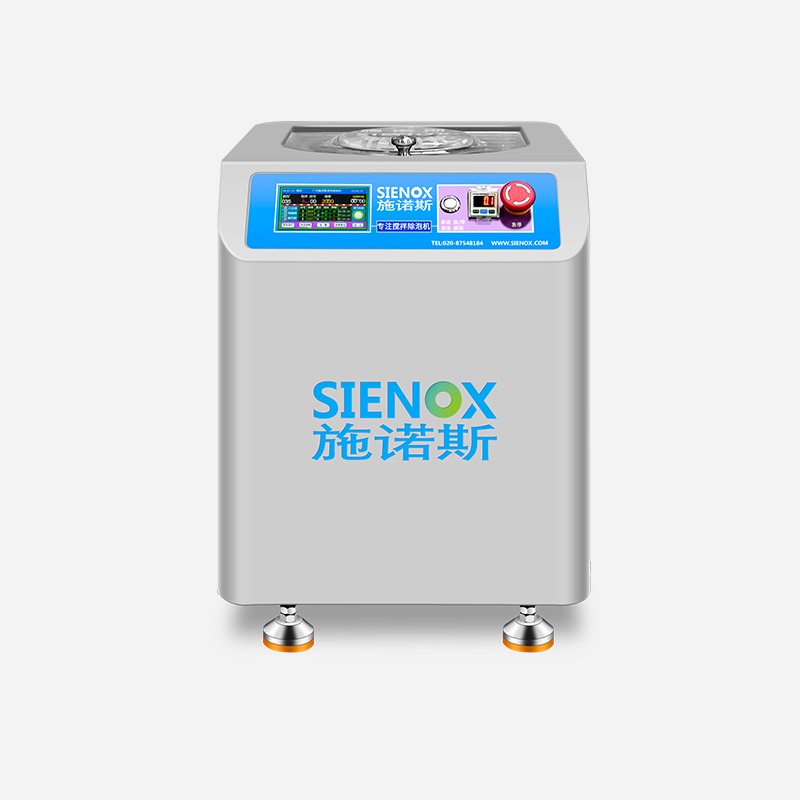
SIENOX行星式脱泡搅拌机 SIE-CV300
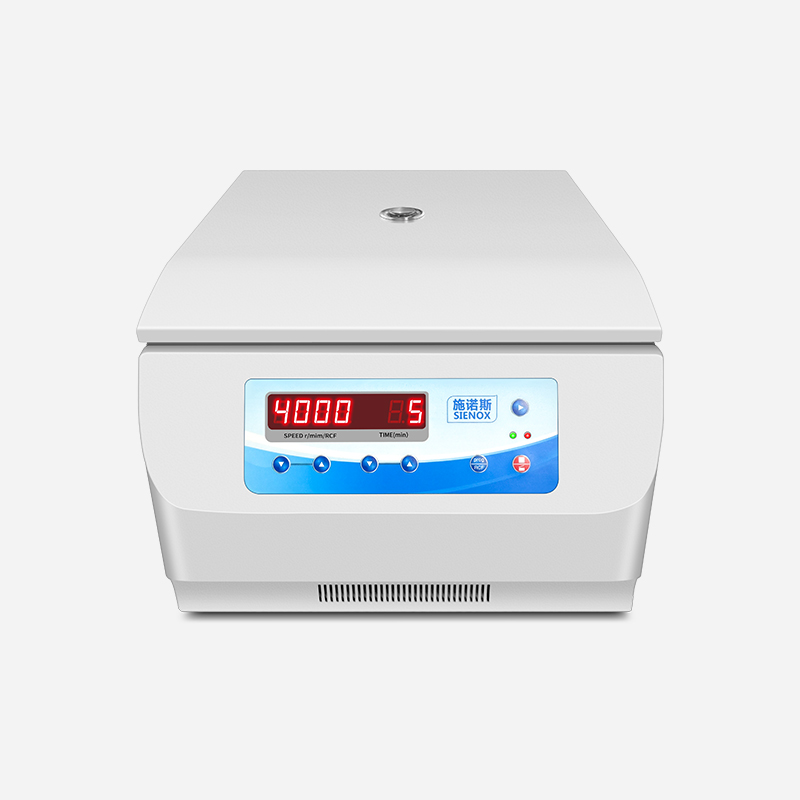
离心脱泡机 SIE-C006
About SIENOX
广州施诺斯(SIENOX),20年脱泡机设备研发与生产的源头厂家
超过1800种材料脱泡案例
纳米级脱泡,满足不同材料多段搅拌除泡需要,支持定制
资质齐全,荣获多项国家专利,联系我们可免费试样