


News

TEL:18925129293


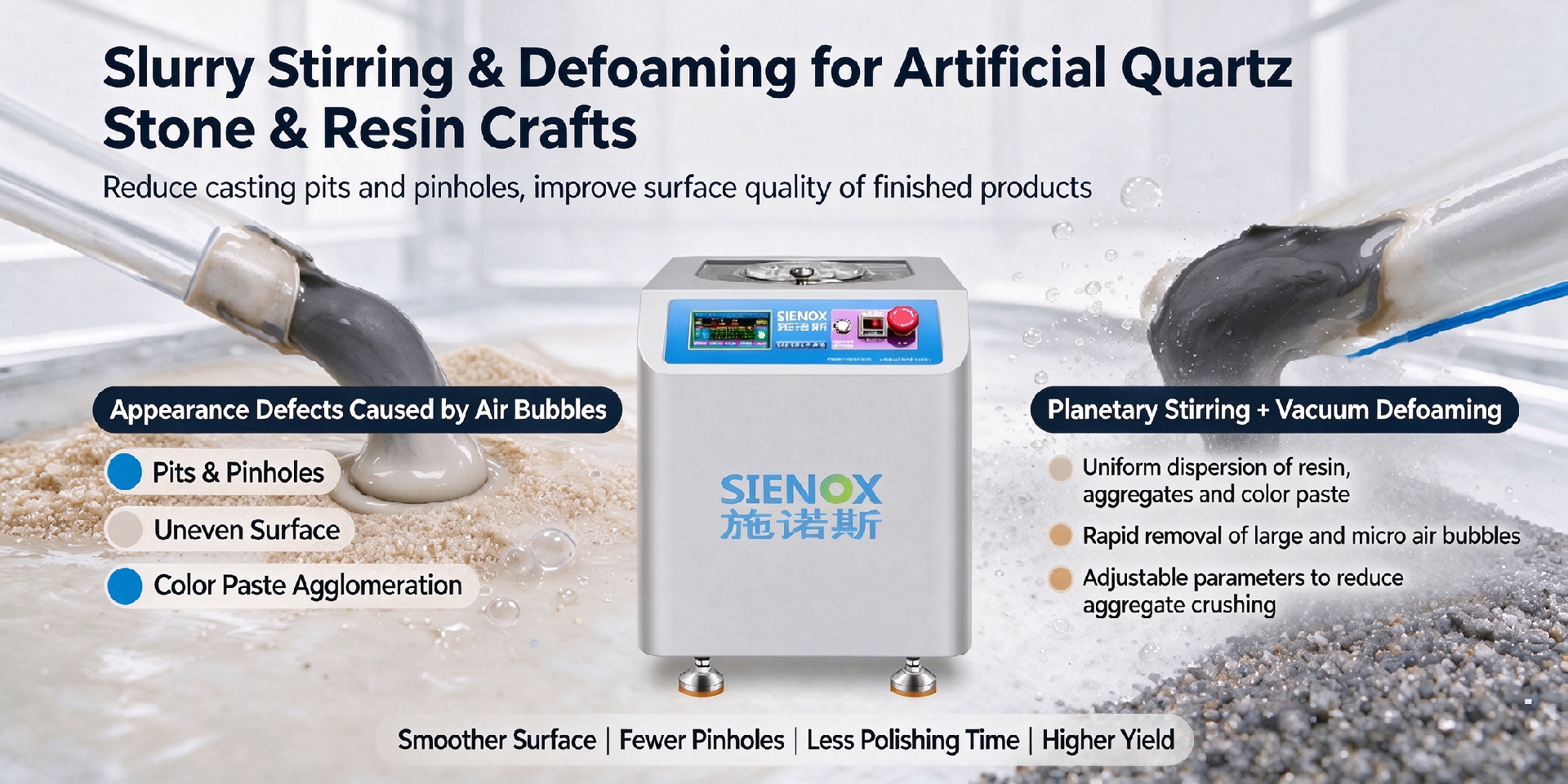
Stirring and Defoaming for Artificial Quartz Stone & Resin Craft Slurry, Reducing Pitting and Pinholes after Casting
date:2026-11-10author:小施Artificial quartz stone slabs and resin crafts are cast and formed by mixing resin with quartz sand, color paste and fillers. Air bubbles are the most common source of defects. Tiny air bubbles inside the slurry float to the surface after casting and remain there, forming pits, pinholes and pores after curing. This results in uneven slab surfaces and severe appearance defects on crafts, which require polishing for rework, while severely defective products are scrapped directly. Bubbles in high-viscosity resin slurry rise slowly. Static defoaming alone takes a long time and slows down production cycles. Besides, microbubbles can hardly escape naturally, making consistent appearance quality hard to achieve.
SIENOX planetary stirring and defoaming machine mixes resin, quartz aggregates and color paste under vacuum. Planetary motion disperses aggregates and color pigments evenly to prevent color paste agglomeration and color difference. Synchronous defoaming quickly eliminates both large and tiny bubbles inside the slurry. Adjustable stirring parameters protect quartz aggregates from crushing and preserve particle morphology to guarantee the texture of quartz stone slabs. Closed stirring reduces resin volatilization and keeps the formula ratio stable.
The processed slurry features consistent fluidity. After casting and curing, it forms smooth surfaces with far fewer pinholes and pits, cutting polishing labor and boosting yield. Benchtop models are suitable for craft sampling and color matching trials, while large-capacity models fit pilot sampling for quartz stone slabs. Sample testing service is available for manufacturers to preview the final appearance in advance. Appearance quality is critical for artificial stone and cultural & creative crafts. A stable stirring and defoaming process is the key to controlling surface defects and upgrading product grade. It also cuts static waiting time and improves overall production efficiency.
Related recommendations
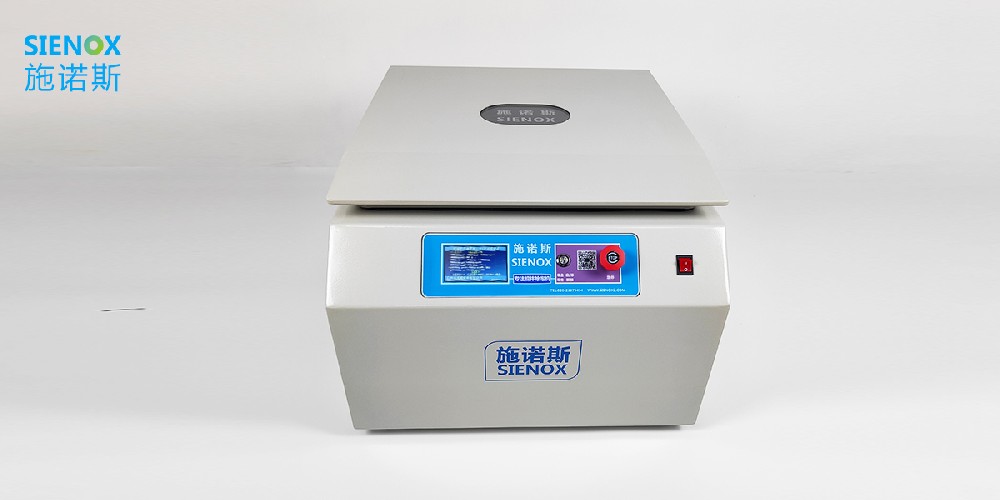
Centrifugal defoaming machine: An efficient tool for both laboratory and factory.
The extensive application fields of planetary defoaming machines.
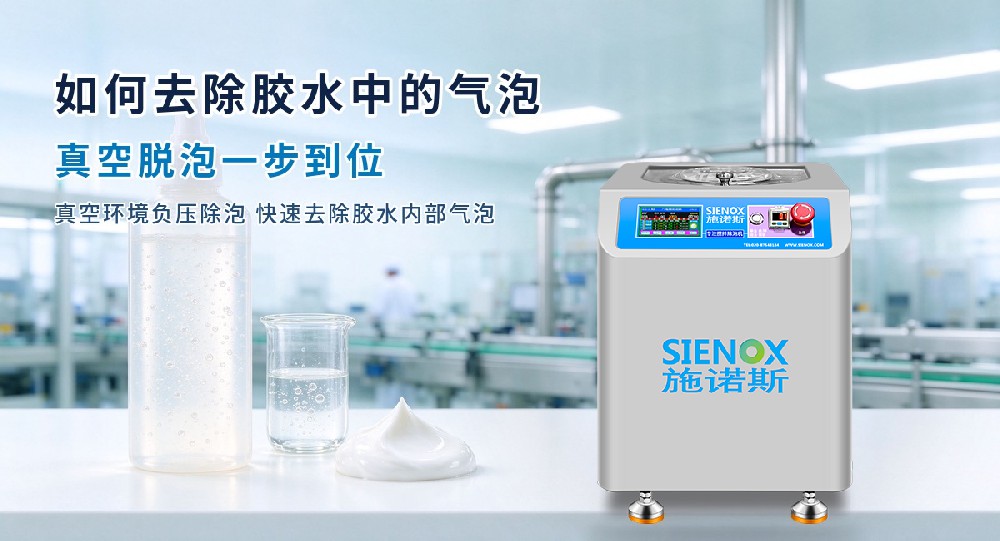
How to remove bubbles from glue

The application of vacuum stirring defoaming machine in the defoaming process of silver paste materials.
Perhaps you still need....
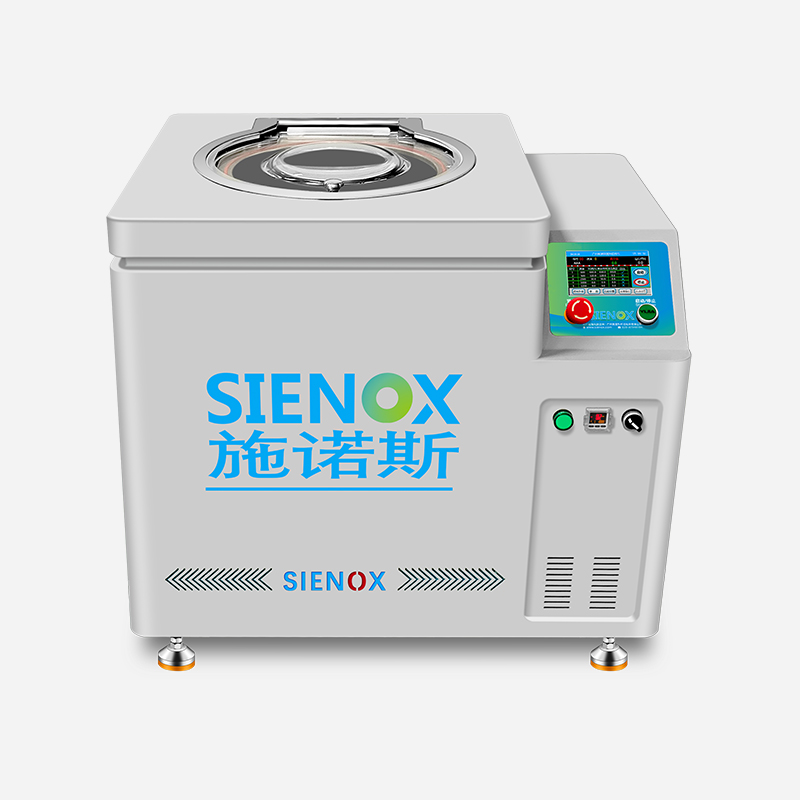
行星式真空脱泡搅拌机 SIE-MIX1000plus
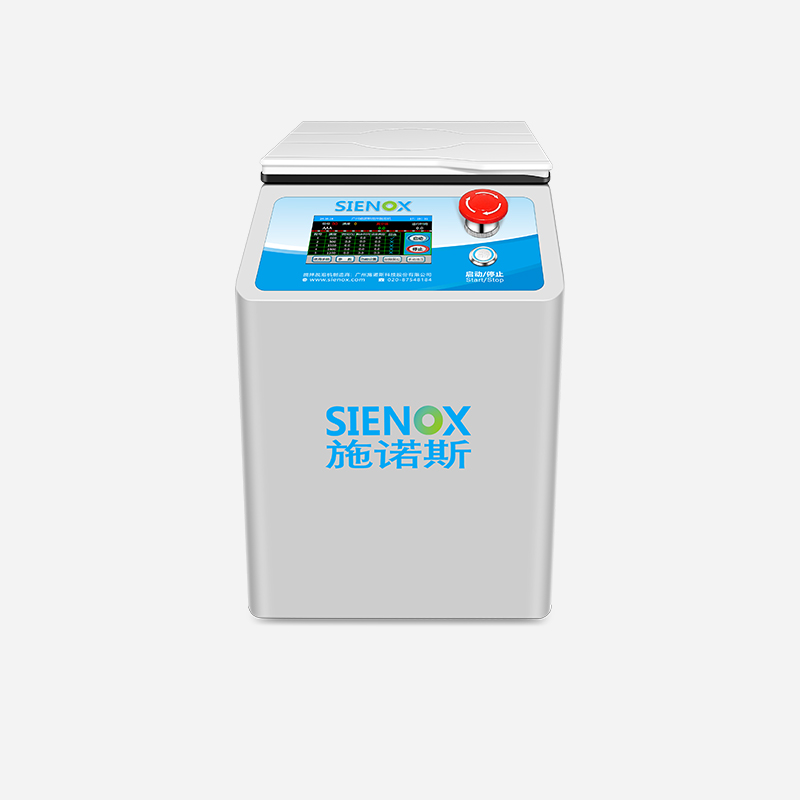
实验室行星式搅拌脱泡机 SIE-SV200
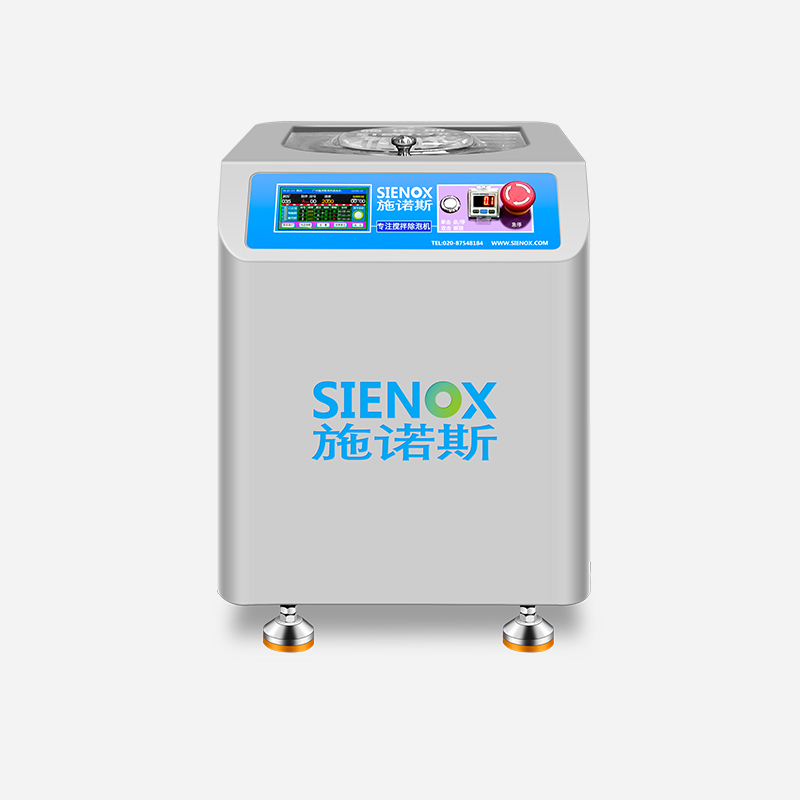
SIENOX行星式脱泡搅拌机 SIE-CV300
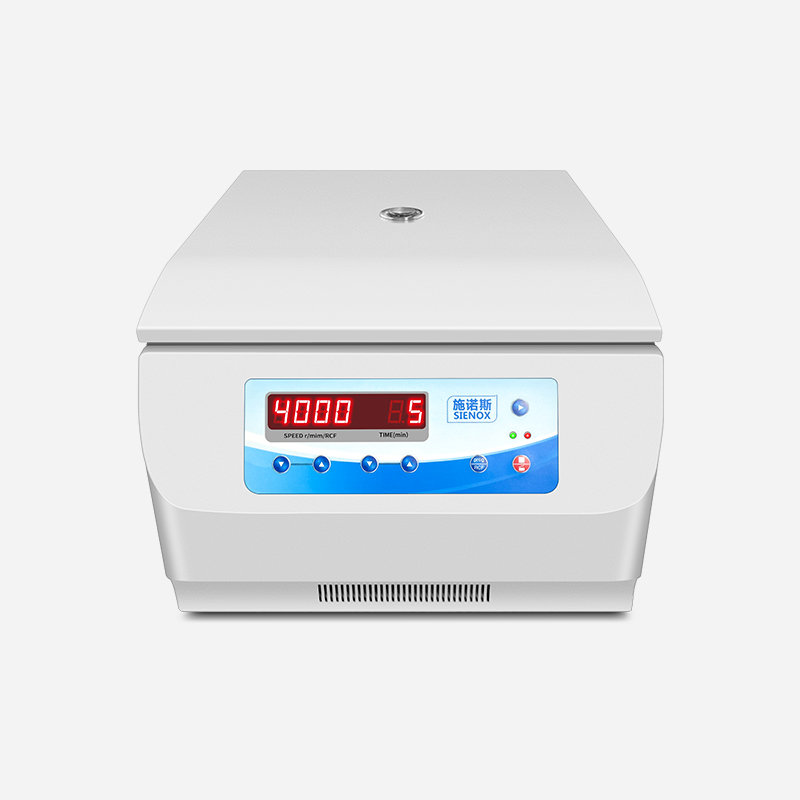
离心脱泡机 SIE-C006
About SIENOX
广州施诺斯(SIENOX),20年脱泡机设备研发与生产的源头厂家
超过1800种材料脱泡案例
纳米级脱泡,满足不同材料多段搅拌除泡需要,支持定制
资质齐全,荣获多项国家专利,联系我们可免费试样