


News

TEL:18925129293


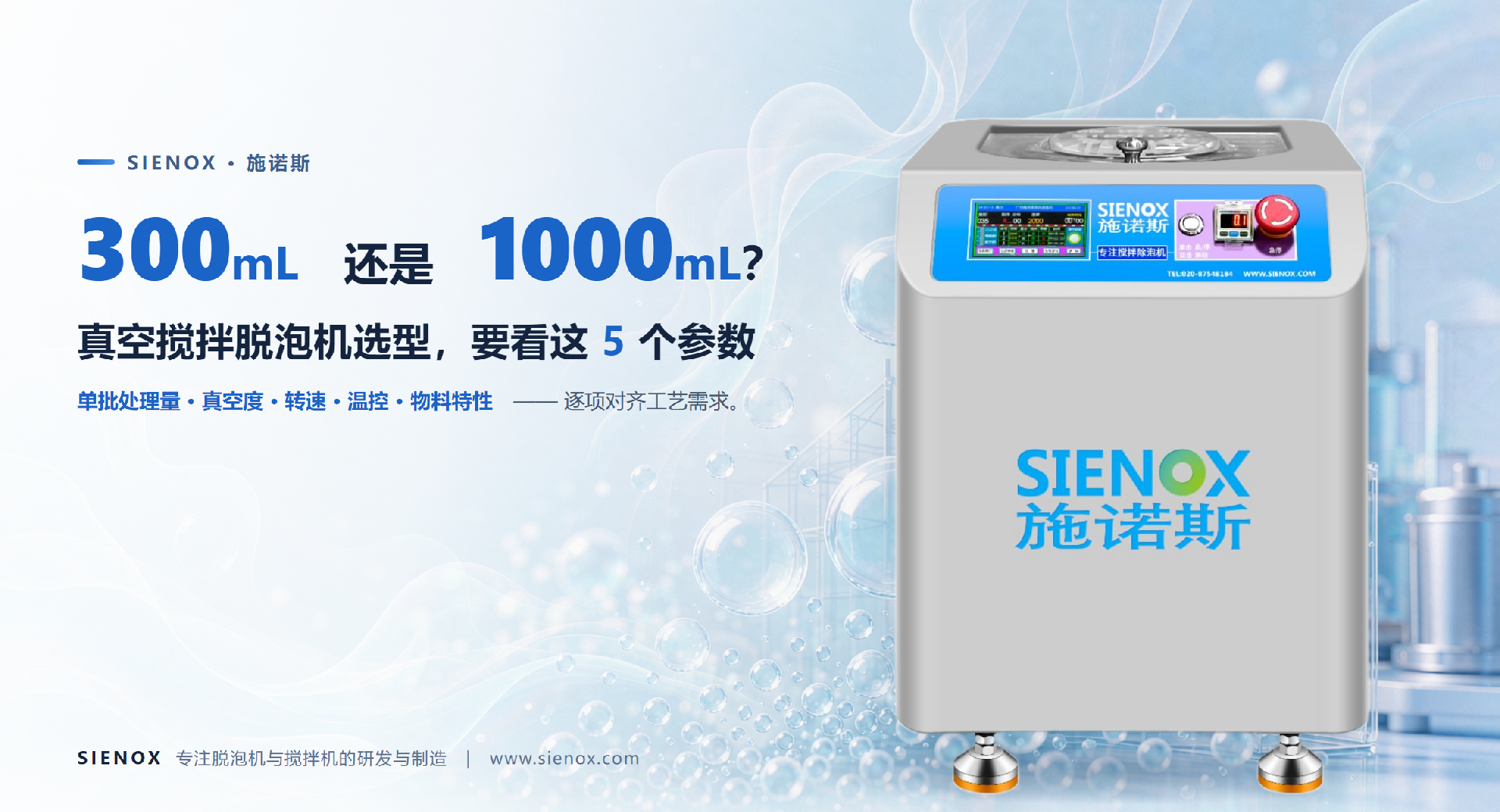
300mL or 1000mL? 5 Key Parameters for Vacuum Mixing & Defoaming Mixer Selection
date:2026-11-03author:小施When selecting a vacuum mixing and defoaming mixer, the most easily misunderstood specification is the "processing capacity", while vacuum level, rotation speed, temperature control and material properties are frequently overlooked. Take SIENOX planetary vacuum mixing and defoaming mixers as examples: SIE-MIX60 / SIE-MIX80 handles 0–300 mL per batch, and SIE-MIX1000plus handles 0–1000 mL per batch. The standard vacuum level is -98 kPa (-100 kPa optional). Temperature control is an optional customized module, not standard. The following elaborates on these five parameters one by one.
Parameter 1: Batch Processing Capacity — Confirm batch volume first, then daily batches
SIE-MIX60 / SIE-MIX80: 0–300 mL per batch, suitable for laboratory sampling, small-batch multi-formula and R&D verification scenarios.
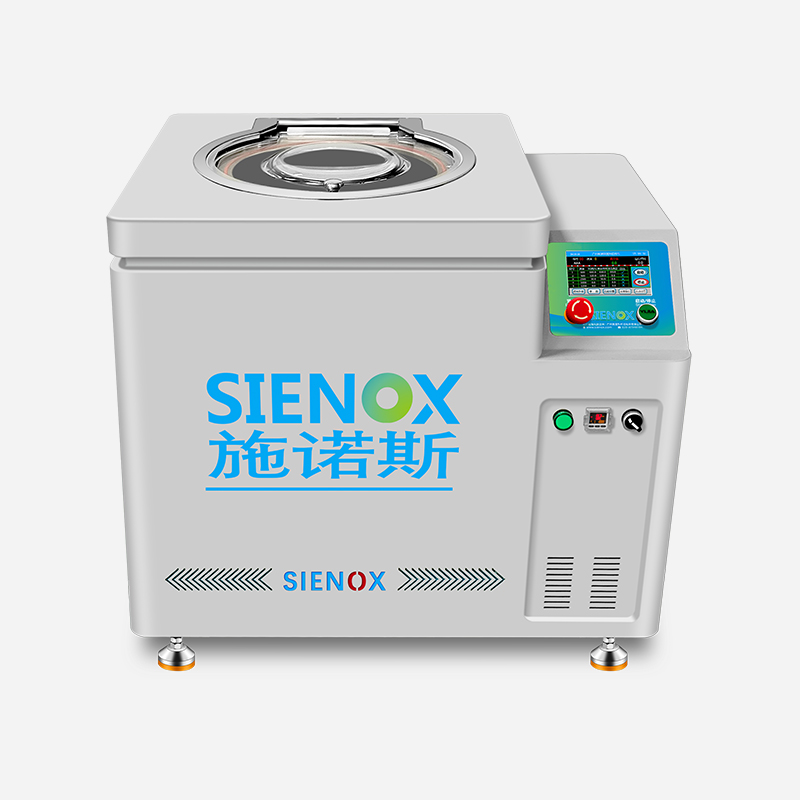
SIE-MIX1000plus: 0–1000 mL per batch, suitable for pilot testing and small-batch production.
Calculation method: Daily processing demand ÷ expected batch quantity = required batch capacity. For example, if 3 L is required per day with 4 batches planned, the required batch volume is about 750 mL, and SIE-MIX1000plus can meet the requirement with margin. Note that the nominal processing capacity is not equal to the tank volume. Space must be reserved for material foaming during feeding; refer to the equipment manual and on-site test results for details.
For the same 300 mL range: SIE-MIX60 adopts gear transmission, while SIE-MIX80 uses belt transmission (lower operating noise, only belt replacement required for maintenance). They share the same core parameters, and users can choose according to laboratory environment requirements.
Parameter 2: Vacuum Level — Determines whether bubbles can be fully removed
Vacuum level serves as the driving force for defoaming. The lower the air pressure inside the chamber, the larger the pressure difference inside and outside the bubbles in the material, enabling faster bubble expansion and release. The three mainstream SIENOX models come with a standard vacuum level of -98 kPa, with an optional -100 kPa.
Two practical tips:
The standard vacuum level is the upper limit of the equipment. The process vacuum should be set according to materials: high-viscosity pastes can adopt higher vacuum, while low-viscosity liquids may foam violently and overflow the chamber near the ultimate vacuum, so staged pressure reduction is recommended;
When comparing equipment parameters, confirm consistent reference standards (gauge pressure / absolute pressure) to avoid misinterpretation caused by different marking methods. Some data on the market mark -98 kPa as -95, -99 or even -100 kPa as standard; refer to the official parameter page of the manufacturer.
Parameter 3: Rotation Speed & Revolution / Rotation — Determines mixing uniformity
The mixing capability of planetary equipment comes from the combined planetary revolution and rotation movement. All three models feature stepless adjustable speed: SIE-MIX60 / SIE-MIX80: 0–3000 RPM, SIE-MIX1000plus: 100–2000 RPM. Do not only focus on the maximum speed during selection. Adjustable speed is more critical. Suitable speeds vary for different viscosities and loading volumes. The common practice is to start at low speed and gradually increase after observing material flow status (typical reference values, subject to on-site test results).
Parameter 4: Temperature Control — Note: This is an optional item
Temperature control is an optional customized module, not standard configuration. Whether it is required depends on whether the material is temperature-sensitive. Some high-viscosity materials experience temperature rise under long-time high-speed operation, which affects viscosity and defoaming performance. Many materials can be processed at room temperature. Heating and cooling assemblies can be installed on SIE-MIX1000plus according to process requirements.
Recommended workflow: Complete process verification (such as sample testing) first, confirm temperature control is truly required, then decide to add the module, instead of choosing fully equipped configurations blindly.
Parameter 5: Material Properties — Viscosity, Solid Content, Particle Size
Clarify these three indicators before selection:
Material Properties | Impact on Selection & Process | Recording Method |
Viscosity | Determines rotation speed, vacuum stages and holding time | Typical viscosity value or range under working temperature |
Solid Content | High-solid-content systems trap more bubbles and require longer defoaming time | Percentage of solid content |
Filler Particle Size | Systems with abrasive or large-size fillers need compatibility confirmation for chamber and sealing parts | D50 or maximum particle size |
Providing these three sets of data to the equipment supplier for sample testing is more effective than checking any parameter sheet. SIENOX offers free incoming sample testing, you only need to send samples for verification.
Quick Reference Table of Five Parameters
Parameter | SIE-MIX60 | SIE-MIX80 | SIE-MIX1000plus | Selection Tips |
Batch Capacity | 0–300 mL | 0–300 mL | 0–1000 mL | Daily demand ÷ batches, reserve foaming space |
Vacuum Level | -98 kPa standard | -98 kPa standard | -98 kPa standard | Set vacuum by stages according to materials |
Rotation Speed | 0–3000 RPM | 0–3000 RPM | 100–2000 RPM | Focus on stepless adjustable range instead of maximum value only |
Transmission Type | Gear Transmission | Belt Transmission (Low Noise) | — | Choose belt transmission for noise-sensitive labs |
Temperature Control | Optional | Optional | Optional (heating/cooling assembly available) | Confirm process demand before adding this option |
Application Scenarios | Small batch, multi-formula | Small batch, noise-sensitive environment | Pilot test, small-batch production | Confirm viscosity / solid content / particle size in advance |
Typical Process Workflow for Selection Verification
Background: Uncertain whether to choose 300 mL or 1000 mL model and required vacuum curve before purchase.
Difficulty: Material performance cannot be judged merely from parameter sheets, blind selection may lead to oversized or undersized equipment.
Selection Principle: Running tests with real materials on real equipment is the only low-cost verification method.
Process Steps:
Collect three core material data (viscosity, solid content, particle size) and target batch volume;
Select candidate models according to target batch volume (300 mL → SIE-MIX60 / SIE-MIX80; 1000 mL → SIE-MIX1000plus);
Apply for free incoming sample testing and send material samples;
Confirm working conditions with technical team: loading volume, vacuum stages, rotation speed, holding time;
Obtain test results (comparison before and after defoaming), confirm performance and cycle time, then finalize the model.
Comparison: Selection changes from "guessing by parameter sheets" to "determining by measured data", avoiding mismatched capacity or vacuum level after purchase.
FAQ: 5 Common Questions about Defoaming Mixer Selection
Q1: What are the core differences between SIE-MIX60 and SIE-MIX1000plus? Batch capacity and speed range: SIE-MIX60: 0–300 mL, 0–3000 RPM; SIE-MIX1000plus: 0–1000 mL, 100–2000 RPM. They share the same vacuum level (standard -98 kPa, optional -100 kPa).
Q2: Which model for 5 L daily processing? Calculate batch volume by daily demand ÷ batch quantity, then refer to 300 mL / 1000 mL options and reserve foaming space; run sample testing to confirm cycle time if uncertain.
Q3: Is higher vacuum always better? The standard vacuum is the upper limit of equipment capability. Vacuum should be set by stages according to materials; low-viscosity materials may foam violently and overflow near ultimate vacuum.
Q4: Is temperature control required for defoaming mixers? Temperature control is an optional customized module, not standard. It is recommended to verify process demand via sample testing before adding this option.
Q5: Can I test before purchase? Yes. SIENOX provides free incoming sample testing and one-on-one technical solution service. You can send samples to get measured comparison results before and after defoaming.
Related recommendations
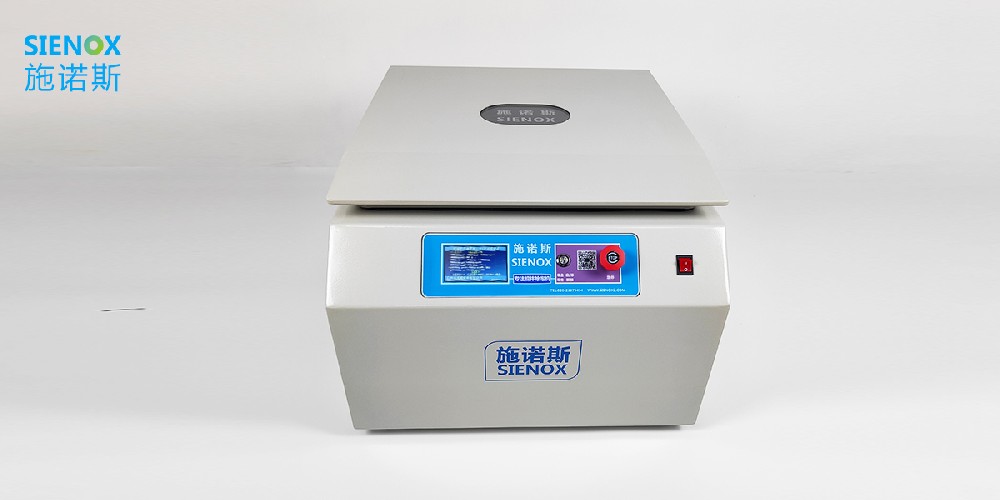
Centrifugal defoaming machine: An efficient tool for both laboratory and factory.

The extensive application fields of planetary defoaming machines.
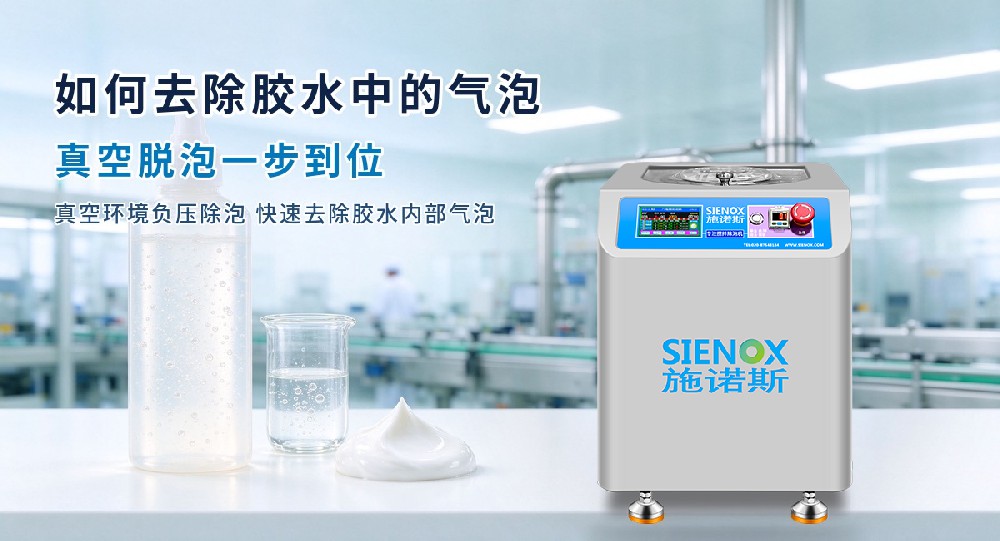
How to remove bubbles from glue
The application of vacuum stirring defoaming machine in the defoaming process of silver paste materials.
Perhaps you still need....
行星式真空脱泡搅拌机 SIE-MIX1000plus
实验室行星式搅拌脱泡机 SIE-SV200
SIENOX行星式脱泡搅拌机 SIE-CV300
离心脱泡机 SIE-C006
About SIENOX
广州施诺斯(SIENOX),20年脱泡机设备研发与生产的源头厂家
超过1800种材料脱泡案例
纳米级脱泡,满足不同材料多段搅拌除泡需要,支持定制
资质齐全,荣获多项国家专利,联系我们可免费试样