


News
TEL:18925129293


Mixing and degassing equipment is also being reshaped by intelligent technology.
date:2026-09-17author:小施Mixing and Degassing Equipment Is Being Reshaped by Intelligence
From "manual mixing relying on experience" to "one-click degassing": the upgrading journey of a 20-year-old manufacturer
On September 8, China Youth Daily published an in-depth report Factories Reshaped by AI. Reporters from the "AI Empowering Thousands of Industries Frontline Research Tour" visited multiple enterprises in Guangxi and delivered insightful findings. (Source: China Youth Daily)
Several figures deserve attention:
Liuzhou Iron and Steel Group deployed an ironmaking large model named "Xuantie". Previously, ore blending decisions took 72 hours, whereas results can now be generated in 16 minutes. Thirty-three AI models cover the whole production workflow, lifting overall efficiency by 8.5%.
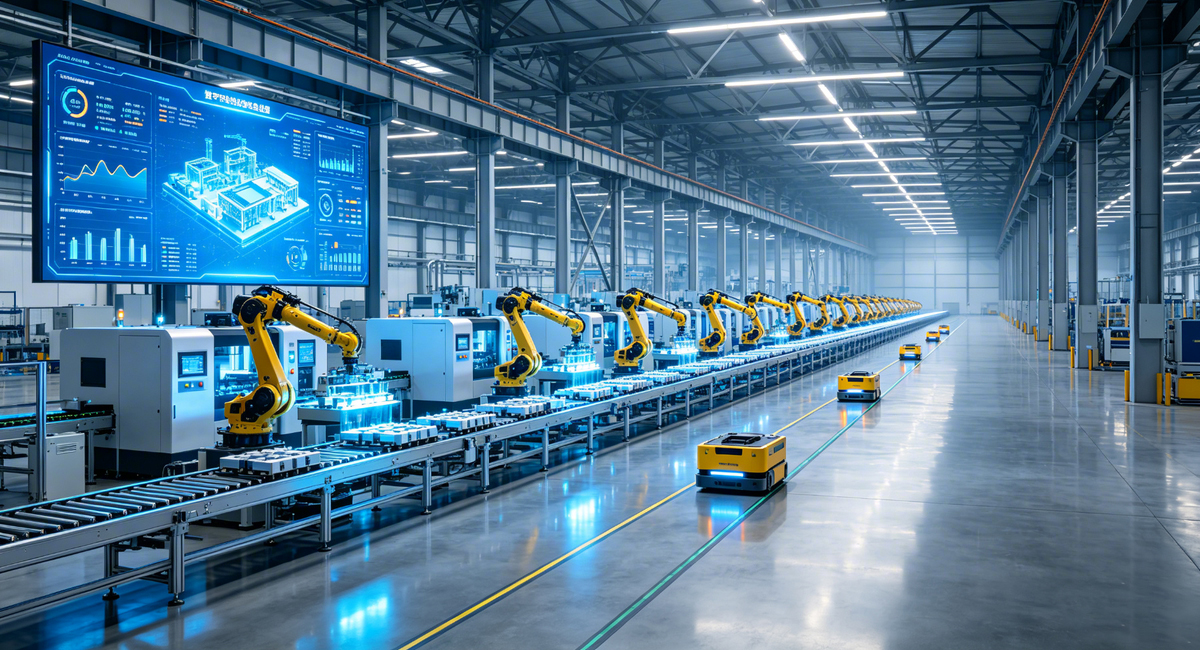
Yuchai Machinery went even further by building an "AI agent cluster", boosting production efficiency by over 40%. It takes as little as 12 hours to turn thousands of raw materials into an engine. This project has also been selected as one of Guangxi’s top ten leading application scenarios for "AI + Manufacturing".
Guangxi Petrochemical constructed a national leading smart factory, where AI video recognition monitors safety hazards in real time, and a full-process intelligent control system handles subtle process operations. (Source: Chinanews.com)
One detail in the report left a deep impression on me. Kang Yuxia, Director of the Technology Department at Yuchai’s production site, remarked:
"Intelligent transformation is not an abstract concept or a pursuit of technical gimmicks. Its core is to solve practical on-site problems regarding efficiency, quality, safety and flexibility."
Having operated in the segmented mixing and degassing industry for 20 years, we fully resonate with this statement. The challenges encountered in mixing and degassing are essentially identical to those faced by the steel and engine industries before transformation.
Problems in Mixing Workshops Mirror Those in Steel Mills
If you have visited traditional building material workshops, adhesive production lines or electronic slurry laboratories, you must be familiar with the following scenarios:
Operators stand beside raw material barrels, mixing manually with paddle mixers for 15 to 30 minutes, switching shifts when arms get sore. Mixing is followed by static defoaming and a second round of mixing. Whether bubbles are fully removed depends purely on experience — "stop mixing once no visible foam remains". Batches vary between operators, and results even differ for the same operator in summer versus winter.
The China Youth Daily report described a similar scene at Liuzhou Iron and Steel:
"In the past, workers judged temperature by visually observing color changes of steel plates and sensed equipment vibration through experience. This 'human sensing' mode brought heavy labor intensity and was prone to fatigue-induced errors."
Simply put, it is "experience dependency". All manufacturing industries were trapped at this stage before intelligent transformation.
A clear contrast emerges when comparing traditional methods with modern equipment solutions:
Dimension | Traditional Mode | Equipment Mode |
Mixing Operation | Manual speed & time control, endpoint judged empirically | Programmable parameter setting, one-click run |
Degassing Performance | Visual bubble estimation, non-quantifiable | Forced degassing under vacuum, porosity measurable |
Batch Consistency | Operator-dependent, CV 8%~15% | Locked parameters, CV <2% |
Labor Intensity | Hard to mix high-viscosity materials, prolonged standing operation | Fully automatic operation, only feeding & material collection required |
Data Traceability | No records, root causes untraceable for defects | Automatic runtime parameter storage, each batch traceable |
Sinos’ 20-Year Focus on Solving One Core Problem
We started manufacturing mixing and degassing equipment in 2006, marking a full 20 years to date.
Looking back, the industry has undergone three major evolutions. Each phase aims to remove bubbles from materials more thoroughly, controllably and with less labor.
The earliest paddle mixers solved the problem of "unmixable high-viscosity materials", yet brought new drawbacks: eddies generated by rotating paddles draw in massive air, creating more bubbles during mixing.
Later mixing degassers realized forced bubble removal under vacuum, cutting porosity from 8% to below 1%. However, they adopted a two-step "mix first then degas" workflow with limited efficiency.
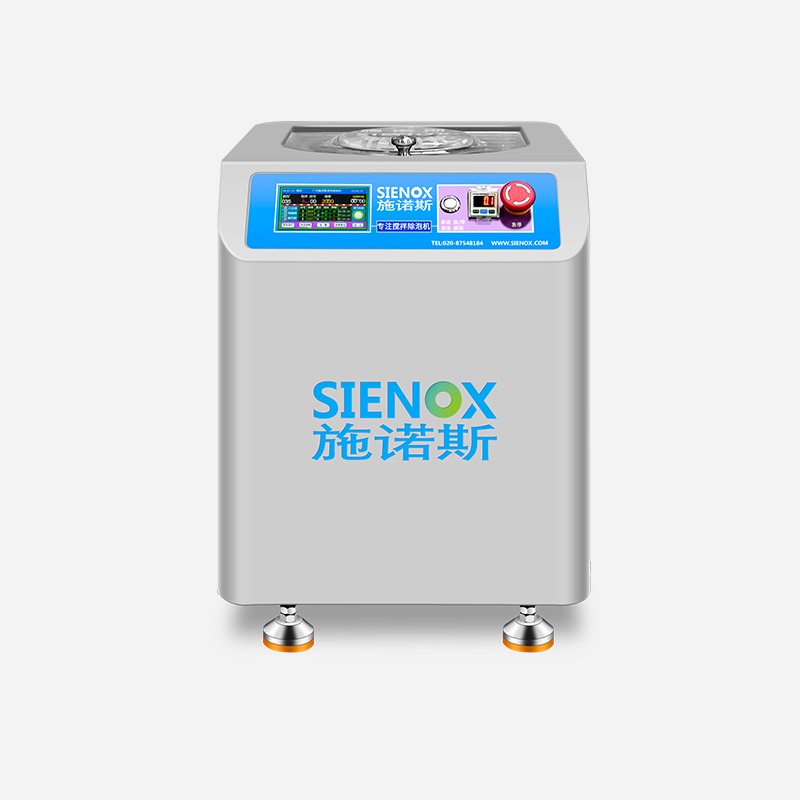
Today, Sinos planetary mixing degassers integrate mixing and degassing in one machine. Planetary motion achieves paddle-free mixing to avoid introducing extra bubbles at the source; a -95KPa vacuum environment expands and discharges existing bubbles. A programmable touchscreen enables one-click parameter setup, and runtime data is automatically stored for batch traceability.
This is exactly the practical interpretation of Kang Yuxia’s words: solving real on-site issues of efficiency, quality, safety and flexibility, without fancy gimmicks.
Data Speaks for Itself
Principles alone are not intuitive. Below are measured comparison data for Grade C2 tile adhesive (viscosity 35,000cps) processed by paddle mixing and Sinos planetary mixing degasser:
Comparison Item | Traditional Paddle Mixing | Sinos Planetary Mixing Degasser |
Slurry Porosity | 8.2% | 0.3% |
Full Slurry Ratio | 82% | 99.1% |
Tensile Bond Strength | 0.65 MPa | 1.18 MPa |
Hollowing Rate | 18% | <0.5% |
Processing Time | 18 min (including static defoaming & re-mixing) | 5 min |
Batch Consistency (CV) | 8%~15% | <2% |
Labor Requirement | Fully manual | One-click start, unattended operation |
Data Traceability | N/A | Auto storage |
Porosity dropping from 8.2% to 0.3% represents far more than a minor improvement.
Just as the "Xuantie" large model shortened ore blending decision-making from 72 hours to 16 minutes, planetary mixing degassers transform degassing from a "craft skill" into a quantifiable, replicable and traceable standardized workflow.
Equipment Serves Humans
The China Youth Daily report raised a question: does artificial intelligence replace humans or serve humans?
Sinos chooses the latter. Our equipment is not designed to replace operators; instead, it helps operators deliver higher-value work.
Previously, mixing took 30 minutes with messy materials and heavy fatigue. Now operators press one button, prepare the next batch of raw materials, and retrieve finished material after 5 minutes. In the past, people judged "good enough" empirically without reproducible records for defects. Today parameters are locked and data saved, enabling direct review of historical logs once issues occur.
The operator remains, but the role shifts: from manual laborer to process manager.
This is identical to Liuzhou Iron and Steel relocating workers from beside high-temperature 10-meter equipment to ground control rooms.
Following Industry Trends for Mixing & Degassing
2026 marks the final year of the 14th Five-Year Plan. In client communication over recent years, we clearly observe several trends:
The new materials industry imposes tighter requirements on quality consistency. For new energy, semiconductor and aerospace sectors, degassing standards approach "zero bubbles". Traditional building materials are also upgrading: tile adhesives advance from Class C1 to C2, and grouting materials evolve from ordinary grades to high-strength grades.
Simply put, old workflows of manual mixing plus natural defoaming can hardly meet downstream demands. Upgrading mixing and degassing processes is no longer optional but mandatory.
Over 20 years, Sinos has expanded from its first mixing degasser to a full product lineup (MIX60/MIX90/MIX300/MIX1000PLUS/MIX2000). Our mission stays unchanged: make mixing and degassing more controllable and user-friendly.
Moving forward, we will keep investing in programmable control, operational data analytics and remote process parameter distribution, advancing equipment from automation to higher intelligence.
Closing Remarks
Mixing and degassing equipment may not attract as much attention as steel large models or humanoid robots. Yet for enterprises handling adhesives, slurries and building material pastes, mixing and degassing quality forms the foundation of final product quality.
Sinos has spent 20 years manufacturing this "invisible yet indispensable" fundamental equipment. You are welcome to send samples for testing; we prove performance with data.
Related recommendations
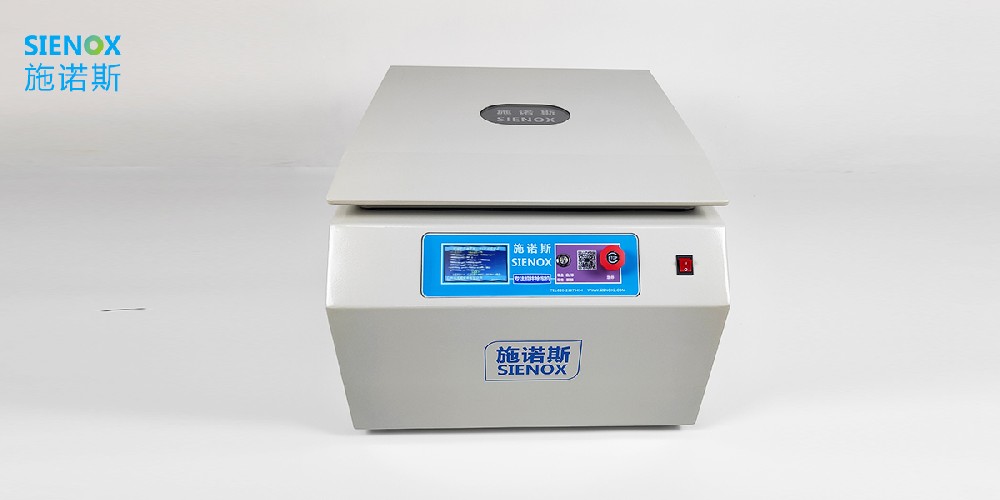
Centrifugal defoaming machine: An efficient tool for both laboratory and factory.
The extensive application fields of planetary defoaming machines.
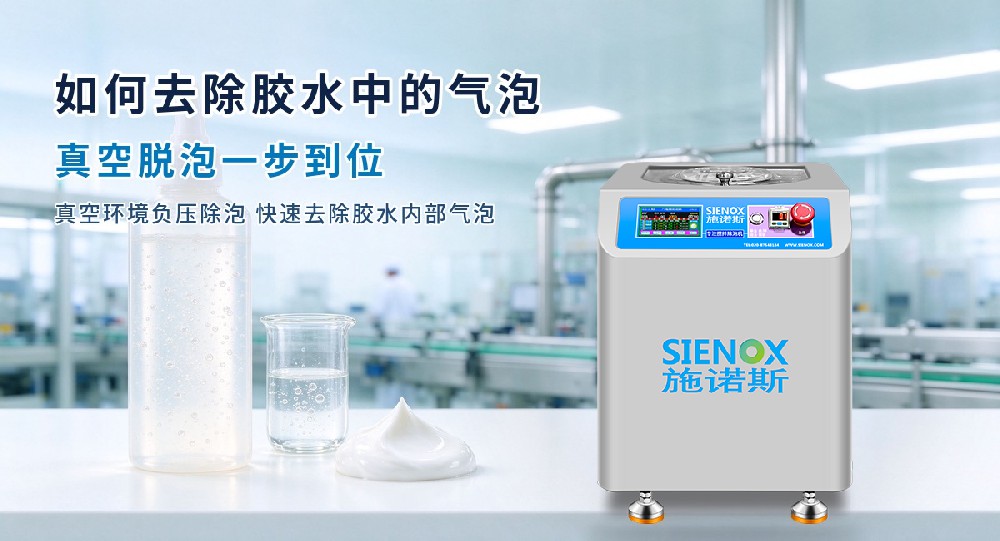
How to remove bubbles from glue
The application of vacuum stirring defoaming machine in the defoaming process of silver paste materials.
Perhaps you still need....
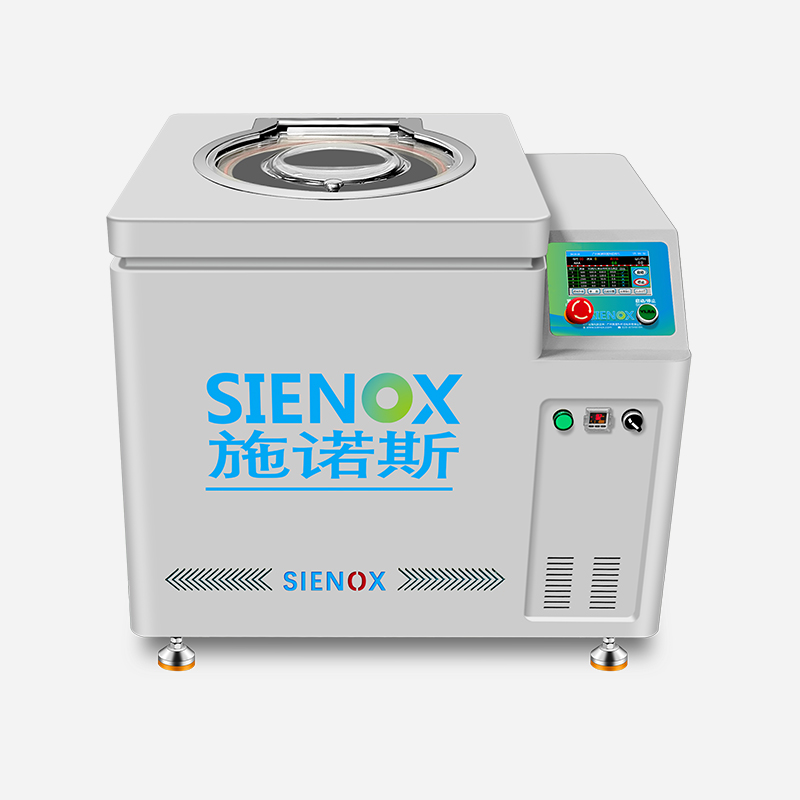
行星式真空脱泡搅拌机 SIE-MIX1000plus
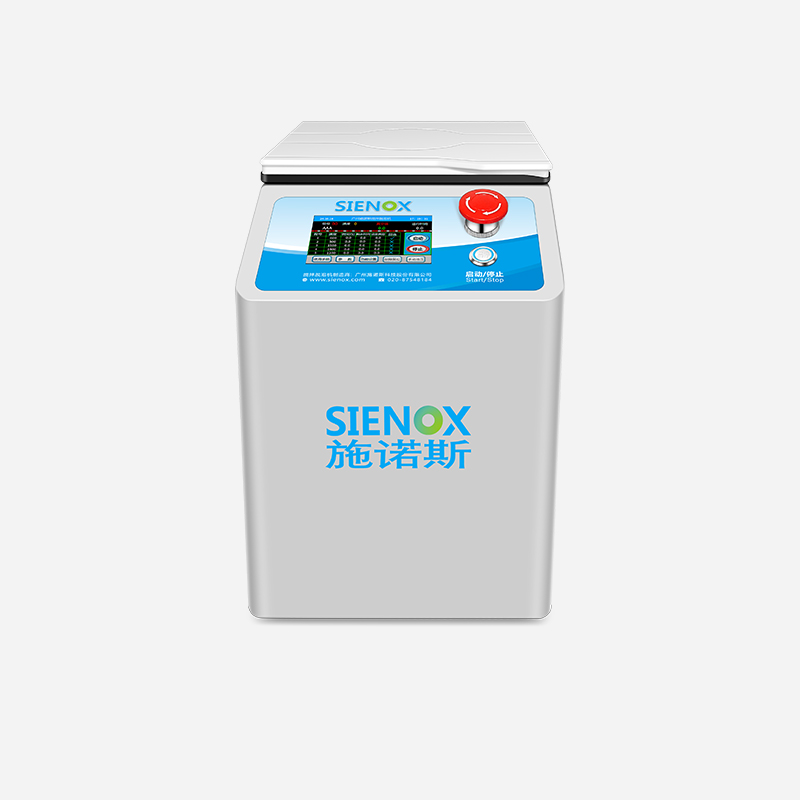
实验室行星式搅拌脱泡机 SIE-SV200
SIENOX行星式脱泡搅拌机 SIE-CV300
离心脱泡机 SIE-C006
About SIENOX
广州施诺斯(SIENOX),20年脱泡机设备研发与生产的源头厂家
超过1800种材料脱泡案例
纳米级脱泡,满足不同材料多段搅拌除泡需要,支持定制
资质齐全,荣获多项国家专利,联系我们可免费试样