


Construction Paste

TEL:18925129293


C2 tile adhesive defoaming solution: from bubble elimination to 99% full mortar rate, an in-depth guide on key choices for stirring and defoaming
date:2026-09-11author:小施I. The Bubble Issue of C2 Tile Adhesive Is More Severe Than You Think
C2 tile adhesive (tensile bond strength ≥1.0MPa, complying with standard JC/T 547-2017) is an essential material for installing low-water-absorption vitrified tiles, large-format slabs and sintered stone panels. However, many contractors purchase premium C2 adhesive at high cost only to end up with hollowing and tile detachment. The root cause usually lies not in the material itself, but in the mixing process.
C2 tile adhesive is characterized by high solid content and high viscosity (typically 25,000~45,000cps), containing large amounts of redispersible polymer powder and cellulose ether. These ingredients easily entrap air during mixing:
Powder feeding: Air trapped between powder particles gets sealed inside the paste after water addition
Mixing stage: Mechanical agitation creates vortices that continuously draw surface air into the paste
Troweling stage: When the notched trowel pushes the paste, internal bubbles are further stretched and dispersed
The consequences of bubbles are cascading:
Cavities form inside the adhesive layer after application, reducing full mortar coverage between tiles and substrate and directly causing hollowing
Bubbles accumulate at the interface between tile back and adhesive layer, lowering the effective bonding area. Tensile bond strength can drop sharply from ≥1.0MPa to 0.4~0.6MPa, far below the C2 requirement
After curing, bubble locations become stress concentration points that accelerate cracking under temperature cycling and load
In humid environments, bubble channels turn into water penetration paths, triggering freeze-thaw damage and mildew growth
According to industry test data, C2 tile adhesive mixed with conventional methods normally has a paste porosity of 5%~10%, with full mortar coverage fluctuating between 75%~85%. This means for every 100 sq.m of tiling area, 15~25 sq.m may carry varying degrees of hollowing risks.
II. Actual Performance of Four Mixing Methods: Which One Makes Things Worse?
2.1 Manual Mixing — More Bubbles With Stirring
The most primitive method. Manual mixing with shovels or sticks delivers poor homogeneity and continuously entrains air during stirring. Large bubbles are visible to the naked eye while microbubbles remain trapped deep inside the paste. Batch consistency is nearly non-existent, fully dependent on workers’ experience and condition.
Application Scope: Only for low-demand temporary repairs. Manual mixing is strictly prohibited for C2 tile adhesive.
2.2 Handheld Electric Mixer (Paddle/Propeller Type) — Mainstream on Construction Sites, Source of Problems
This is the most widely adopted mixing method on sites: low-speed electric mixers (300~600rpm) fitted with propeller or flat paddles submerged inside buckets for mixing.
It appears to produce uniform mixing yet carries severe hidden issues:
Problem Dimension | Specific Performance |
Continuous Air Entrainment | Rotating paddles create vortices, continuously pulling surface air deep into paste; longer stirring traps more air |
Dead Zones | Corners of bucket bottom and paste adhering to bucket walls are not mixed, leaving undispersed powder agglomerates |
Defoaming Inability | Under atmospheric pressure, microbubbles are locked within high-viscosity paste and cannot rise and escape spontaneously |
Noticeable Temperature Rise | Frictional heat generated by high shear of rotating paddles raises paste temperature and accelerates consumption of additives |
Unstable Batch Quality | Depends on operator technique, mixing quality varies greatly between workers and batches |
Test Data: When mixing C2 tile adhesive (35,000cps) with handheld paddle mixer, paste porosity reaches approx. 8.2% after 5 min mixing and remains 6.5% after 10 min resting. Full mortar coverage is around 82%, tensile bond strength only hits 0.65MPa — despite using C2 grade material, actual performance is close to C1 grade.
2.3 Vertical Mixer (with Paddle/Frame Agitator) — Suitable for Factory Premixing, Insufficient On-site Defoaming
Vertical mixers commonly used on factory production lines fitted with frame or anchor paddles run at lower speeds (60~200rpm), suitable for large-batch premixing. Some high-end models are equipped with vacuum defoaming function.
Advantages: Large batch capacity, good homogeneity, vacuum option available on selected models
Disadvantages:
Ordinary paddle vertical mixers still suffer from air entrainment; vacuum models are costly (usually 100,000~300,000 CNY)
Direct contact between paddles and materials creates risk of abrasion contamination
Bulky equipment, not fit for construction site use
High-viscosity material sticks heavily to mixer walls during paddle mixing, making cleaning difficult
2.4 Planetary Mixer-Defoamer — Mixing and Defoaming Completed in One Step
Represented by SIENOX, planetary mixer-defoamers adopt a completely different technical route:
Working Principle: The mixing cup performs planetary motion combining revolution and rotation. The paste undergoes complex 3D tumbling movement inside the cup, with every micro volume repeatedly folded, sheared and exposed. Combined with vacuum environment (-95KPa), internal pressure inside bubbles drops sharply, expanding bubble volume for rapid rupture and escape.
Core Difference — Paddle-Free Design:
The biggest distinction from paddle mixers is that planetary mixer-defoamers contain no mixing paddles inside the material cup. Material movement is fully driven by centrifugal force and gravity generated by planetary motion, fundamentally eliminating:
Air entrainment from mixing paddles
Contamination caused by paddle abrasion
Cleaning difficulty from material sticking to paddles
Temperature rise induced by paddle shearing
III. Planetary vs Paddle Mixing: C2 Tile Adhesive Benchmark Test
We carried out tests on C2 tile adhesive (viscosity 35,000cps), processed separately by handheld paddle mixer (600rpm) and SIENOX MIX90 planetary mixer-defoamer. Comparison results as follows:
Comparison Item | Handheld Paddle Mixer | SIENOX MIX90 Planetary Mixer-Defoamer |
Mixing Method | Paddle rotation, vortex air entrainment | Planetary revolution & rotation, 3D tumbling without vortex |
Porosity After Mixing | 8.2% | 0.3% |
Porosity After 10min Rest | 6.5% | 0.3% (No resting required) |
Full Mortar Coverage (Notched Trowel Application) | 82% | 99.1% |
Tensile Bond Strength | 0.65 MPa | 1.18 MPa |
Processing Time | 5min mixing + 10~30min resting | 5min mixing & defoaming, ready for immediate use |
Temperature Rise | +3~5℃ (heat from friction) | +0.5~1℃ (negligible temperature rise) |
Batch Consistency | Manual-dependent, large fluctuation | Parameterized control, CV<2% |
Labor Dependence | High | Low, auto-run after parameter setup |
Cleaning Difficulty | Material sticks to paddles, time-consuming cleaning | No paddles; simply remove cup and rinse |
Conclusion: After adopting planetary mixer-defoamer, porosity of C2 tile adhesive drops from 8.2% to 0.3%, full mortar coverage rises from 82% to 99.1%, tensile bond strength increases by 81%, changing from "barely qualified" to "far exceeding standard". More importantly, processing time is shortened from 30~35 minutes to 5 minutes, ready for immediate application without resting period.
IV. Benchmark Tests Under Three Typical Working Conditions for C2 Tile Adhesive
Case 1: Wall Vitrified Tile Installation (35,000cps)
Parameter | Value |
Material | C2 Tile Adhesive (Specified for Wall Vitrified Tiles) |
Viscosity | 35,000 cps |
Model | MIX90 |
Vacuum Level | -95 KPa |
Rotation Speed | Revolution 1,500rpm / Rotation 750rpm |
Time | 5 min |
Temperature | Ambient Temperature |
Result: Paste porosity drops from 8.2% after mixing to 0.3%, tile full mortar coverage rises from 82% to 99.1%, tensile bond strength increases from 0.65MPa to 1.18MPa (exceeding C2 requirement ≥1.0MPa), hollowing rate falls from 18% to below 0.5%.
Case 2: Large-format Slab Installation on Floor (28,000cps)
Parameter | Value |
Material | C2TES1 Tile Adhesive (Flexible for Large Slabs) |
Viscosity | 28,000 cps |
Model | MIX90 |
Vacuum Level | -95 KPa |
Rotation Speed | Revolution 1,200rpm / Rotation 600rpm |
Time | 4 min |
Temperature | Ambient Temperature |
Result: Paste porosity reduced to 0.2%, full mortar coverage reaches 99.5% (double-sided adhesive application). 28-day tensile bond strength hits 1.25MPa, transverse deformation meets S1 grade (≥2.5mm), zero hollowing for large slab tiling.
Case 3: Waterproof Tile Adhesive for Humid Environment (42,000cps)
Parameter | Value |
Material | C2TE Tile Adhesive (Waterproof Type for Bathrooms & Swimming Pools) |
Viscosity | 42,000 cps |
Model | MIX1000PLUS |
Vacuum Level | -95 KPa |
Rotation Speed | Revolution 1,500rpm / Rotation 750rpm |
Time | 6 min |
Temperature | Ambient Temperature |
Result: Paste porosity reduced to 0.4%. Tensile bond strength remains 0.9MPa after 72h water immersion (minimum requirement ≥0.5MPa), impermeability grade reaches P8. Bathroom wall installation achieves zero hollowing and zero leakage.
V. Comparison Before and After Improvement
<td style="border-top:none;border-left:none;border-bottom:solid #DDDDDD 1px;border-right:solid #DDDDDD 1px;padding:5px 10px 5px 1
Comparison Item | Traditional Paddle Mixing | SIENOX Planetary Mixing & Defoaming | Improvement Margin |
Paste Porosity | 8.2% | 0.3% | ↓ 96.3% |
Tile Full Mortar Coverage | 82% | 99.1% | ↑ 17.1 percentage points |
Tensile Bond Strength | 0.65 MPa | 1.18 MPa | ↑ 81.5% |
Hollowing Rate | 18% | <0.5% | ↓ 97%+ |
Processing Time | 35~40min (including resting) | 5 min | ↓ 85%+ |
Batch Consistency (CV) | 15%~25% | <2% | Greatly Improved |
Labor Cost | High (experience-dependent) | Low (parameterized operation) | Significantly Reduced |
Immediate Application | No (30min resting required) | Yes |
Related recommendations

C2 tile adhesive defoaming solution: from bubble elimination to 99% full mortar rate, an in-depth guide on key choices for stirring and defoaming
Cement-based Self-leveling Defoaming Solution: Eliminate Pinholes & Pitting, Form Mirror Finish in One Step
Perhaps you still need....
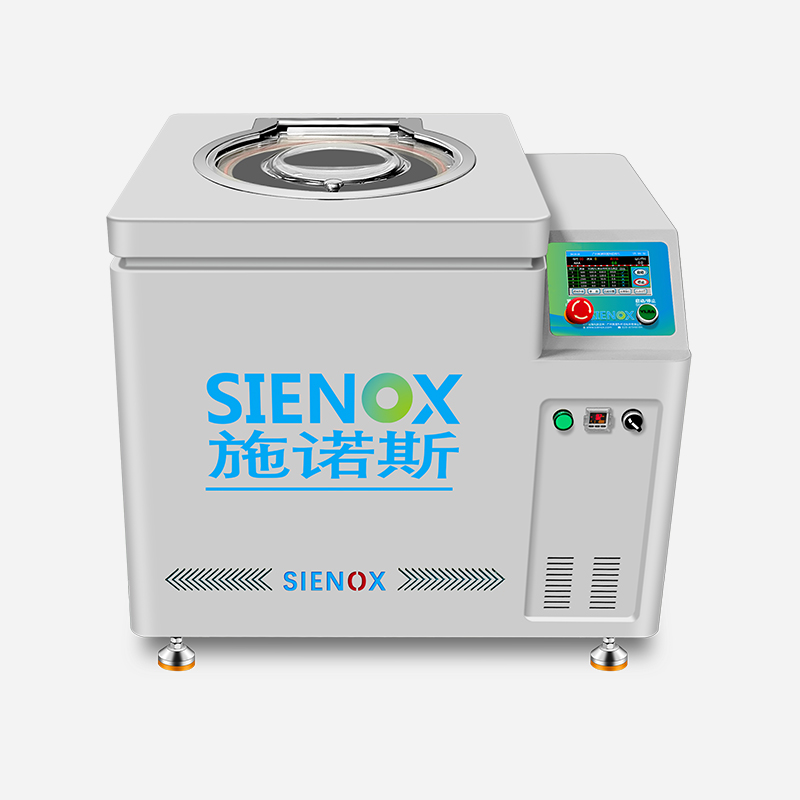
行星式真空脱泡搅拌机 SIE-MIX1000plus
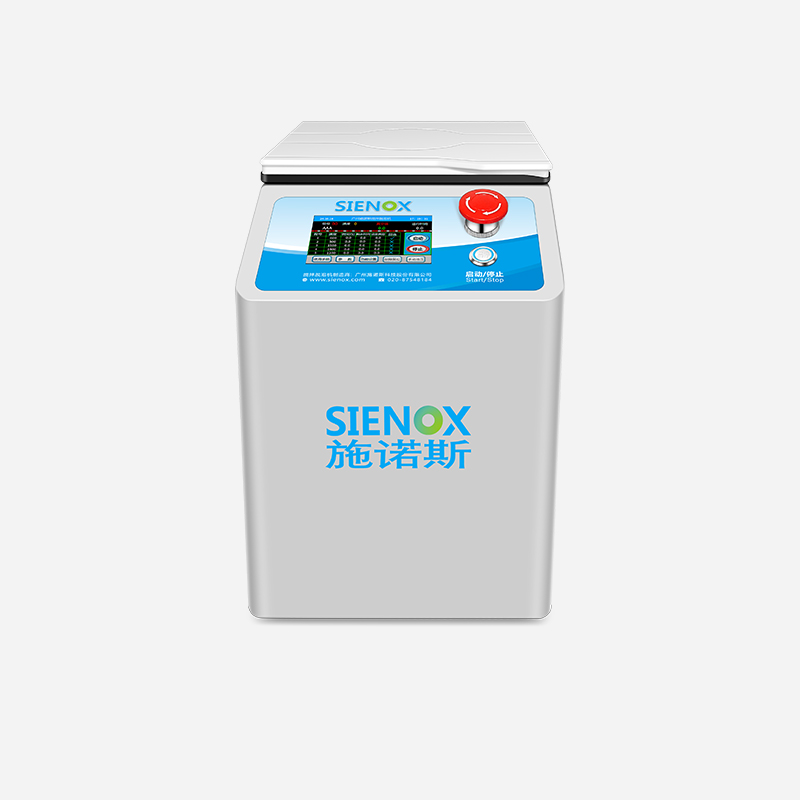
实验室行星式搅拌脱泡机 SIE-SV200
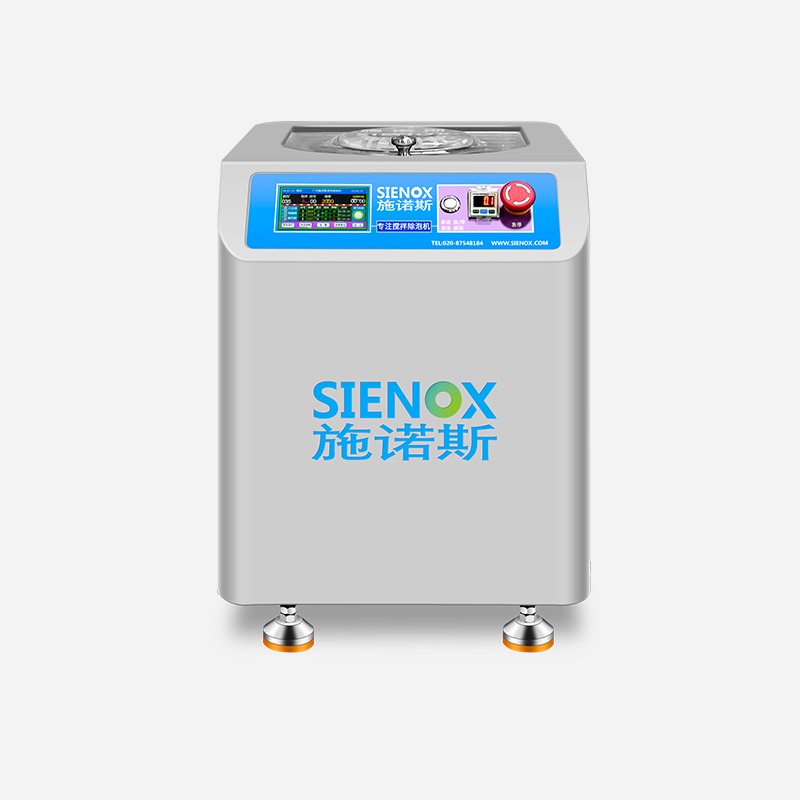
SIENOX行星式脱泡搅拌机 SIE-CV300
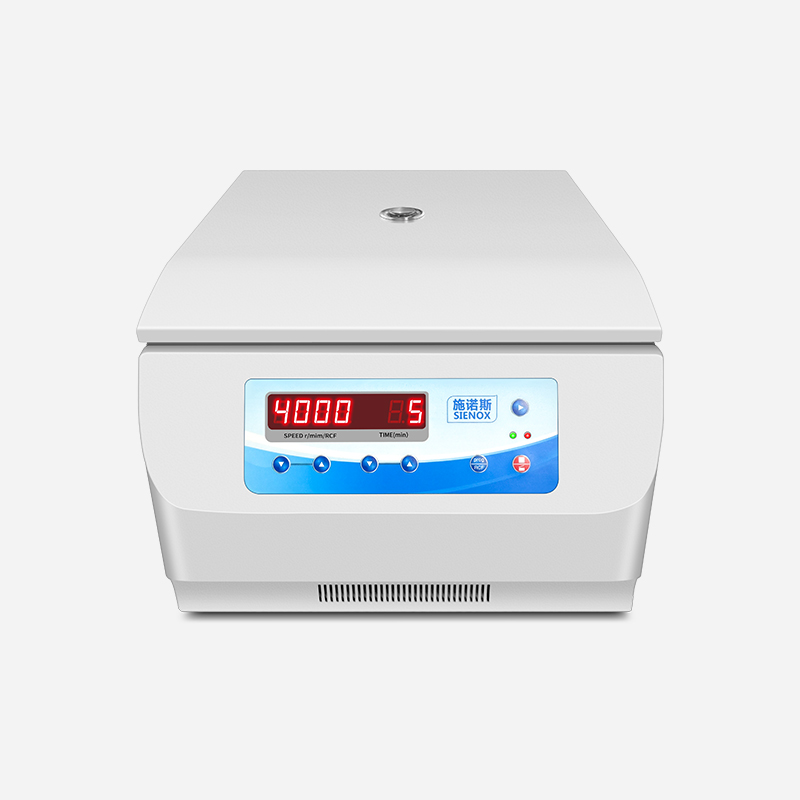
离心脱泡机 SIE-C006
About SIENOX
广州施诺斯(SIENOX),20年脱泡机设备研发与生产的源头厂家
超过1800种材料脱泡案例
纳米级脱泡,满足不同材料多段搅拌除泡需要,支持定制
资质齐全,荣获多项国家专利,联系我们可免费试样