


Coatings

TEL:18925129293


Industrial University Solves Bubble Challenges of Coating‑Film Materials with SIENOX Defoaming Machine
date:2026-09-03author:小施Coating‑Film Material Stirring‑Defoaming Solution
Coating‑film material is a common surface‑treatment technique widely applied in architecture, electronics, automotive, optics and other industries. During scientific research and coating‑film application at ***Industrial University, bubble issues severely degraded coating‑film quality and experimental accuracy. After learning that SIENOX defoaming machines could resolve material‑defoaming problems online, the university contacted SIENOX. After requirement communication, SIENOX sales engineers provided mature coating‑film material defoaming solutions and invited the customer to submit samples for free trial‑testing.
Working Condition Requirements
• Material Types: Coating‑film materials (optical coating‑film, electronic coating‑film, architectural coating‑film, automotive coating‑film, functional coating‑film, anti‑fouling coating‑film, anti‑corrosion coating‑film, conductive coating‑film, thermal‑insulation coating‑film, etc.)
• Initial Status: Large quantities of bubbles, especially stubborn micro‑bubbles, are incorporated during material preparation. As fluid‑state coating‑film materials trap bubbles that hardly escape naturally, direct coating will result in bubble pinholes and uneven film thickness.
• Processing Target: Thoroughly remove stubborn micro‑bubbles from coating‑film materials to obtain uniform, flat films free of bubble pinholes, satisfying high‑quality coating requirements for university‑based scientific research and industrial mass production.
Comparison Before and After Improvement
Before Improvement — Pain Points of Traditional Processes:
• Difficult removal of stubborn micro‑bubbles: Micro‑bubbles trapped inside fluid coating‑film materials. Conventional static defoaming shows extremely low efficiency, with abundant bubbles remaining even after hours of standing.
• Bubble‑induced pinholes: After coating, trapped bubbles rupture and form pinholes, seriously impairing coating integrity and protective performance.
• Uneven coating‑film thickness: Bubbles cause uneven fluid distribution during coating, leading to thickness fluctuations and degrading optical and electrical performance.
• Poor surface quality: Bubbles produce pits and dimples on coating surfaces, ruining appearance and surface smoothness.
• Reduced adhesion: Bubbles create discontinuous contact between coating‑film and substrate, lowering adhesion and triggering peeling‑off risks.
• Poor experimental repeatability: Unstable defoaming results with large quality variations among batches in scientific‑research experiments.
Solution:
***Industrial University contacted SIENOX after discovering SIENOX defoaming machines online. Following detailed requirement communication, SIENOX sales engineers delivered mature coating‑film material defoaming solutions and invited the customer to provide samples for free trial tests.
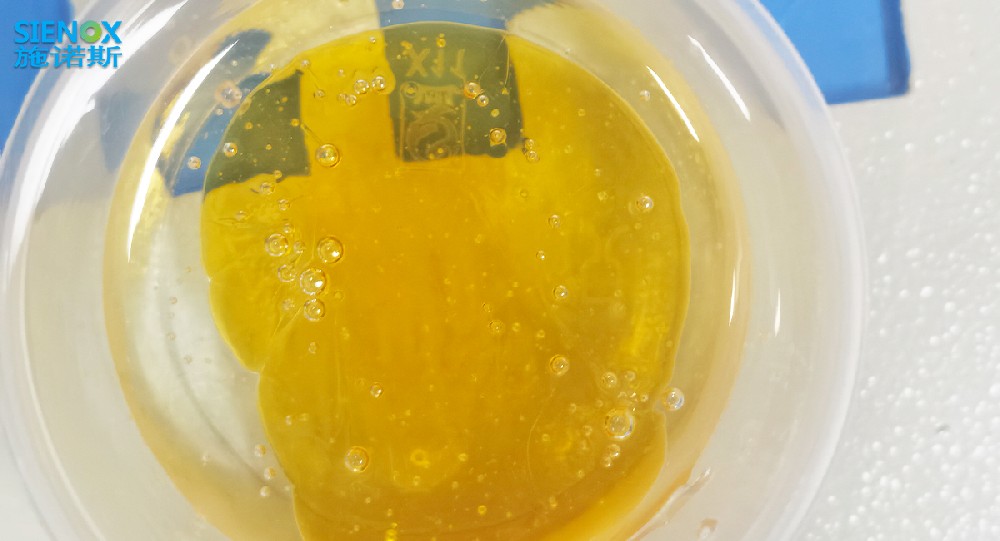
The submitted fluid sample contained abundant bubbles, especially stubborn micro‑bubbles. SIENOX adopted the SIE‑MIX90 planetary vacuum stirring‑defoaming machine for testing. Rotation speed and duration parameters were optimized for the material’s properties. The customer was highly satisfied with the defoaming performance and promptly signed the contract.
Core Solution Highlights:
1. Dual defoaming by vacuum stirring: The SIE‑MIX90 planetary vacuum stirring‑defoaming machine performs dynamic stirring under vacuum to rapidly expel and thoroughly eliminate stubborn micro‑bubbles within fluid coating‑film materials.
2. Nano‑level defoaming: Nano‑scale defoaming capability. Efficient defoaming is completed within 2 minutes at 1600 rpm for thorough and fast bubble removal.
3. Customizable fixtures: Custom‑made fixtures support cans, beakers, glue cups and other containers of various sizes for both research‑lab and mass‑production scenarios.
4. Adjustable rotation speed: Flexible speed adjustment enables fast defoaming for coating‑film materials of different viscosities.
5. Automated operation: Manual intervention is minimized for easy operation and reliable experimental repeatability.
6. Customizable functions: Custom‑configurable functions to maximize compliance with customer‑specific application demands.
Sample Provider: ***Industrial University
Test Conditions
Item | Parameter |
Test Model | SIE‑MIX90 Planetary Vacuum Stirring‑Defoaming Machine |
Test Material | Coating‑film material (fluid) |
Rotating Speed | 1600 rpm |
Time | 2 min |
Vacuum Degree | -95 KPa |
Stirring‑Defoaming Effect Comparison Chart
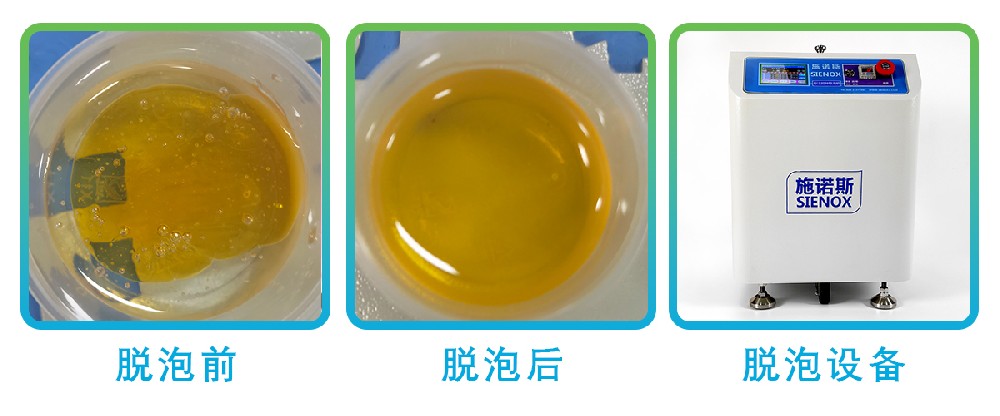
Comparison Dimension | Before Stirring‑Defoaming | After Stirring‑Defoaming |
Bubble Content | Large amounts of stubborn micro‑bubbles, non‑uniform fluid | Nano‑scale bubbles thoroughly removed, uniform and fine texture |
Coating‑film Surface | Bubble pinholes, pits and dimples | Smooth surface free of pinholes and pits |
Coating‑film Thickness | Uneven thickness caused by bubbles | Uniform coating with consistent thickness |
Adhesion | Discontinuous contact surface due to bubbles, poor adhesion | Sufficient contact surface, strong adhesion |
Optical Performance | Light scattering by bubbles, reduced light transmittance | Dense and uniform coating‑film, significantly improved light transmittance |
Experimental Repeatability | Unstable traditional defoaming, large batch‑to‑batch variation | Replicable parameters, favorable experimental repeatability |
Mature Application Fields
• Optical coating‑film (optical‑lens coating, optical‑filter coating, anti‑reflection coating)
• Electronic coating‑film (ITO conductive‑film coating, flexible‑circuit coating‑film, semiconductor coating‑film)
• Architectural coating‑film (architectural‑glass coating‑film, exterior‑wall coating‑film, waterproof coating‑film)
• Automotive coating‑film (automotive‑paint coating‑film, windshield‑glass coating‑film, thermal‑insulation coating‑film)
• Functional coating‑film (anti‑fouling coating‑film, anti‑corrosion coating‑film, self‑cleaning coating‑film)
• Conductive coating‑film (conductive‑silver‑paste coating‑film, electromagnetic‑shielding coating‑film)
• Thermal‑insulation coating‑film (IR thermal‑insulation coating‑film, UV thermal‑insulation coating‑film)
• Research‑lab coating‑film (university‑based scientific‑research experiments, lab‑scale sample preparation)
Related recommendations
Industrial University Solves Bubble Challenges of Coating‑Film Materials with SIENOX Defoaming Machine
Perhaps you still need....
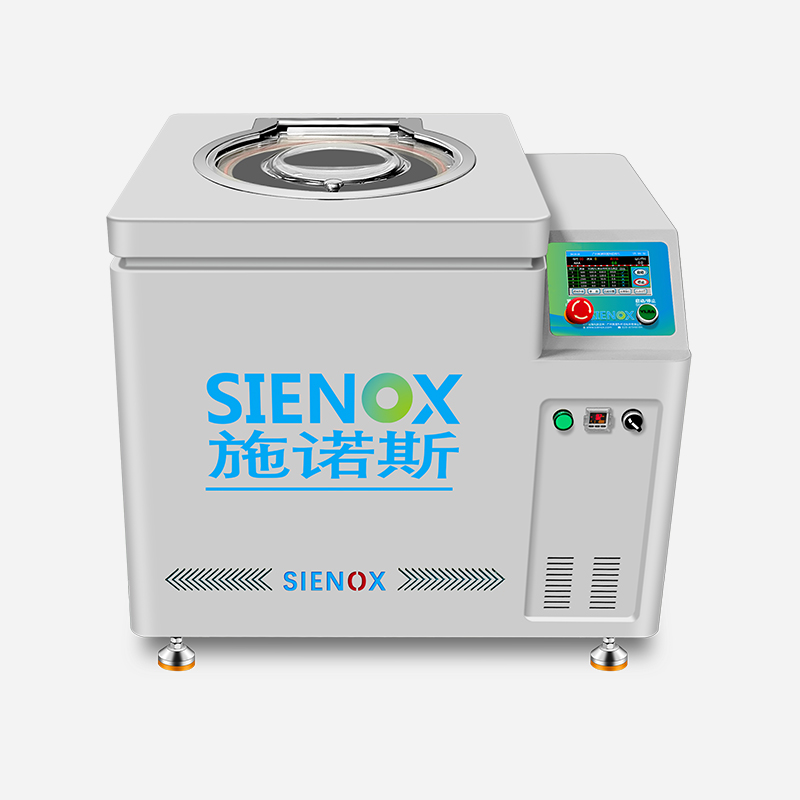
行星式真空脱泡搅拌机 SIE-MIX1000plus
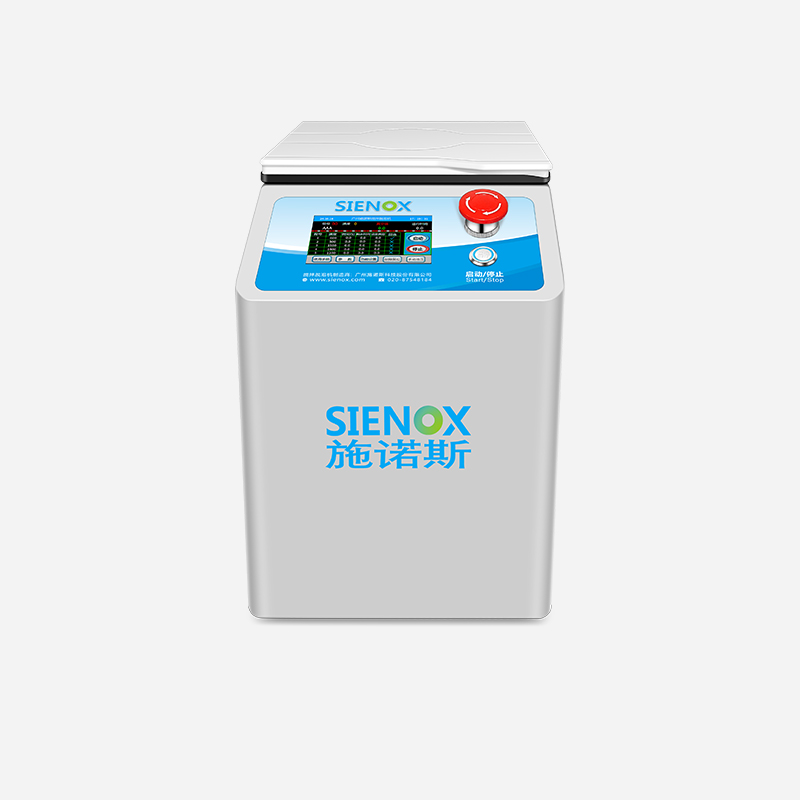
实验室行星式搅拌脱泡机 SIE-SV200
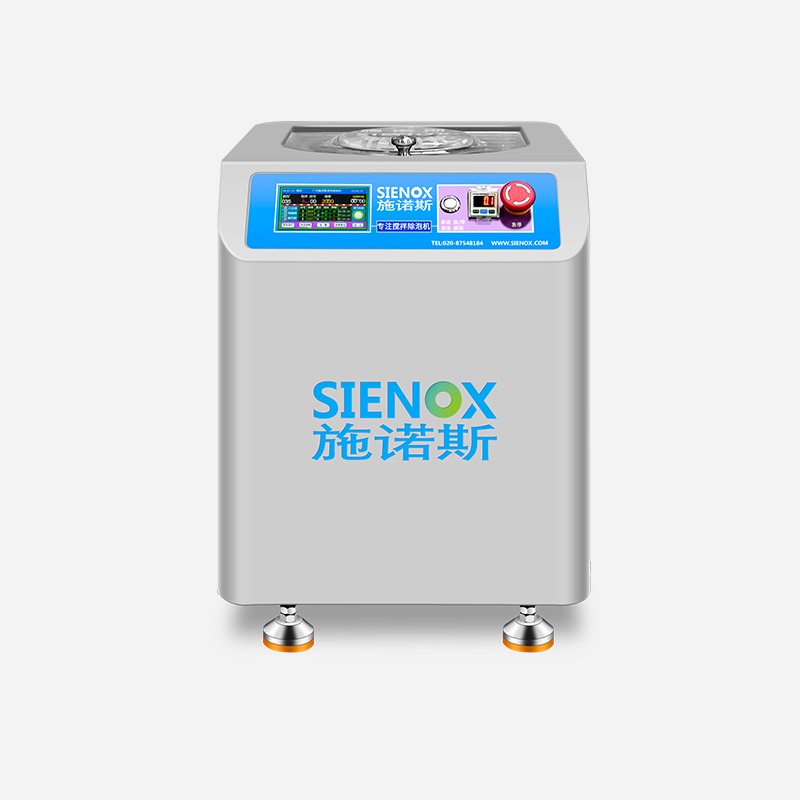
SIENOX行星式脱泡搅拌机 SIE-CV300
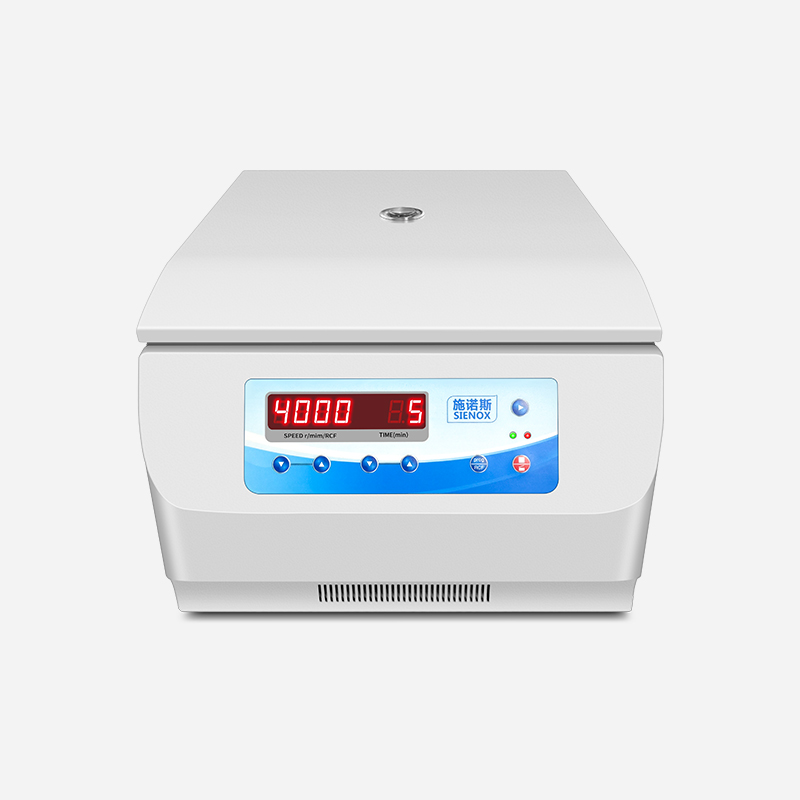
离心脱泡机 SIE-C006
About SIENOX
广州施诺斯(SIENOX),20年脱泡机设备研发与生产的源头厂家
超过1800种材料脱泡案例
纳米级脱泡,满足不同材料多段搅拌除泡需要,支持定制
资质齐全,荣获多项国家专利,联系我们可免费试样